Topical Authority SEO: 7 Proven Steps to Rank
Most SEO strategies chase keywords. The ones that actually win chase topics. There’s a reason some sites publish 10 articles and rank for everything, while others publish 200 and rank for almost nothing — and it has very little to do with backlinks or technical optimization. It comes down to whether Google trusts you as the definitive source on a subject.
Topical authority SEO is the discipline of building that trust systematically. And the gap between sites that understand it and sites that don’t is widening every quarter. A 2023 white paper by Graphite found that domains with high topical authority achieve organic search visibility significantly faster than those relying on traditional link acquisition alone.
This guide breaks down exactly how to build topical authority — not in abstract theory, but in seven sequential steps you can start this week.
What Is Topical Authority SEO?
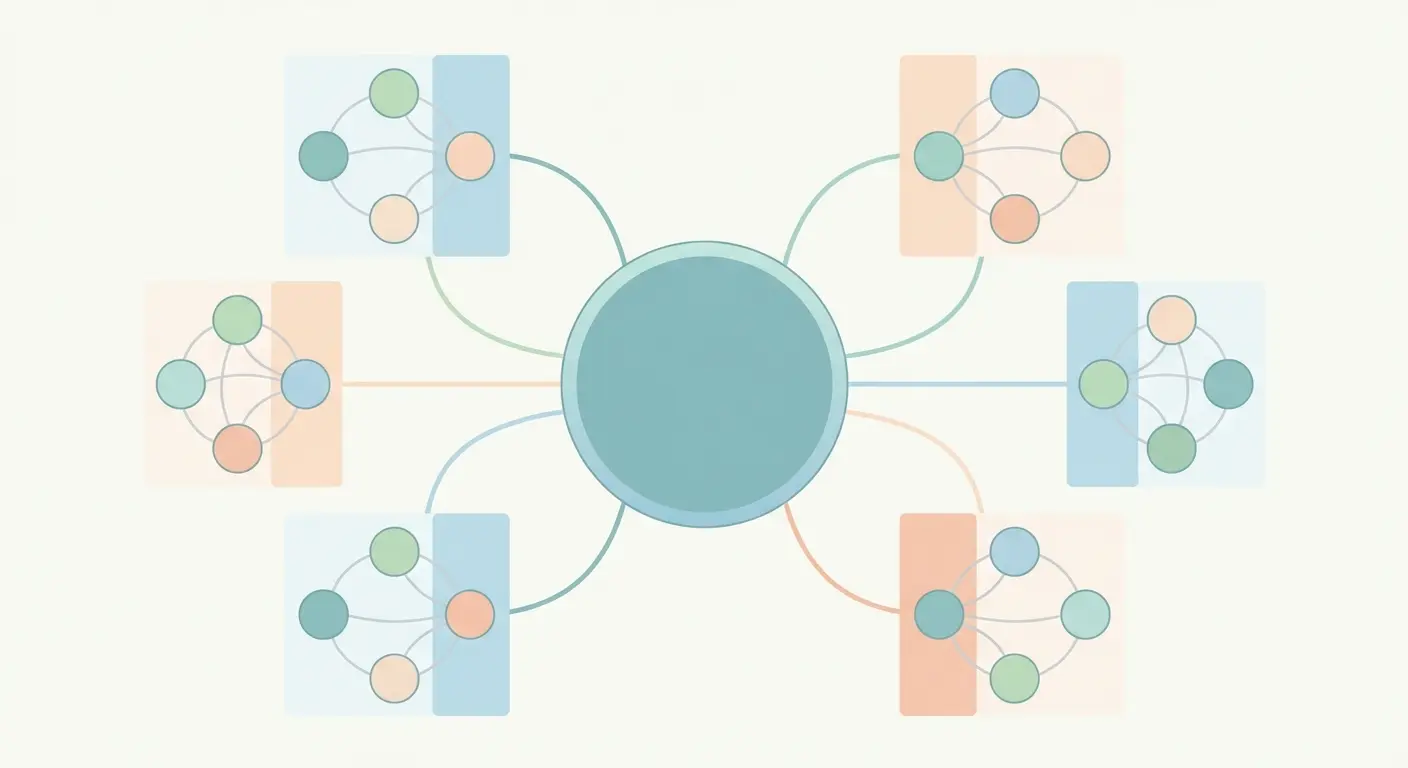
The concept draws from information retrieval theory, specifically from how search engines model document relevance beyond simple keyword matching. Google’s systems — including the Knowledge Graph, BERT, and more recently the Helpful Content System — evaluate whether a page exists within a coherent topical ecosystem or stands in isolation.
Koray Tuğberk GÜBÜR, one of the most cited practitioners on this topic, has demonstrated through semantically optimized topical maps that proper topical coverage can generate rankings within days for new domains — an outcome that would be impossible with link-only SEO strategies.
What most people miss is that topical authority isn’t just about publishing more. It’s about publishing the right things in the right order so that Google can map your content to a coherent subject model. Miss a critical subtopic and Google’s systems may still route that query to a competitor who covers it — even if your overall domain is stronger.
For a deeper exploration of the theoretical mechanics behind this, the definitive framework for building domain expertise covers the research foundation and phased implementation in granular detail.
Why Topical Authority Matters More Than Ever in 2025
Google’s algorithm has shifted — not gradually, but structurally. The August 2023 Helpful Content Update, followed by the March 2024 Core Update, explicitly targeted thin, keyword-chasing content and elevated sites that demonstrated genuine subject-matter depth. This wasn’t a tweak. It was a signal about where search is heading.
Here’s what the data shows:
- Sites with coherent topical clusters consistently outperform single-page optimizations in competitive niches (Ahrefs internal analysis, 2023)
- Domains that cover a topic comprehensively rank for 3-5x more long-tail variations without additional optimization effort
- According to Ahrefs’ research on topical authority, topical relevance can compensate for lower domain authority in many competitive SERPs
The counterintuitive insight here? Niche domains with 50 deeply interconnected articles routinely outrank massive editorial sites with 50,000 articles on the same queries — because the niche site has topical coherence and the mega-site has topical sprawl.
AI-driven search features — Google’s AI Overviews, Bing Copilot, Perplexity — compound this dynamic. These systems pull from sources they already trust on a topic. If you’re not in their “trusted source” model for a subject, you won’t be cited in AI-generated answers regardless of your technical optimization. Topical authority SEO is now the foundation of AI search visibility, not just traditional organic rankings.
Step 1: Define Your Topical Domain
Before you map a single keyword, you need to answer a more fundamental question: What subject are you claiming ownership of?
This sounds obvious. It’s surprisingly difficult. Most sites try to own too much — “digital marketing,” “health and wellness,” “personal finance” — and end up owning nothing. The sites that build genuine topical authority pick a domain narrow enough to dominate completely, then expand from a position of strength.
Think of it as the Topical Domain Selection Matrix:
| Domain Scope | Example | Risk Level | Recommended For |
|---|---|---|---|
| Too Broad | “Marketing” | Very High | Established media brands only |
| Broad Vertical | “B2B SaaS Marketing” | Medium-High | Sites with 3+ years of content history |
| Focused Niche | “SEO Content Strategy” | Medium | Most growing sites — optimal entry point |
| Micro-Niche | “Technical SEO for E-commerce” | Low | New sites, niche service providers |
The practical test: Can you identify 50-100 meaningful, distinct content topics within your chosen domain? If yes, it’s viable. If you can only think of 15, narrow it further. If you can’t stop listing topics without hitting 500+, narrow it significantly.
Your topical domain should also map to your actual expertise and business purpose. Google’s E-E-A-T framework explicitly evaluates whether real-world experience backs your claims. A cybersecurity firm writing about topic areas adjacent to their practice will always have a credibility advantage over a content farm covering the same ground.
Step 2: Build a Topical Map Before You Write a Single Word
A topical map is the single most important strategic document in a topical authority SEO campaign. It’s not a keyword list. It’s a structured hierarchy of every question, concept, subtopic, and entity your audience could need to understand your subject — organized by semantic relationship.
Here’s the distinction that changes everything: keywords tell you what people search for; a topical map tells you what a subject actually is. The difference determines whether you rank for 20 queries or 2,000.
How to build a topical map in practice:
- Seed entity extraction: Start with your core topic and extract every related entity (people, tools, concepts, processes) from top-ranking content using Google’s “People Also Ask,” related searches, and tools like topical map generators
- Question-based expansion: For each entity, generate the full question universe — definition, comparison, how-to, why, when, cost, alternatives
- Semantic clustering: Group questions and topics by semantic proximity, not just keyword similarity. Topics about “content calendars” and “editorial planning” belong in the same cluster even if they share no keywords
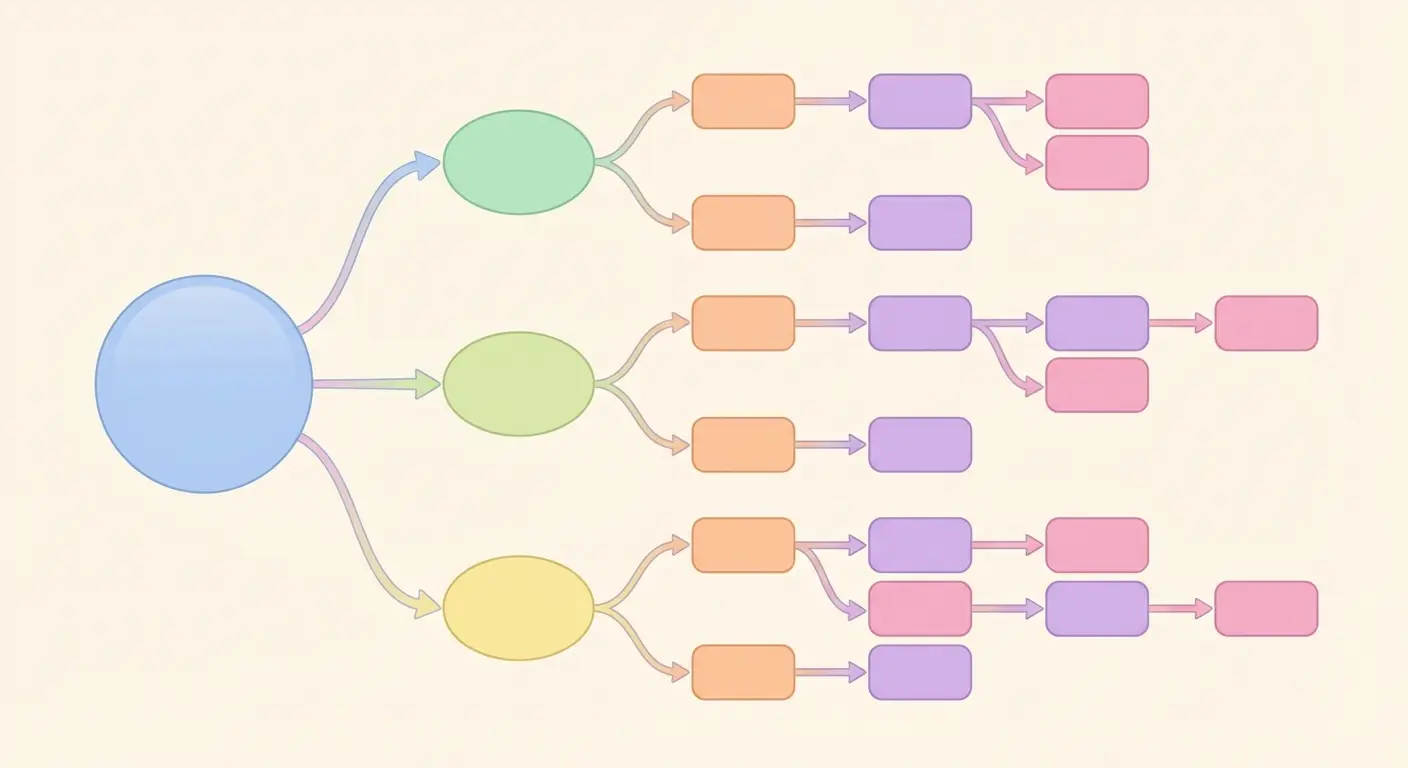
- Hierarchy mapping: Assign each topic to a tier — pillar (broad, high-volume), cluster (medium, specific), supporting (narrow, long-tail)
- Gap analysis: Compare your map against competitor content to identify topics they cover that you don’t — these gaps signal ranking opportunities and coverage weaknesses
Koray Tuğberk GÜBÜR’s work on semantic SEO provides one of the most rigorous frameworks for this process. The core insight from his research: search engines don’t just want you to cover topics — they want you to cover topics in a way that mirrors how a genuine subject-matter expert thinks about the domain.
Step 3: Design Your Content Architecture Around Pillars and Clusters
Topical maps tell you what to cover. Content architecture tells you how to structure it so that Google can efficiently crawl, understand, and attribute expertise to your site.
The pillar-cluster model is the most battle-tested architecture for topical authority SEO. A pillar page covers a broad topic comprehensively at a high level. Cluster pages each cover a specific subtopic in depth. Internal links connect them deliberately — not randomly.
The key principle most implementations get wrong: the architecture should reflect semantic relationships, not just site navigation. A cluster page about “on-page SEO for e-commerce” should link back to its pillar (“SEO for e-commerce”), but it should also cross-link to semantically adjacent clusters (“product page optimization,” “category page SEO”) when those connections are genuinely useful to readers.
For the full implementation patterns — including how information retrieval theory justifies specific architectural decisions — the pillar-cluster content strategy architecture guide provides measurement tactics and IR theory that explain why certain structures outperform others.
Three architecture principles to build into your planning from day one:
- Completeness before optimization: A cluster with 8 tightly connected articles will outperform a single over-optimized article every time. Fill the topical space first
- Hub pages earn authority: Pillar pages accumulate topical authority from clusters and redistribute it via internal links. Treat them as living documents, not static resources
- Avoid topical orphans: Every piece of content should exist within at least one semantic cluster. Standalone articles that don’t connect to a broader topical neighborhood dilute your authority signal
Step 4: Create Semantically Optimized Content at Scale
Semantic optimization is not keyword stuffing with synonyms. It’s the practice of writing content that covers a topic’s full conceptual space — all the entities, relationships, attributes, and contextual signals that tell a language model “this author genuinely understands this subject.”
Google’s Natural Language API and the underlying transformer models that power search can distinguish between a writer who truly understands content marketing and one who’s assembled a competent-looking article from surface-level research. The difference shows up in rankings.
What semantically optimized content looks like in practice:
- Entity completeness: Every relevant named entity (tools, frameworks, people, organizations) that belongs in a genuine treatment of the topic should appear naturally
- Attribute coverage: Don’t just define a concept — explain its causes, effects, comparisons, limitations, and applications. Thin topic coverage is what triggers Google’s “low quality” signals
- Contextual co-occurrence: Terms that naturally appear together in expert writing should appear together in yours. “Content strategy” naturally co-occurs with “editorial calendar,” “audience research,” “content audit” — if these are missing, the content signals shallow expertise
- Reader intent alignment: Each piece should satisfy a specific search intent completely. Informational pieces should inform; commercial investigation pieces should compare; transactional pieces should convert
Scale matters here — but not in the way many assume. Publishing 500 articles in 90 days with thin coverage is actively harmful to topical authority. Publishing 50 deeply researched, semantically complete articles over the same period builds measurable authority. Quality-weighted volume beats raw volume every time.
For the keyword-level execution — specifically how to find and organize long-tail topics that feed your clusters — the long-tail keyword strategy guide covers the research methods and organizational frameworks in detail.
Step 5: Build Contextual Internal Links That Transfer Authority
Internal linking is where most topical authority strategies lose value that they’ve already earned. The architecture exists, the content is published, and then internal links are added as an afterthought — generic, inconsistent, and strategically meaningless.
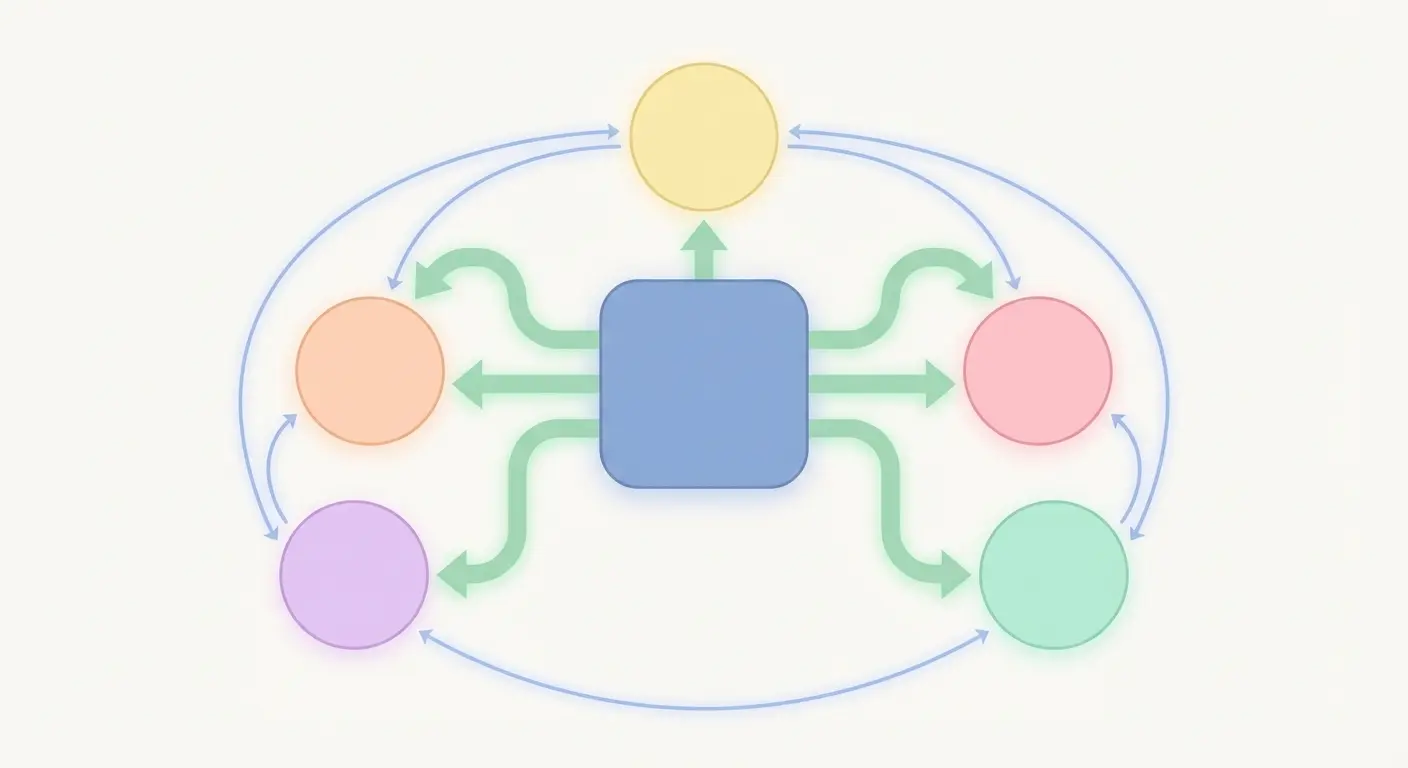
Done properly, internal linking is how you tell Google’s crawlers exactly how your topical content relates to itself. It’s the connective tissue of your authority model.
Here’s what the evidence shows about internal link optimization:
- Pages with strong internal link equity from topically relevant sources rank significantly higher than equally optimized pages with weak internal linking (multiple Ahrefs studies confirm this)
- Anchor text in internal links directly influences how Google associates a page with specific topics — not just keywords
- Crawl depth matters: pages buried more than 3 clicks from the homepage receive substantially less PageRank flow, regardless of their content quality
The practical internal linking protocol for topical authority:
- Link clusters to their pillar using the pillar’s primary keyword as anchor text — every time, without exception
- Cross-link between semantically related clusters when the connection genuinely serves the reader — forced links harm UX and signal manipulation
- Audit new content against existing content before publishing: does existing content link to the new piece? Does the new piece link back to relevant existing content?
- Prioritize “topical hub” pages for internal link equity — these are your pillar pages and should be among the most internally linked pages on your domain
- Use descriptive anchor text that reflects the target page’s topical focus, not generic phrases. “How topical authority signals work” is better than “learn more”
Step 6: Earn Topically Relevant Backlinks — Not Just Any Backlinks
The relationship between backlinks and topical authority is more nuanced than most practitioners admit. A thousand backlinks from sites in unrelated verticals contributes relatively little to topical authority signals — and may actually create topical confusion in Google’s entity model for your domain.
What matters is topical proximity. A backlink from a site that Google has already associated with your subject carries substantially more topical authority weight than a higher-DA link from a tangentially related domain.
According to Semrush’s analysis of topical authority factors, link relevance at the page and domain level is among the strongest signals separating topical authority leaders from laggards in competitive verticals.
Backlink strategies that build topical authority specifically:
- Original research and data: Publish studies, surveys, or original analyses that practitioners in your vertical will cite. Data-driven content earns contextual links from relevant sources almost automatically
- Expert roundups and interviews: When recognized authorities contribute to your content, they often link to it — and their domain’s topical association transfers through that link
- Resource page inclusion: Getting listed on “best resources for [your topic]” pages from established sites in your vertical is one of the cleanest topical authority signals possible
- Digital PR around topical expertise: Position your contributors as sources for journalists covering your subject area. Media citations from topically relevant publications carry significant E-E-A-T and authority weight
Fair warning: this takes real effort and usually real expertise. The shortcut version — buying links or running generic guest post campaigns — doesn’t build topical authority. It builds a link profile that may pass a basic DA check but does nothing for the subject-matter trust signals that drive long-term rankings.
Step 7: Measure and Iterate on Topical Coverage Gaps
Topical authority SEO isn’t a campaign with a completion date. It’s an ongoing intelligence operation — constantly auditing what topics you cover, what competitors have added, and where Google’s query landscape is shifting.
The measurement framework that works in practice combines three signal types:
- Topical coverage ratio: What percentage of topics in your defined domain does your content cover? A useful benchmark — if you’re below 60% coverage of your core topical map, you likely have significant authority gaps that prevent ranking even for topics you do cover
- Semantic share of voice: Track ranking positions across your full topical map, not just target keywords. Tools like Semrush or Ahrefs allow you to build custom keyword sets that mirror your topical clusters. Share of voice across the full cluster is a better authority proxy than any single keyword ranking
- Crawl and indexation health: Authority can’t exist in content Google isn’t crawling. Monitor crawl coverage, indexation rates, and crawl depth for your cluster pages monthly
Quarterly topical gap audits are the discipline that separates sites that plateau at partial topical authority from those that eventually dominate their vertical. The process is straightforward: export all ranking keywords for competitors in your space, map them against your topical content inventory, and identify the patterns in what you’re missing.
Here’s where it gets interesting: the gaps often aren’t random. They cluster around specific subtopics your original topical map underweighted. Recognizing this pattern lets you make architectural corrections — adding new clusters, strengthening weak pillars — rather than just publishing more content randomly.
Topical Authority SEO vs. Traditional SEO: Key Differences
| Factor | Traditional Keyword SEO | Topical Authority SEO | Advantage |
|---|---|---|---|
| Content planning unit | Individual keyword | Topic cluster | Topical (more durable) |
| Ranking signal priority | Backlinks + on-page | Semantic coverage + relevance | Topical (works in lower-DA scenarios) |
| Algorithm update resilience | Low (keyword-specific targets shift) | High (authority is structural) | Topical (proven in HCU recovery data) |
| Long-tail ranking efficiency | Each term requires individual targeting | Authority spills over to untargeted terms | Topical (compound returns over time) |
| AI search visibility | Unpredictable — keyword match insufficient | Strong — AI systems cite trusted sources | Topical (critical for AI Overviews) |
| Content production ROI | Linear — each article targets one query | Exponential — cluster content lifts all members | Topical (cluster effect documented) |
| Time to results | Immediate for low competition; slow otherwise | Faster once authority threshold reached | Traditional (short-term); Topical (long-term) |
Topical Authority SEO: Implementation Checklist
Use this checklist as a quarterly audit tool and a launch framework for new topical authority campaigns. Check off each item honestly — partial completion on most items is more common than SEO teams admit, and it’s usually where rankings plateau.
Foundation Phase (Months 1-2)
- ☐ Topical domain defined with explicit scope boundaries
- ☐ Topical map built covering minimum 50 topics across 3 tiers
- ☐ Competitor topical coverage analyzed and gap map created
- ☐ Pillar pages identified and content briefs created
- ☐ URL and site architecture designed to reflect topical hierarchy
Content Build Phase (Months 2-6)
- ☐ Pillar pages published and internally linked to existing content
- ☐ Priority clusters (highest search volume + strategic importance) published first
- ☐ Each cluster article connected to its pillar via descriptive internal links
- ☐ Semantically adjacent clusters cross-linked where contextually appropriate
- ☐ Every new article audited against existing content for internal link opportunities
Authority Building Phase (Ongoing)
- ☐ Original data or research asset published per quarter to earn topical citations
- ☐ Backlink outreach focused on topically relevant domains in your vertical
- ☐ Author E-E-A-T signals active (bio pages, credentials, publication history visible)
- ☐ Monthly ranking review across full topical keyword set (not just target terms)
- ☐ Quarterly topical gap audit comparing map coverage to competitor content
FAQ: Topical Authority SEO
How long does it take to build topical authority SEO?
For most domains, meaningful topical authority signals appear within 3-6 months of systematic cluster publishing, with significant ranking gains typically arriving in months 6-12. New domains can accelerate this timeline with highly focused topical maps and consistent content output, but there’s no reliable shortcut past the threshold coverage Google requires to assign domain-level topical trust.
Does topical authority replace the need for backlinks?
No — but it does change the equation significantly. Topical authority can help lower-DA domains outrank higher-DA competitors on specific queries when coverage and semantic relevance are strong. Backlinks remain important, but the most valuable backlinks for topical authority are topically proximate ones, not just high-DA links from unrelated sources.
What tools are best for building a topical map?
The most effective topical map tools include free utilities like Topical Map AI’s free tools, combined with Ahrefs or Semrush for competitive gap analysis, and Google’s own “People Also Ask” and related searches for question coverage. No single tool provides a complete topical map — the best results come from combining automated generation with manual expert review.
How many articles do I need for topical authority?
There’s no universal minimum, but the practical threshold for most focused niches is 30-50 semantically connected articles organized into 3-5 clusters. What matters more than raw count is coverage completeness — Google’s systems evaluate whether you’ve addressed the full question universe for a topic, not whether you’ve hit an arbitrary article count.
Can a new website build topical authority?
Yes — and new websites often build topical authority faster than established sites that need to restructure existing content. The key advantage for new sites is starting with a clean topical architecture rather than inheriting years of unfocused content. Niche focus is especially critical for new domains; broad topic selection almost always delays authority establishment significantly.
How does topical authority affect AI search visibility?
Topical authority is increasingly the primary determinant of AI search citations. Google’s AI Overviews, Bing Copilot, and Perplexity draw from sources their underlying models already associate with specific subject expertise. Sites with strong topical authority are cited in AI-generated answers at disproportionately higher rates — making topical authority SEO the foundation of AI search strategy, not just traditional organic rankings.
Next Steps: Putting This Into Practice
Topical authority SEO rewards the practitioners who treat it as a long-term infrastructure investment rather than a campaign tactic. The seven steps in this guide aren’t sequential tasks you complete once — they’re an iterative cycle that compounds over time as your topical coverage deepens and Google’s trust in your domain solidifies.
The sites that will dominate search in 2025 and beyond are being built right now — with careful topical map construction, deliberate content architecture, and the discipline to fill topical gaps before chasing new territories.
If you want to go deeper on the theoretical foundations and research-backed evidence for why these methods work, the definitive topical authority framework provides the complete academic and practitioner evidence base — including phased implementation guidance and the information retrieval theory behind each strategic decision.
For teams working on content architecture specifically, the pillar-cluster architecture guide covers implementation patterns, measurement models, and the IR theory that explains why specific structures outperform others in competitive verticals.
And if keyword-level execution is your current constraint — finding and organizing the long-tail topics that feed your clusters — the long-tail keyword strategy guide has the research methods and organizational frameworks to accelerate that process significantly.
Found this useful? Share it with your network.
The SEO professionals and content strategists in your circle are likely wrestling with the same topical authority challenges. This resource is designed to be cited, bookmarked, and returned to as your strategy evolves.
Explore more research-backed frameworks at authenova.site