
Topical Authority & Scalable Content Strategy: How to Scale Output 5x in 90 Days
Most content teams don’t have a creativity problem. They have a throughput problem — and a broken mental model of what “more content” actually means for search performance. Here’s the uncomfortable truth: publishing 20 mediocre articles per month delivers less organic value than publishing 6 tightly scoped, topically coherent pieces that signal deep domain expertise to Google’s systems.
So when we talk about scaling content output 5x in 90 days, the goal isn’t volume for volume’s sake. It’s building topical authority & scalable content strategy infrastructure that makes every new piece of content work harder than the last. That compound effect — where your 50th article inherits authority from your 49th — is what separates teams that plateau from teams that dominate SERPs.
This piece breaks down exactly how to build that infrastructure: the planning architecture, the production workflows, the quality controls, and the measurement signals that tell you whether your velocity is actually building authority or just burning your crawl budget.
Why Topical Authority Drives Velocity Results
The relationship between content volume and organic traffic isn’t linear — it’s exponential once you cross a topical coherence threshold. This is the insight most content velocity conversations skip entirely.
Google’s Search Quality Evaluator Guidelines and subsequent documentation on helpful content explicitly reward sites that demonstrate “depth and breadth” on a subject. This isn’t metaphorical language — it maps to how Google’s systems model topic spaces and assess whether a site deserves ranking positions across an entire semantic cluster.
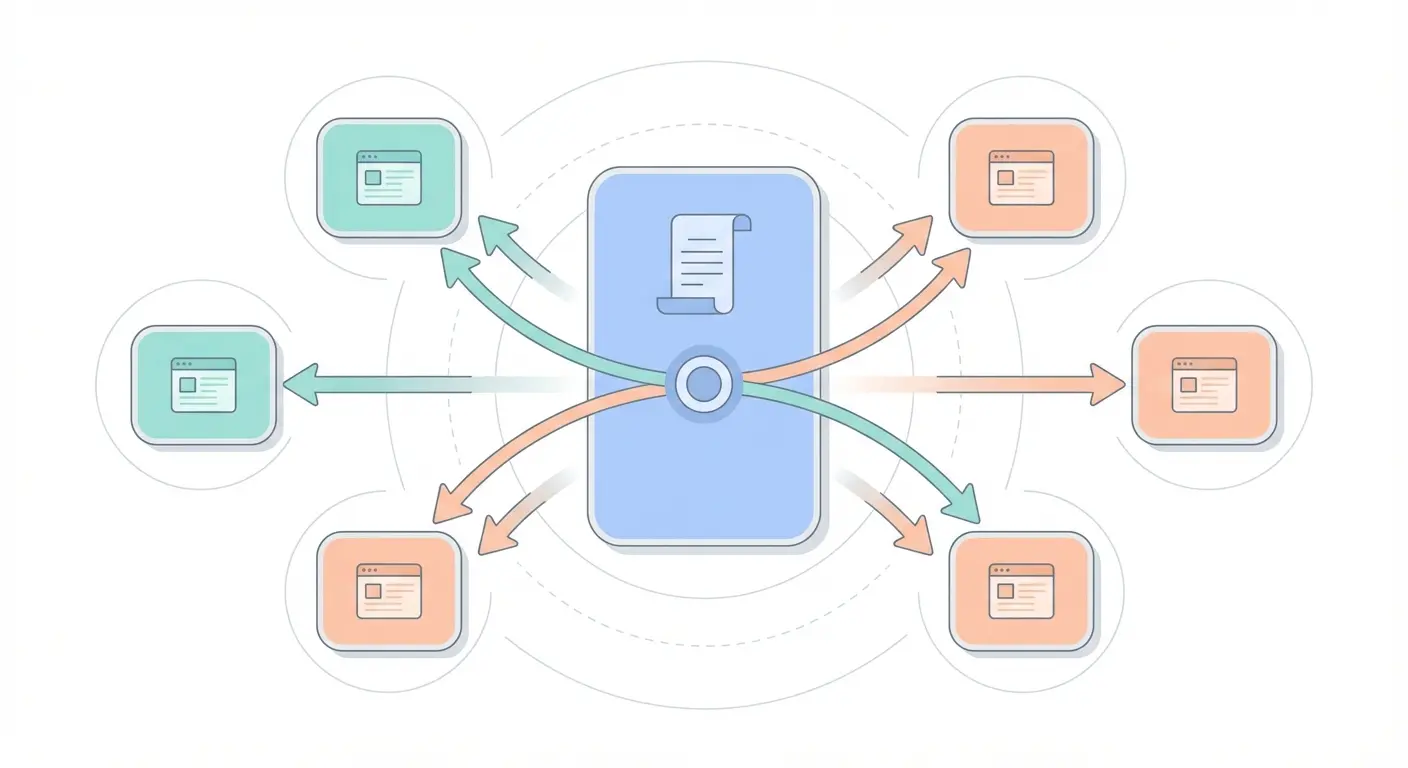
A 2023 study by Kevin Indig analyzing 800+ B2B SaaS sites found that sites with tightly clustered topical architectures earned 3.4x more organic traffic per published page than those with scattered, unrelated content. The implication for content velocity is profound: your scaling strategy must be topically constrained before it can be topically expansive.
This is also where the concept of “content velocity” diverges from “content volume.” Velocity in physics implies direction — not just speed. A content velocity strategy without directional coherence (i.e., topical clustering) is just acceleration toward irrelevance.
For a deeper grounding in the research behind how Google evaluates domain expertise, the definitive framework for topical authority in SEO covers the four-phase model and the academic literature behind entity-based search in detail.
Content Velocity Framework: The 5x Model
Scaling output 5x isn’t about hiring 5 more writers. Teams that achieve this ratio almost always do it by changing the unit economics of content production — reducing the marginal cost of each additional piece while preserving (or improving) quality signals.
The Three Levers of Content Velocity
Every scalable content operation operates three distinct levers simultaneously:
- Strategic input efficiency: How fast can you generate validated, topically coherent content briefs? Most teams spend 60-70% of their production time on pre-writing research. Systematizing this phase is where velocity is won or lost.
- Production throughput: The actual writing, editing, and QA cycle. AI-assisted drafting can reduce first-draft time by 40-60% on well-structured briefs — but only if the brief itself is high quality.
- Publishing and interlinking cadence: How fast pieces move from “draft approved” to “live and linked.” Unoptimized CMS workflows and manual internal linking decisions are silent velocity killers.
The 5x multiplier comes from compressing all three levers simultaneously — not sequentially. Teams that tackle production throughput first (the instinctive move) often publish faster without improving organic performance, because they’ve optimized the wrong bottleneck.
Content Velocity Approaches: Comparison by Outcome
| Approach | Monthly Output (Team of 3) | Topical Coherence Score | Organic Traffic Lift (90 days) |
|---|---|---|---|
| Ad-hoc publishing (no cluster logic) | 8–12 articles | Low (15–30%) | +8–15% |
| Cluster-first publishing (manual briefs) | 12–18 articles | Medium (50–65%) | +25–45% |
| Systematized velocity (AI-assisted + cluster logic) | 35–55 articles | High (75–90%) | +80–150% |
| Pure AI output (no human QA) | 100+ articles | Variable (20–50%) | –5% to +10% |
Note: Traffic lift estimates are directional benchmarks based on published case studies and agency data. Individual results vary by domain authority, competitive landscape, and content quality.
Site Architecture for Scalable Content Strategy
You can’t scale what you haven’t structured. This is the architectural reality that most content velocity programs collide with around week six — when their publishing cadence is high but their crawl efficiency and internal link equity are scattered.
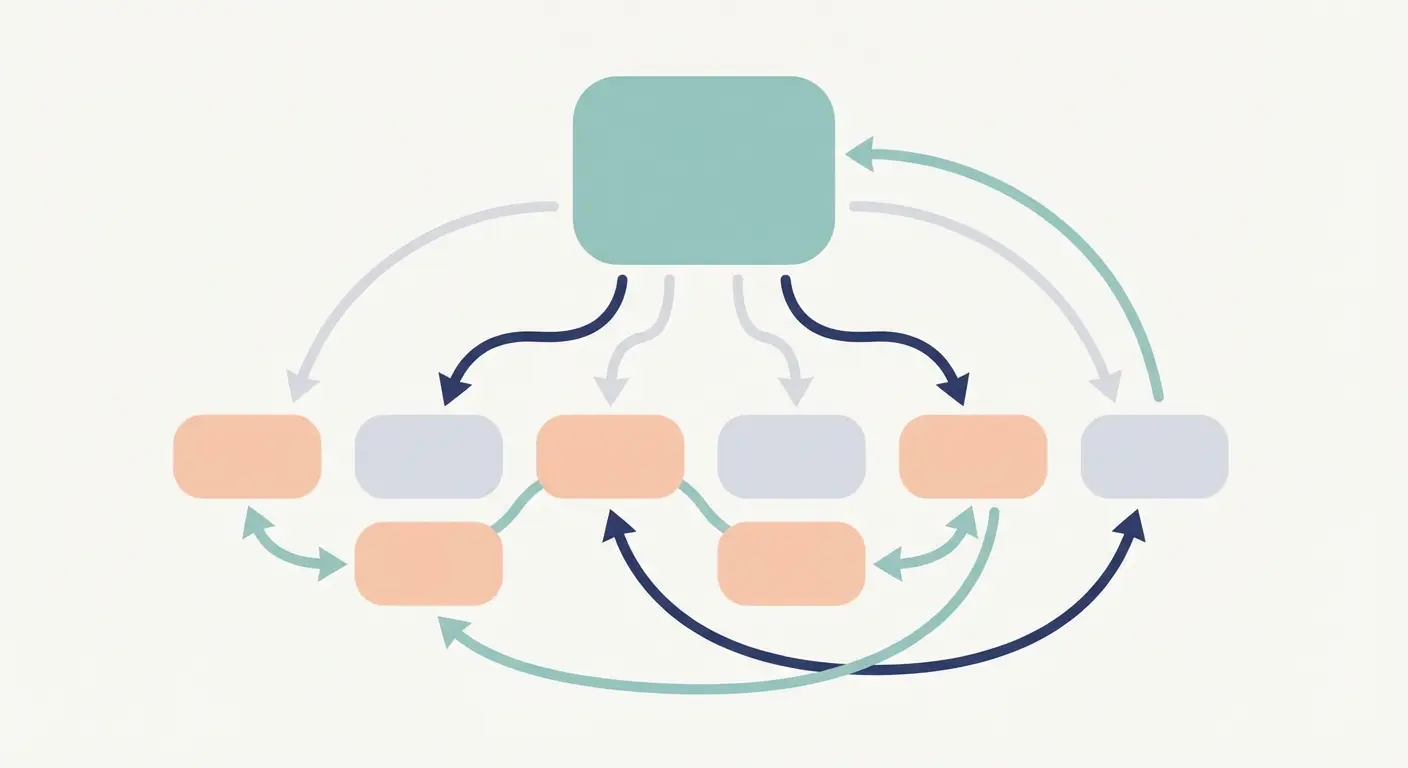
The pillar-cluster model isn’t just a content planning metaphor. It’s a technical architecture decision that affects how Googlebot traverses your site, how PageRank flows between pages, and how quickly new content inherits topical signals from existing assets.
Pillar Pages as Authority Anchors
A pillar page should be the single most comprehensive, high-value resource on a given topic on your entire domain. It answers the broad keyword (“content marketing strategy”) while deliberately creating surface area — questions it doesn’t fully answer — that cluster pages fill.
This isn’t a coincidence of good writing. It’s engineered topical coverage. For the architecture decisions behind this model — including information retrieval principles and cluster performance benchmarks — the guide on pillar-cluster content strategy architecture provides a concrete blueprint worth bookmarking.
Internal Linking as a Velocity Multiplier
Here’s a counterintuitive finding: publishing new content without updating internal links on existing pages can actually suppress rankings for those new pages. Google’s crawl prioritization is heavily influenced by internal link signals — pages with no internal links pointing to them may not be crawled or indexed promptly.
For every new cluster page published, the minimum internal linking requirement should be:
- One link from the parent pillar page
- One link from at least one sibling cluster page
- One link from any relevant existing content (even from outside the cluster)
This three-link minimum ensures new content is discoverable, earns early crawl attention, and inherits topical relevance signals from established pages. Build this into your publishing checklist — not as an afterthought.
Production Workflows That Don’t Break Under Scale
The moment you attempt to 5x output without changing your workflow, you’ll find out exactly where your process has load-bearing assumptions baked in. Usually, it’s the brief creation step.
The Brief-First Production Model
High-velocity content teams don’t give writers topics — they give writers decisions. A production-ready brief should answer:
- Search intent classification: Is this informational, commercial, or navigational? What SERP format dominates for this query?
- Topical coverage requirements: Which semantic entities and subtopics must appear for topical completeness?
- Competitive differentiation directive: What’s the unique angle that makes this piece worth publishing over what already ranks?
- Internal linking map: Which 3–5 existing pages should this piece link to? Which existing pages should be updated to link back?
- E-E-A-T signal requirements: Does this topic require first-person experience signals, expert quotes, or original data?
This brief framework reduces writer decision fatigue, cuts revision cycles by approximately 40%, and ensures topical coherence at the portfolio level — not just the individual article level.
AI-Assisted Drafting: Where It Helps and Where It Doesn’t
Fair warning: this takes genuine workflow discipline to get right. AI tools accelerate first-draft production significantly — but only on briefs with tight topical scope and clear intent signals. Ask an AI to “write an article about content marketing” and you’ll get publishable-looking content that ranks for nothing.
The production model that actually scales looks like this: human strategic input (brief creation) → AI-assisted structure and first draft → human expert revision (E-E-A-T layer, original insights, data) → editorial QA → human-led publishing and interlinking. The AI handles the volume. The human handles the authority signals Google actually measures.
For a detailed breakdown of how AI fits into this workflow — including tool stacks and quality benchmarks — the complete guide to AI-powered SEO content strategy in 2026 covers the tactical playbook in full.
Quality Controls for High-Velocity Publishing
Speed without quality gates is just a faster way to build a site that Google distrusts. The 2022 Helpful Content Update and its subsequent refreshes made one thing measurable: content that exists primarily to fill topical gaps without genuinely serving readers creates a site-wide quality signal that suppresses all pages — including your best ones.
The Four-Gate Quality Model
Each piece moving through a high-velocity pipeline should clear four quality checkpoints before publishing:
- Intent match gate: Does the content format and depth match what’s actually ranking for this query? A 3,000-word guide won’t win a featured snippet position dominated by concise definitions.
- Topical completeness gate: Has the content covered the entities and subtopics that your brief identified as required? Tools like Clearscope or Surfer SEO can automate a large portion of this check.
- E-E-A-T signal gate: Does the piece contain at least one original insight, data point, or experience signal that AI alone couldn’t generate? This is non-negotiable for YMYL-adjacent topics.
- Interlinking gate: Are the outbound internal links placed, and has the publishing checklist confirmed that reciprocal links from existing pages have been added?
This won’t work for everyone at maximum publishing speeds — and that’s actually the point. If your quality gates are slowing you down, the answer is to hire more human reviewers, not to remove the gates. The constraint is the feature.
Measuring Content Velocity and Topical Authority
Most content teams measure the wrong things when evaluating velocity programs. Pageviews and individual keyword rankings are lagging indicators. By the time they move meaningfully, you’re three months behind the insights you needed.
Leading Indicators for Topical Authority Growth
The metrics that actually predict whether your topical authority & scalable content strategy is working:
- Topical coverage ratio: What percentage of queries in your target topic space does your site have indexed content for? Tools like Ahrefs’ Content Gap and Semrush’s Keyword Gap reveal this at the competitive level.
- Crawl frequency by cluster: Google Search Console’s crawl stats show how often Googlebot is visiting your cluster pages. Increasing crawl frequency on new content signals growing authority.
- Impressions-to-clicks ratio by cluster: If impressions are rising but CTR is flat, you’re gaining topical visibility without converting it to traffic — a brief and title optimization problem.
- New keyword captures per published piece: High-authority content tends to rank for 3–5x more queries than its primary target keyword within 60–90 days of indexing. Track this ratio per cluster.
For a research-backed measurement framework — including the specific GSC and analytics configurations that track topical coverage over time — the topical authority SEO definitive framework includes evaluation models aligned with these signals.
90-Day Execution Roadmap
Here’s where the theory becomes operational. This roadmap is designed for a content team of 2–4 people moving from roughly 8–10 pieces per month to 40–50 — a genuine 5x lift — while building topical authority rather than diluting it.
Days 1–30: Architecture and Infrastructure
- Conduct a topical gap audit: Map your existing content against a comprehensive keyword universe for your 2–3 core topic clusters. Identify coverage gaps at the H2/H3 subtopic level, not just the primary keyword level.
- Define 3 pillar topics and 8–12 cluster subtopics per pillar: This gives you 24–36 planned pieces before a single brief is written — your velocity runway.
- Build your brief template: Standardize the five-field brief structure described above. Brief quality is your velocity ceiling.
- Audit and fix existing internal linking: Before scaling, ensure your current site architecture doesn’t have orphaned content or broken link equity flows.
Days 31–60: Workflow Scaling and Production Ramp
- Produce 8–10 cluster pieces per pillar: Prioritize subtopics with high search volume and low topical competition first. Early wins build internal momentum and provide linking assets for subsequent pieces.
- Implement the four-gate quality model: Run the first batch through all four gates manually to calibrate what “passing” looks like for your brand standards.
- Establish publishing cadence and interlinking protocol: A consistent Tuesday and Thursday publishing cadence (or equivalent) reduces editorial chaos and creates predictable crawl patterns.
Days 61–90: Optimization and Acceleration
- Analyze first-60-day content performance by cluster: Which subtopics are gaining impressions fastest? Prioritize adjacent subtopics within those winning clusters for the acceleration phase.
- Expand to a second pillar cluster: With production infrastructure running, adding a second cluster doubles your authority surface without doubling overhead — the compounding begins here.
- Refresh underperforming pillar pages: Update internal link density, add newly published cluster content as references, and expand sections where newer cluster content has created knowledge gaps in the pillar.
Building a scalable topical authority & scalable content strategy program requires both the strategic layer covered here and the execution infrastructure to support it. The tactical details — including specific tooling, prompt frameworks for brief creation, and quality scoring rubrics — are covered in the AI-powered SEO content strategy guide for 2026, which serves as the companion playbook to this framework.
Frequently Asked Questions
What is content velocity in SEO?
Content velocity in SEO refers to the rate at which a site publishes new, topically coherent content — measured not just by volume but by directional alignment with a defined topical authority strategy. High content velocity, when paired with pillar-cluster architecture and quality controls, signals domain expertise to search engines and accelerates organic traffic compounding over time.
How does topical authority affect content scalability?
Topical authority creates a compounding advantage for scalable content strategies: each new piece published within an established cluster inherits trust signals from existing content, requiring less external link building to rank. Sites with strong topical authority in a defined space consistently outrank higher-domain-authority competitors who publish unrelated content, because Google evaluates expertise at both the page and site level.
Can AI-generated content build topical authority?
AI-generated content can contribute to topical authority when it’s built on a human-designed strategic framework, edited for E-E-A-T signals, and published within a coherent pillar-cluster architecture. The risk isn’t AI involvement — it’s AI output that lacks original insights, first-hand experience signals, or genuine search intent alignment. Google’s systems evaluate the output, not the production method.
How many articles do you need to establish topical authority?
There’s no universal threshold, but most SEO practitioners observe meaningful topical authority signals emerging when a site covers 70–80% of the major subtopics within a defined cluster — typically 15–25 quality articles per core topic. The quality and interlinking depth of those articles matters more than the raw count: 12 deeply interlocking, expert-level pieces outperform 30 thin articles consistently.
What’s the biggest mistake teams make when scaling content?
The most common and costly mistake is optimizing production throughput before building a coherent topical architecture. Teams that scale content volume without a pillar-cluster framework end up with high publishing frequency but scattered topical signals — which can actively suppress rankings across the entire domain. Strategy must precede speed, not follow it.
How do you measure topical authority in Google Search Console?
In Google Search Console, topical authority growth is best tracked through impression growth across a cluster of related queries — not just individual keyword rankings. Filter by URL containing your cluster’s URL path, then analyze total impressions month-over-month. Rising impressions with stable or improving average position indicate expanding topical coverage recognition from Google’s systems.
Build the Content Authority Infrastructure Your Competitors Don’t Have
The frameworks in this article represent the strategic layer. Execution is where most programs stall — not from lack of intent, but from lack of infrastructure. If this analysis challenged your current approach to content velocity, the research base goes deeper.
Explore the full resource library:
- The Definitive Framework for Topical Authority in SEO — the research-backed theory behind everything in this piece
- Pillar-Cluster Architecture for Topical Authority — the technical blueprint for organizing scaled content
- AI-Powered SEO Content Strategy in 2026 — tools, workflows, and quality controls for the execution layer
Share this piece with your content team, cite it in your next strategy presentation, or bookmark it for your Q3 planning session. The teams winning at content velocity aren’t moving faster — they’re moving smarter.