How to Build Topical Authority with AI Content: A Step-by-Step Guide
Building topical authority with AI content means using a structured content automation workflow to achieve dense, interlinked coverage of a topic domain faster than any manual team could. Sites with high topical authority rank new articles 28% faster and get cited by AI assistants at 3.7x the rate of single-article domains (Ahrefs, 2025). This guide provides the exact step-by-step process.
Prerequisites: Active domain with WordPress, Authenova account configured, target topic domain selected.
Time to complete: 4–6 hours initial setup. 90 days to measurable topical authority. 6–12 months to full authority.
Step 1: Map Your Topic Domain
Time: 1–2 hours
- Enter your primary topic into Semrush Topic Research or Ahrefs Content Explorer.
- Export all keyword ideas (typically 200–500 for a medium-sized topic).
- Filter to keywords with volume above 100 and difficulty below 60.
- Group keywords into semantic clusters using a keyword clustering tool or manually by intent similarity.
- Identify 1 pillar keyword (highest volume, broadest intent), 8–15 cluster keywords (specific subtopics), and 10–20 supporting keywords (long-tail questions).
- Identify gaps: subtopics where no strong content exists from any site. These are your fastest ranking opportunities.
Output: A topic map with 20–36 keywords assigned to content types. This is the blueprint for your entire topical authority strategy.
Step 2: Create the Pillar Article First
Time: 1–2 hours (once configured in Authenova, 10 minutes setup)
The pillar article is the most important piece in your cluster. It:
- Establishes the topical frame for the entire cluster.
- Targets the highest-volume keyword, bringing the most traffic.
- Links to all cluster articles, distributing link equity once backlinks arrive.
In Authenova, mark the pillar keyword as PRIMARY, set content type to PILLAR, and generate first. Ensure the pillar article:
- Is 3,000–5,000 words covering the topic comprehensively.
- Includes sections on every major subtopic (even briefly — clusters cover them in depth).
- Contains placeholder internal links to cluster articles (Authenova adds these automatically when clusters are generated).
- Has Article schema and a comprehensive FAQ section with FAQPage schema.
Step 3: Generate Cluster Articles Systematically
Time: 30 minutes configuration; automated generation over 4–6 weeks
Configure the cluster articles in Authenova in priority order:
- Sort cluster keywords by search volume (highest first).
- Enter each cluster keyword into Authenova’s strategy as a secondary keyword.
- Set the publishing schedule: 2–3 cluster articles per week.
- Configure each cluster article to link to: the pillar page + 2–3 related cluster articles (Authenova handles this automatically with autoInternalLink enabled).
- Activate generation. Articles publish automatically on the schedule.
After 4–6 weeks at 2–3 articles/week, you’ll have 8–18 cluster articles published. This is the critical mass needed for Google to recognize topical authority on your domain.
Marketing automation companies like CampaignOS have built topical authority around email automation using this exact cluster publishing approach — each new cluster article on their site ranks faster than the one before it.
Step 4: Build Supporting Articles for Long-Tail Coverage
Time: Automated after configuration
Supporting articles target “People Also Ask” questions and long-tail queries at the edge of your topic. They are shorter (800–1,500 words) and focus on very specific questions. Their role is to:
- Capture zero-competition long-tail traffic.
- Signal to Google that your domain covers every nuance of the topic.
- Provide AEO-optimized content that AI assistants extract for specific queries.
In Authenova, mark these as SUPPORTING content type. Configure them to link to relevant cluster articles but not necessarily the pillar. Set them to publish 1–2 per week as you fill out the cluster.
Step 5: Implement Internal Linking Architecture
Time: 30 minutes setup; automated ongoing
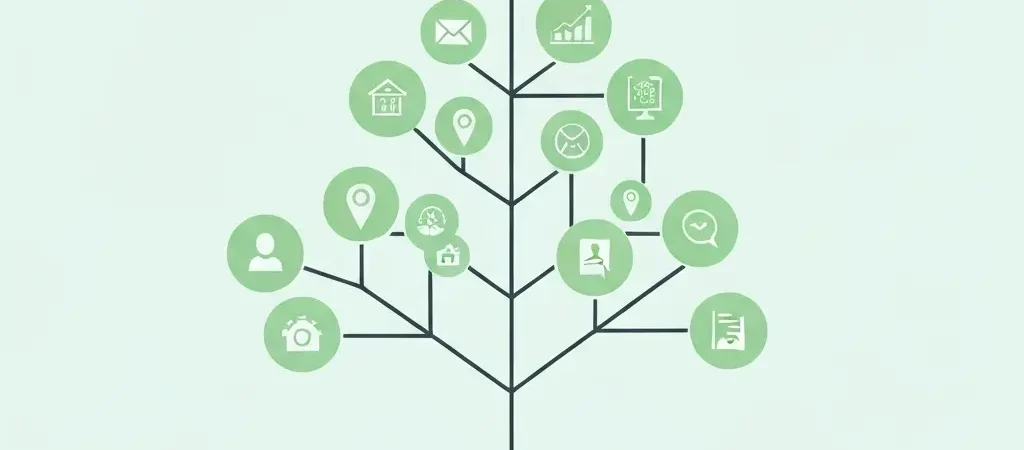
The internal linking architecture is what transforms a collection of articles into a topical authority cluster. The required structure:
- Pillar article links to every cluster article.
- Every cluster article links back to the pillar article.
- Every cluster article links to 2–3 related cluster articles.
- Supporting articles link to 1–2 relevant cluster articles.
With Authenova’s autoInternalLink feature enabled, this architecture is maintained automatically as new articles are published. For existing content, run an internal link audit using Screaming Frog and manually add missing links.
Step 6: Monitor Authority Growth
Time: 30 minutes per week
Track these metrics in Google Search Console and Ahrefs weekly:
- Time to rank for new articles: As topical authority grows, new articles should rank in the top 20 progressively faster. Benchmark your first article’s time to rank; compare with your 15th article.
- Average position for topic cluster: GSC > Performance > filter by your topic keywords. Track average position improvement over time.
- Total impressions in topic domain: Measures how many total search appearances your cluster receives. Should increase steadily each week.
- Topical coverage percentage: The percentage of your mapped topic keywords for which you have a published article. Aim for 80%+ within 3 months.
Expected Timeline
| Month | Articles Published | Expected Outcome |
|---|---|---|
| Month 1 | 8–12 | Indexing begins; long-tail articles start appearing in SERPs |
| Month 2 | 16–24 | Cluster articles rank for their target keywords; topical authority threshold reached |
| Month 3 | 24–36 | New articles rank faster; pillar page moves into top 20 |
| Month 6 | 48–72 | Strong topical authority; pillar page targeting top 10; new articles rank within 14 days |
Academic content platforms follow a similar authority-building curve. Tesify’s AI tools comparisons gain topical authority in the academic writing space through the same cluster publishing model — each article reinforcing the domain’s expertise signal for student researchers.
FAQ
How long does it take to build topical authority?
Publishing 2–3 articles per week, most domains see measurable topical authority signals within 60–90 days: faster time-to-rank for new articles, higher average positions within the topic, and increased total impressions. Full authority — where new articles rank in the top 10 within 2 weeks — typically takes 6–12 months of consistent publishing at 8–12 articles per month.
How many articles do I need for topical authority?
A minimum viable topical cluster requires 9–11 articles (1 pillar + 8–10 clusters). Measurable topical authority signals appear after 12–15 published articles on a focused topic. Full topical dominance requires 25–40 articles covering the pillar, all major subtopics, and key long-tail supporting articles. AI content automation makes reaching these milestones 4–5x faster than manual publishing.
Does AI content build topical authority as well as human content?
Yes. Topical authority is driven by content coverage breadth and internal linking structure — both of which AI content automation provides. AI content clusters build topical authority at 4–5x the speed of manual content because they enable consistent high-volume publishing. The per-article quality ceiling is slightly lower for AI content, but the volume and coverage advantages outweigh this for informational topic clusters.
What is the minimum publishing frequency to build topical authority?
The minimum effective publishing velocity for topical authority building is 2 articles per week (8/month). Below this, authority accumulates too slowly and competitors may outpace you on coverage. The optimal range is 3–5 articles per week (12–20/month) — fast enough to build authority quickly while maintaining editorial quality through weekly review.
Build Topical Authority Automatically
Authenova maps your topic cluster, generates pillar and cluster articles, injects internal links, and publishes on a schedule — building topical authority without manual effort. Get started today.