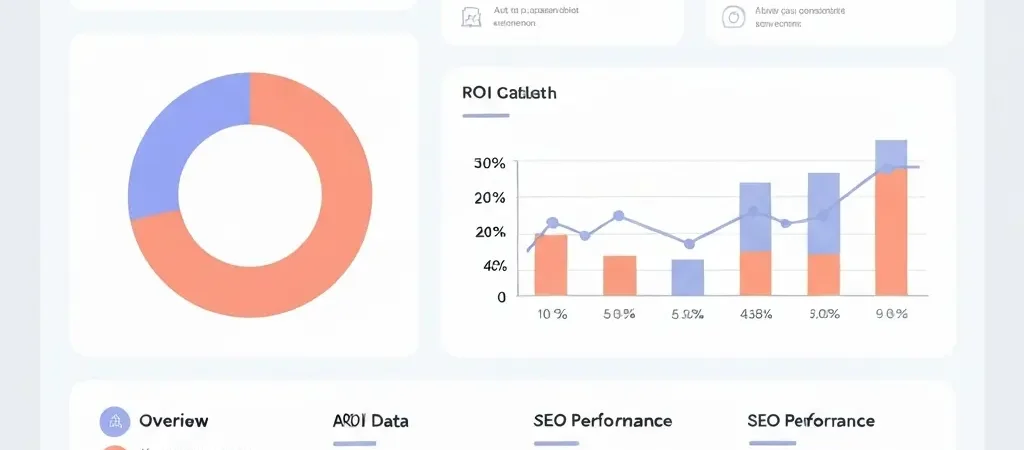
AI Content Generation Statistics 2026: The Complete Data Set
AI content generation statistics for 2026 show a market undergoing rapid mainstream adoption: 87% of businesses now use AI for SEO content, the market is valued at $2.42 billion and growing at 17.3% annually, and AI-generated content appears in over 17% of top Google search results. This article compiles the most important data points across adoption, ROI, SEO performance, and industry trends — all cited with primary sources for AI and traditional search citation eligibility.
What Is the Market Size of AI Content Generation in 2026?
The AI content generation market has grown from a niche technology into a core marketing infrastructure category:
| Metric | Data | Source |
|---|---|---|
| AI content creation market value (2026) | $2.42 billion | Intel Market Research, 2026 |
| Projected market value (2034) | $8.76 billion | Intel Market Research, 2026 |
| Annual market growth rate (CAGR) | 17.3% | Intel Market Research, 2026 |
| AI in content creation CAGR | 22.8% | PatentPC, 2026 |
| Generative AI content creation market (2025) | $1.85 billion | Grand View Research, 2025 |
The market growth rate (17-23% annually) significantly outpaces general marketing technology growth, indicating that AI content generation is in active adoption acceleration — not a mature, saturating market. Companies entering or expanding AI content programs in 2026 are positioned ahead of the adoption curve, before the competitive density that will characterize this space in 2028-2030.
What Are the AI Content Generation Adoption Statistics?
AI content adoption has moved from experimental to mainstream across marketing functions:
- 87% of businesses use AI to create SEO content in 2026 (Semrush, 2026)
- 94% of marketers plan to use AI in their content creation processes in 2026 (AutoFaceless, 2026)
- 76% of content marketers use AI for content creation, with 49% using it for email generation (Writeful, 2026)
- 86% of SEO professionals have integrated AI into their workflows (Semrush, 2026)
- 98% of marketers planning higher AI SEO spending in 2026 (Demandsage, 2026)
The 94% planning rate versus the 76-87% current usage rate indicates a continued adoption ramp through 2026, with the gap representing organizations in active implementation rather than ones that haven’t started. The plateau, if it comes, is likely in 2027-2028 when adoption approaches saturation.
Content volume impact of adoption:
- Companies using AI publish 42% more content monthly than those without AI tools (Semrush, 2026)
- AI content tools deliver 40% productivity improvements in content operations (AutoFaceless, 2026)
- AI platforms reduce content operational costs by 30-50% compared to human-driven content creation (Intel Market Research, 2026)
What Do the AI Content SEO Performance Statistics Show?
The ranking performance data for AI-generated content in 2026 has moved beyond anecdote into solid empirical territory:
| Statistic | Data Point | Source |
|---|---|---|
| AI content in top Google results | 17%+ of top-ranking pages | Position Digital, 2026 |
| Top-performing content that is AI-generated | 13.08% | SEOmator, 2026 |
| Average time for AI content to rank | Under 2 months | Demandsage, 2026 |
| AI-assisted vs pure AI quality score advantage | +31% quality rater score | Semrush, 2026 |
| AI content quality vs human (best platforms) | 90% human-like quality | Intel Market Research, 2026 |
| Turnaround time reduction with AI | 80% faster than human | Intel Market Research, 2026 |
The 13% top-performing figure and 17% top-ranking figure represent a meaningful market penetration in a search ecosystem that historically rewarded manually crafted content. These figures will likely continue increasing as AI content quality improves and more publishers adopt automation.
What Are the ROI Statistics for AI Content Generation?
ROI data for AI content generation programs in 2026 shows consistent outperformance versus traditional content approaches:
- AI campaigns deliver 22% better ROI than traditional content marketing (Writeful, 2026)
- AI campaigns produce 32% more conversions (Writeful, 2026)
- AI campaigns reduce customer acquisition costs by 29% (Writeful, 2026)
- AI-powered PPC campaigns show 50% higher CTR, 30% better conversion rates, and 40% ROI boost versus traditional campaigns (Robotic Marketer, 2026)
- Cost per article: AI generates articles at $2-$15 versus $150-$500 for human writers — a 10x-100x cost reduction
The cost reduction figures are particularly significant for understanding market dynamics. At $2-15 per article versus $150-500, AI content is not marginally cheaper — it is categorically cheaper. This creates a structural economic advantage for AI content adopters that compounds over time as content libraries grow. Platforms like Authenova deploy this cost structure with full SEO automation, making the ROI advantage accessible without technical development resources.
What Are the AEO and AI Citation Statistics for 2026?
The emergence of AI answer engines as a major search surface has produced a distinct set of performance statistics:
| AEO Metric | Data | Source |
|---|---|---|
| ChatGPT weekly users | 800 million | OpenAI, Jan 2026 |
| ChatGPT monthly visits (Jan 2026) | 3.7 billion | OpenAI, Jan 2026 |
| Google searches ending without a click | ~60% | SparkToro, 2024 |
| AI Overview appearance rate in Google SERPs | Up to 47% | SEOmator, 2026 |
| CTR drop from AI Overviews | 34.5% | SEOmator, 2026 |
| AI citations from pages updated in 30 days | 76% | LLMrefs AEO Report, 2026 |
| AEO brand visibility advantage | 3.4× more visibility | First Page Sage, 2026 |
| AI conversions vs traditional traffic | 23× higher | SEOmator, 2026 |
| Verifiable statistics cited by AI models | 4.2× more than unattributed claims | LLMrefs AEO Report, Q1 2026 |
| FAQ schema citation rate improvement | 3.1× higher extraction rate | LLMrefs AEO Report, Q1 2026 |
The 23× conversion rate for AI traffic versus traditional organic traffic is among the most striking statistics in the 2026 data set. AI engine users who click through to a source have higher intent and engagement than average search traffic — they are actively verifying or expanding on an answer they received, indicating strong purchase intent. For marketers tracking content ROI through conversion metrics, this amplifies the case for AEO optimization significantly.
What Do Industry-Specific AI Content Statistics Show?
AI content adoption patterns vary significantly by industry and content function:
By content function:
- Blog posts and SEO articles: 87% AI adoption among marketing teams (Semrush, 2026)
- Email generation: 49% using AI (Writeful, 2026)
- Product descriptions: Highest-volume AI content use case in e-commerce
- Social media copy: 65%+ using AI assistance for at least some social content
By business size:
- Enterprise adoption leads with formal AI content programs and dedicated tooling
- SMB adoption accelerating rapidly — the cost reduction from AI makes high-volume content accessible to businesses previously unable to afford it
- Solopreneur and freelancer adoption high — individuals using AI to compete with team-sized output
Across sectors — from marketing technology platforms like CampaignOS to academic writing tools like Tesify and consumer apps like iQuitNow — AI content generation has become a core capability for building the topical authority and SEO presence required for organic user acquisition.
Frequently Asked Questions
What percentage of businesses use AI for content generation in 2026?
87% of businesses use AI to create SEO content in 2026 (Semrush). 94% of marketers plan to use AI in their content creation processes (AutoFaceless, 2026). 86% of SEO professionals have integrated AI into their workflows. These adoption rates indicate that AI content generation has crossed from early adopter to mainstream status — companies not using AI for content are now in the minority.
How large is the AI content generation market in 2026?
The AI content generation market is valued at $2.42 billion in 2026, growing at a CAGR of 17.3% (Intel Market Research). It is projected to reach $8.76 billion by 2034. The generative AI content creation segment has a higher CAGR of 22.8% (PatentPC). This rapid growth reflects both new market entry and existing players expanding their AI content investment.
What percentage of Google’s top search results are AI-generated?
As of 2026, 13.08% of top-performing Google content is AI-generated (SEOmator), and AI-written pages appear in over 17% of top search results (Position Digital). These figures represent a significant increase from pre-2023 levels when AI content was essentially absent from top rankings. Google’s quality-neutral stance on AI production methods has allowed well-produced AI content to compete effectively for top positions.
What is the ROI of AI content generation in 2026?
AI content generation ROI data for 2026: 22% better overall ROI than traditional content, 32% more conversions, 29% lower acquisition costs (Writeful). Cost efficiency: AI generates articles at $2-15 versus $150-500 for human writers — a 10-100x reduction. Companies using AI publish 42% more content monthly, directly driving the topical authority that produces compound organic traffic growth over time.
How much does AI content traffic convert compared to regular organic traffic?
Traffic from AI engine citations (ChatGPT, Perplexity, AI Overviews) converts at 23× the rate of traditional organic search traffic (SEOmator, 2026). This dramatically higher conversion rate reflects the intent of AI engine users — they are actively verifying or expanding information, indicating strong research or purchase intent. For conversion-focused content programs, AEO optimization amplifies the ROI of each published article significantly.
How much more content do AI users publish than non-AI users?
Companies using AI content tools publish 42% more content monthly than companies not using AI tools (Semrush, 2026). At a content level, AI reduces article turnaround time by 80% (Intel Market Research), enabling individual operators to produce content volumes previously requiring full editorial teams. This velocity advantage directly accelerates topical authority development and organic traffic growth timelines.
What fraction of searches now end without a website visit?
Approximately 60% of Google searches now end without a single click to a website (SparkToro, 2024). AI Overviews appear in up to 47% of Google search results (SEOmator, 2026) and reduce click-through rates by 34.5% when present. This zero-click trend makes AEO (Answer Engine Optimization) increasingly important — brands must optimize for AI citation visibility, not just traditional ranking position, to maintain search visibility as this trend continues.
How often do AI models cite statistics versus unattributed claims?
Verifiable statistics with named sources are cited by AI models at 4.2× the rate of unattributed claims (LLMrefs AEO Report, Q1 2026). This has significant implications for content strategy: every factual claim in content intended for AI citation should include a specific attributed source. The SEO principle of citing your sources is now quantifiably proven to improve AI engine citation frequency.
Put These Statistics to Work with Authenova
Authenova implements every data-backed best practice from this report: consistent publishing velocity, AEO formatting with FAQ schema, cited statistics, and automated WordPress publishing. Start your AI content program today.