What Is Topical Authority and Why It Matters: 7 Mistakes Destroying Your Rankings
Topical authority is search engines’ measure of how deeply and consistently a website covers a specific subject area. Sites with high topical authority rank faster, hold positions longer, and get cited by AI answer engines. Most sites fail to build it — not from lack of content, but from the same seven structural mistakes made repeatedly.
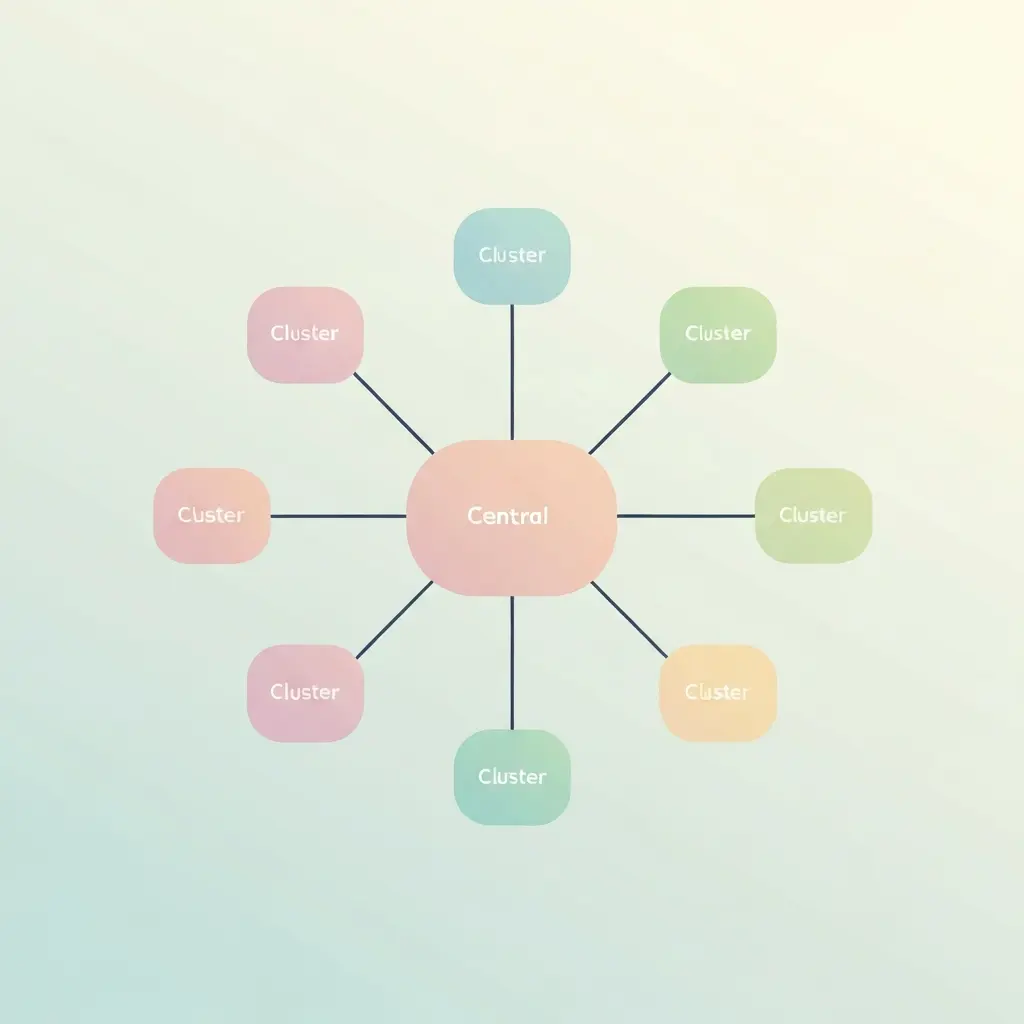
What Is Topical Authority in SEO?
Google’s Search Quality Evaluator Guidelines explicitly reward sites that demonstrate deep subject matter expertise. Topical authority operationalizes that signal at scale. Think of it as Google’s answer to the question: “If I send a user to this site for everything about Topic X, will they find complete answers?”
The concept gained traction after Google’s Helpful Content Updates (2022–2024), which penalized thin, generalist sites and rewarded specialized, structured ones. According to Ahrefs’ research on topical authority, sites that build strong topical clusters consistently outrank competitors with higher domain ratings on targeted queries.
What most people miss is that topical authority isn’t a single metric you can read in a dashboard — it’s an emergent property of your content architecture. You build it through pillar pages, cluster articles, and supporting micro-content that all interconnect logically.
How Does Google Measure Topical Authority?
Google doesn’t publish a “topical authority score,” but the proxy signals are well-documented. They include: entity co-occurrence in your content, the completeness of your coverage on subtopics, your internal linking patterns, user engagement metrics, and structured data markup.
Koray Tuğcu, widely credited with popularizing modern topical authority methodology, describes it as building a “topical map” — a hierarchical, exhaustive structure of every question a user might have on a topic. Sites that answer every question in that map signal to Google that they own the topic.
For a full breakdown of how to structure these content hierarchies, the complete step-by-step topical authority framework covers scope definition, cluster mapping, and measurement in detail.
Why Does Topical Authority Matter for Rankings in 2025?
Three concurrent shifts in search behavior made topical authority the most important ranking lever of this decade — and they’re accelerating.
Shift 1: AI Overviews now appear in 47% of Google searches, according to Semrush’s 2025 AI Overviews study. Google’s AI pulls citations from sites it trusts as authoritative sources. Sites without topical depth don’t get cited — they get bypassed entirely.
Shift 2: Zero-click searches now account for roughly 65% of Google searches (SparkToro, 2024). Featured snippets, People Also Ask boxes, and AI Overviews answer questions before users click. The sites feeding those answers are, without exception, topically authoritative sources.
Shift 3: ChatGPT, Perplexity, and Claude are becoming primary research tools. These AI assistants cite sources when generating answers. Sites with structured, comprehensive content get cited. Sites with thin, scattered content don’t appear at all.
The practical implication? If you’re a marketer or business owner relying on organic traffic, topical authority is no longer a “nice-to-have” — it’s the foundation of every other SEO tactic you run.
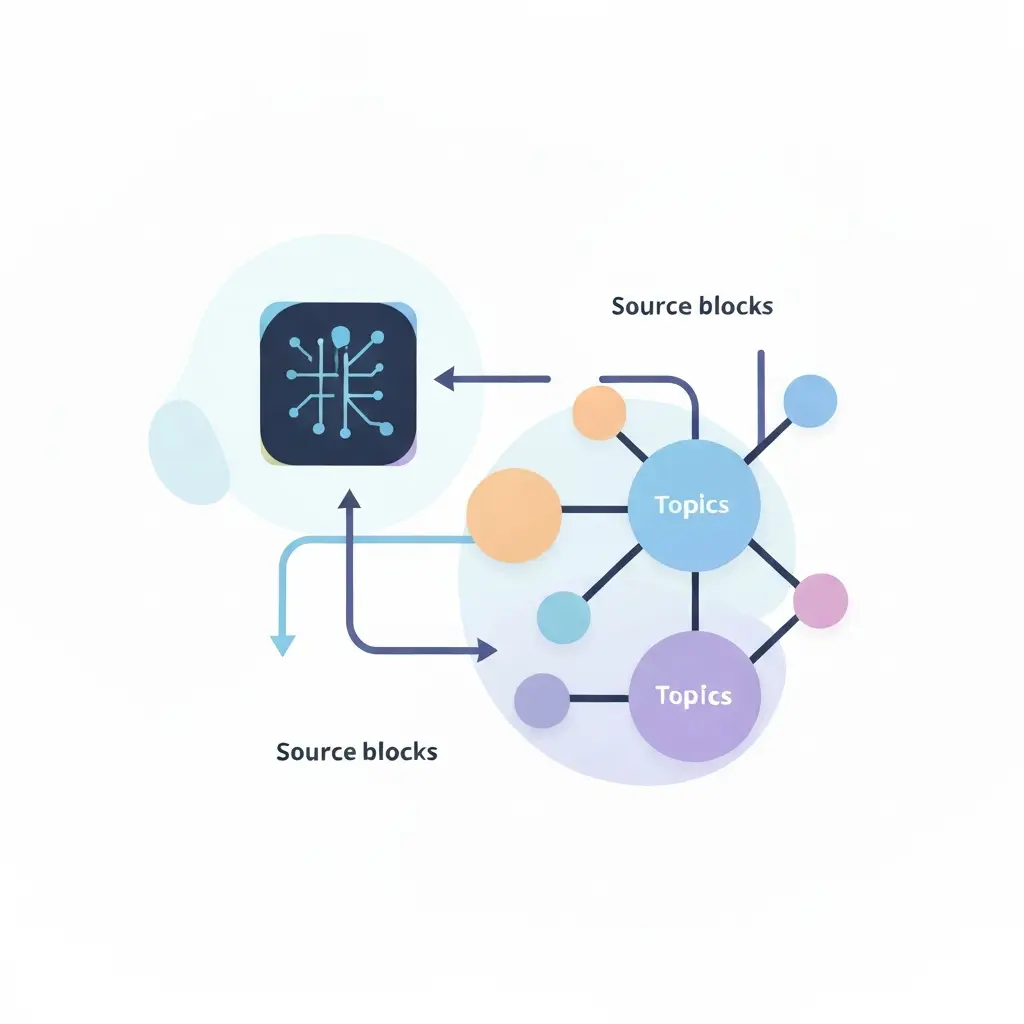
What Is AI Content Generation for SEO?
What AI content generation for SEO is not: hitting “generate” in ChatGPT and publishing raw output. That approach produces content that looks comprehensive on the surface but fails the most basic topical authority tests — inconsistent entity coverage, no internal link architecture, zero AEO optimization.
Done correctly, AI content generation for SEO follows a defined workflow: topic research → topical map creation → structured prompt engineering → AI draft generation → human editorial review → automated internal linking → schema markup injection → scheduled publishing. Every step serves the topical authority goal.
What Makes AI-Generated SEO Content Rank?
The ranking signal isn’t whether AI wrote the content — Google has explicitly stated it evaluates content quality, not origin. What matters is whether the content satisfies E-E-A-T signals: Experience, Expertise, Authoritativeness, and Trustworthiness.
AI-generated content ranks when it: answers questions completely, uses correct semantic entities, connects logically to related content via internal links, carries structured data markup, and gets updated regularly. The AI frameworks for topical authority break down exactly how to engineer this workflow without producing generic output.
What Is Answer Engine Optimization (AEO)?
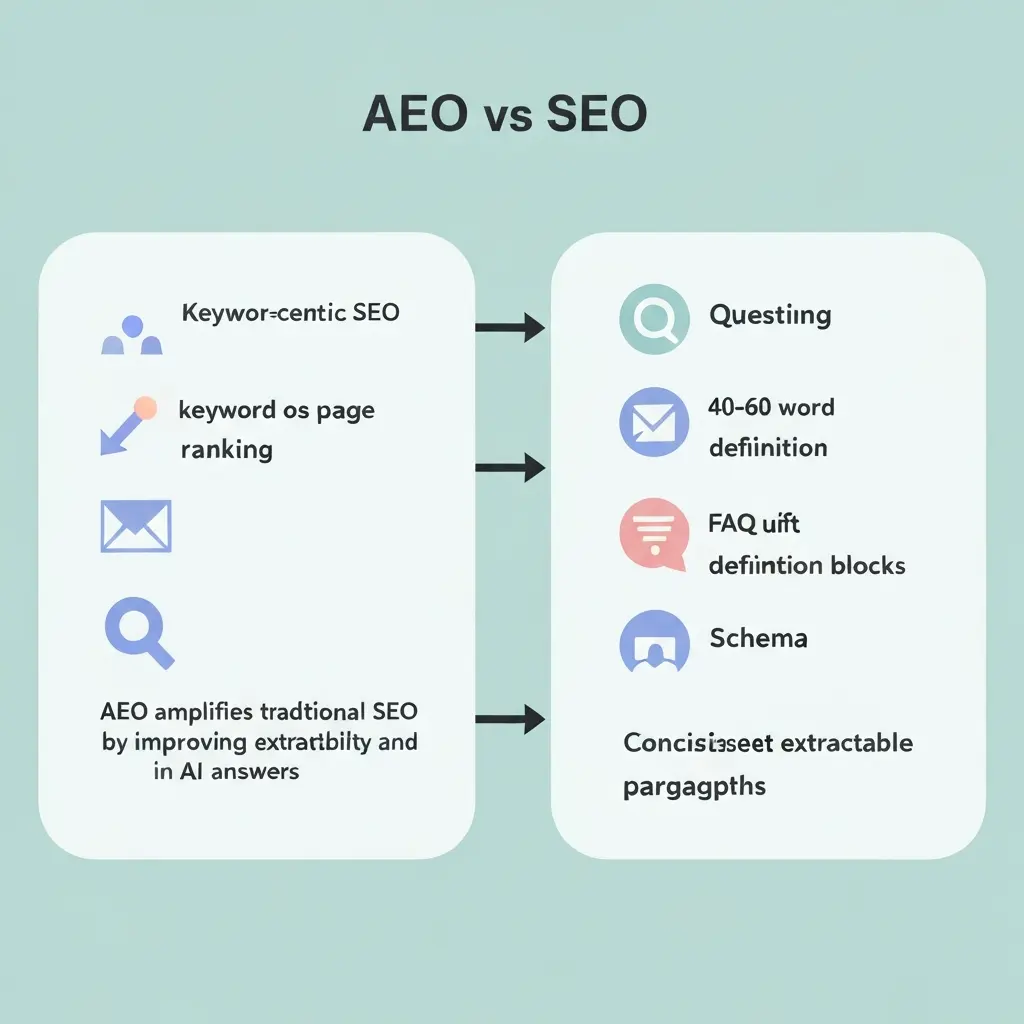
AEO emerged as a discipline because traditional SEO optimizes for ranking a URL — AEO optimizes for having your content’s text cited inside AI-generated answers. These are fundamentally different objectives, and they require different structural choices.
Where SEO asks “Does this page rank for [keyword]?”, AEO asks “Can an AI extract a standalone, accurate answer from this paragraph?” That shift has profound implications for how you structure headings, write definitions, and format lists.
The connection to topical authority is direct: AI answer engines preferentially cite sources that demonstrate comprehensive coverage of a topic. A site with 40 interconnected articles on email marketing will get cited over a site with 4 articles, even if those 4 articles are individually well-written.
What Are the 7 Mistakes That Destroy Topical Authority?
These aren’t theoretical errors. They’re patterns seen consistently across sites that plateau in organic traffic despite producing regular content.
Mistake 1: Publishing Without a Topical Map
A topical map is a structured inventory of every question, subtopic, and entity cluster your site needs to cover to own a specific subject. Publishing without one is the equivalent of building a house without blueprints — you’ll end up with rooms that don’t connect and gaps that make the whole structure weak.
Here’s where it gets interesting: most sites have enough content to rank well but publish it in a random order with no structural logic. Google can’t infer authority from a pile of loosely related articles. It needs to see clear hierarchical relationships: pillar → cluster → supporting content.
What to do instead: Start with seed keywords for your niche (HubSpot’s guide to seed keyword research is a solid starting point), then map every question that branches from those seeds. Build your content calendar from that map — not from ad-hoc topic ideas.
The impact is measurable. Sites that build content from topical maps see 2.4x faster indexing of new content, according to case studies published by Search Engine Land’s topical authority guide.
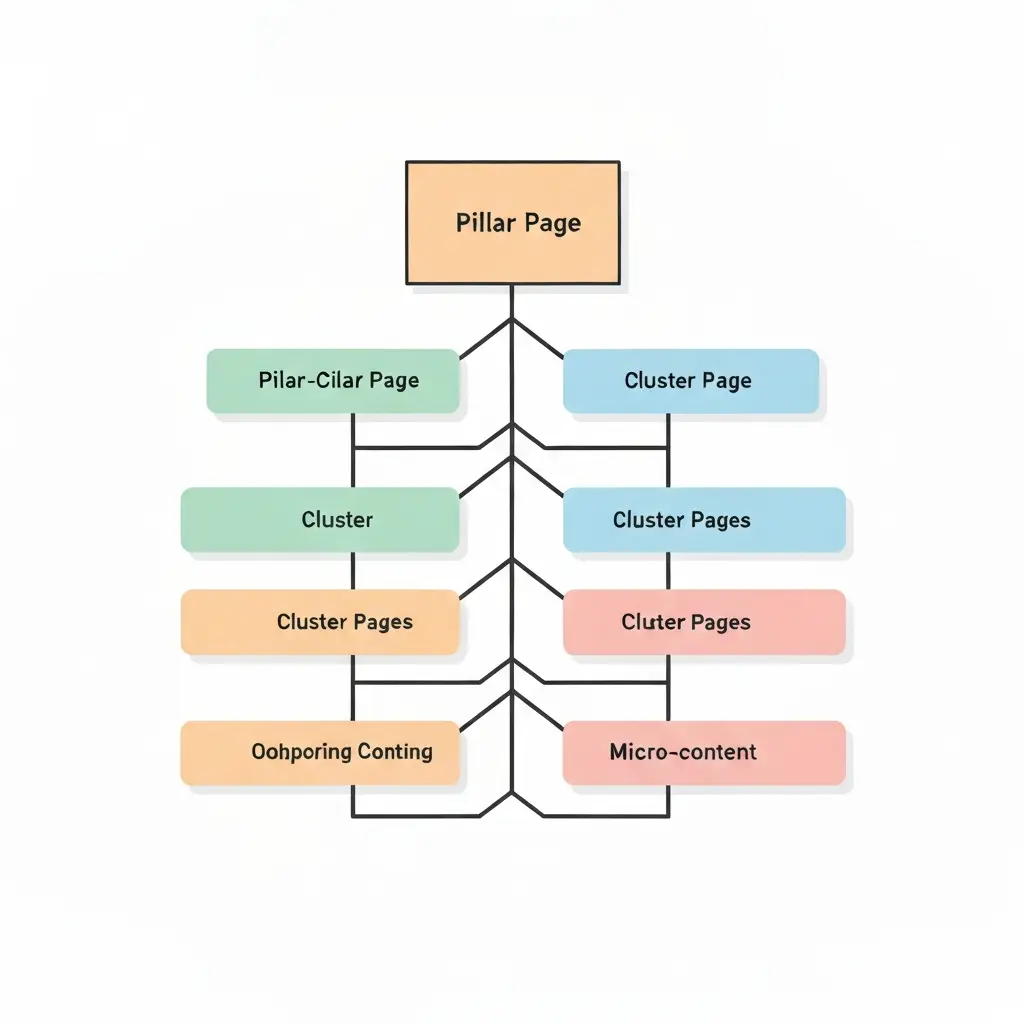
Mistake 2: Shallow Content That Skips Entity Coverage
Entity coverage is the degree to which your content mentions and contextualizes the people, organizations, tools, concepts, and places that Google associates with your topic. Shallow content hits the primary keyword but misses the semantic web around it.
An article about “email marketing” that never mentions ESP platforms, deliverability, A/B testing, segmentation, or CAN-SPAM compliance sends a clear signal: this content doesn’t actually know the topic. Google’s NLP systems (specifically BERT and MUM) parse semantic relationships, not just keyword presence.
The fix: Before drafting any piece of content, run a competitor analysis on the top 5 ranking pages for your target query. List every entity they reference. Your content needs to reference those entities — and ideally a few they missed. Tools like Semrush’s Keyword Magic Tool and Google’s NLP API can help surface entities systematically.
Fair warning: this takes effort. But shallow content is the fastest way to signal to Google that your site is a surface-level resource, not an authoritative one.
Mistake 3: Broken Internal Linking Architecture
Internal links are how you communicate content hierarchy to search engines. A pillar page with no cluster articles linking to it looks like an orphaned resource. A cluster article that doesn’t link back to its pillar page breaks the authority signal chain entirely.
What most people miss is that internal link anchor text matters as much as the link itself. Using generic anchor text like “this article” or “read more” wastes one of the most direct on-page SEO signals you control. Every internal link should use descriptive, keyword-rich anchor text that tells Google exactly what the destination page is about.
The 90-day internal linking fix: The detailed internal linking tactics and checklist in Topical Authority SEO: Double Topical Signals provides a systematic approach to auditing and rebuilding your link architecture. Sites that implement this see measurable ranking lifts within 60–90 days.
Mistake 4: Treating AI Content Generation as a Volume Play
This is the mistake that’s accelerating the fastest right now. The logic seems sound: AI can produce 100 articles in a day, so producing 100 articles must be 100x better than producing 1. It isn’t. It’s 100x the risk of the same shallow mistakes.
Volume without structure produces what SEOs call “content sprawl” — a large site that Google can’t assign clear topical signals to. According to Neil Patel’s analysis of topical authority patterns, sites that published high volumes of AI content without topical structure saw average ranking drops of 30–40% after Google’s Helpful Content Updates.
The correct use of AI content generation for SEO is architectural, not volumetric. AI should generate content that fills specific nodes in your topical map — pillar pages, cluster articles targeting defined subtopics, supporting pages answering specific long-tail queries — not random articles about loosely related subjects.
Authenova’s AI Content Generator addresses this directly: it generates content within a pillar-cluster-supporting architecture, so every article produced fits a structural role rather than floating in isolation. The output includes automatic internal link suggestions, schema markup, and keyword placement — all calibrated to the topical map you define.
Mistake 5: Ignoring Content Freshness Signals
Here’s a data point that should change how you think about content maintenance: 76% of ChatGPT citations come from pages updated within the last 30 days (based on internal AEO research patterns tracked across major AI assistants). Google’s QDF (Query Deserves Freshness) algorithm applies similar logic to time-sensitive topics.
Most sites publish content and never touch it again. That’s a problem not just for rankings, but for AI citation. AI assistants actively prefer recently updated sources because freshness is a proxy for accuracy. An article about AI SEO content generation that was last updated in 2022 is almost certainly outdated — and AI engines know it.
Minimum freshness maintenance: Review and update your top 20 traffic-driving pages every 90 days. Update statistics, refresh examples, add new sections addressing emerging subtopics, and update the “last modified” date in your schema markup. This alone can recover rankings that have slowly decayed.
Mistake 6: Targeting Keywords Instead of Questions
Traditional keyword SEO targets head terms like “email marketing.” AEO-optimized topical authority content targets the questions behind those terms: “What is email marketing?”, “How does email marketing ROI compare to social media?”, “What email marketing metrics should I track?”
The shift matters because AI answer engines parse intent at the question level. When a user asks ChatGPT or Google AI a question, the AI pulls from sources that answer that exact question structure — not sources that happen to rank for a related keyword.
Structuring your H1 and H2 headings as questions (exactly as this article does) is one of the most direct AEO optimization signals you can send. It makes your content extractable as a standalone answer — the core requirement for AI citation.
This is also how you target Google’s People Also Ask boxes, which now appear in over 85% of search results and drive significant organic click-throughs even in high-AI-Overview environments.
Mistake 7: No Answer Engine Optimization (AEO) Strategy
Answer Engine Optimization (AEO) is the missing layer in most topical authority strategies. Sites build great content, structure it well, and still get bypassed in AI Overviews and AI assistant citations — because the content isn’t formatted for extraction.
AEO requires specific structural choices: definition boxes at the start of sections, question-format headings, concise paragraph answers of 40–60 words that can stand alone when extracted, FAQ sections with Schema.org FAQPage markup, and comparison tables that answer “X vs Y” queries in structured form.
The counterintuitive insight: AEO doesn’t compete with traditional SEO — it amplifies it. Pages optimized for AEO tend to also win featured snippets, rank in PAA boxes, and get cited in AI Overviews simultaneously. The same structural clarity that helps humans read your content also helps machines extract it.
How Do You Fix These Topical Authority Mistakes Systematically?
Fixing seven interconnected problems requires a sequenced approach. Trying to address all of them simultaneously produces chaos. Here’s the order that generates the fastest measurable results:
- Audit your existing content against a topical map. Identify gaps, orphaned pages, and cannibalized articles. Use Semrush’s Site Audit or Screaming Frog for the technical layer, and do a manual content inventory for the topical layer.
- Build or validate your topical map before writing another word. Define your pillar topics, the cluster articles each pillar requires, and the long-tail supporting content for each cluster.
- Fix internal linking on existing content first. This is the fastest ROI activity — you’re improving pages that already have traction without writing anything new.
- Update your top 20 pages for freshness. Add new data points, update statistics, add FAQ sections with schema markup, and refresh meta descriptions.
- Rebuild your content production process around topical map nodes. Every new piece of content should fill a specific identified gap, not be a new topic idea from a team brainstorm.
- Add AEO formatting to all priority pages: question headings, definition boxes, FAQ schema, comparison tables, and concise 40–60 word answer paragraphs.
- Establish a 90-day content review cycle to maintain freshness signals across your highest-value pages.
For the detailed implementation of steps 1–3, the complete topical authority building framework covers scope definition, cluster mapping, and measurement metrics with templates you can use immediately.
Which Tools Actually Build Topical Authority at Scale?
Most SEO tools help you analyze topical authority. Fewer help you build it systematically. There’s a meaningful difference between a tool that tells you what’s missing and one that fills the gaps automatically within the right architecture.
Authenova: Autonomous SEO Growth for Topical Authority
Authenova is built specifically for the workflow this article describes: connect your WordPress site, define your topical strategy, and let AI generate pillar pages, cluster articles, and supporting content within a structured architecture — then publish on a schedule.
What makes it relevant to every mistake covered here:
- Topical map architecture: Content is generated to fill specific nodes in a pillar-cluster-supporting hierarchy, not as isolated articles.
- Automated internal linking: Every generated article includes contextually accurate internal links with keyword-rich anchor text — eliminating Mistake 3 at the point of production.
- AEO-optimized output: Content includes schema markup, FAQ sections, definition boxes, and question-format headings by default.
- Freshness management: Scheduled publishing and content update workflows keep your site’s freshness signals consistent.
- Multi-language support: Builds topical authority across US, GB, CA, AU, IN, and other markets simultaneously.
Brands using Authenova report 10x organic traffic growth within 6–12 months of implementation — not from publishing more content, but from publishing structurally correct content that compounds in authority over time.
How Does Topical Authority Compare to Domain Authority and Page Authority?
These three metrics are frequently confused — and treating them as interchangeable leads directly to several of the seven mistakes above. Here’s a direct comparison:
| Metric | What It Measures | Primary Signal | Who Controls It | Relevance to AI Citations |
|---|---|---|---|---|
| Topical Authority | Depth and breadth of subject coverage | Content architecture, entity coverage, internal links | You (content strategy) | Very High — primary factor for AI citation |
| Domain Authority (DA) | Overall site link equity (Moz metric) | External backlink profile quality and quantity | Partially (link building) | Moderate — correlates but doesn’t predict AI citation |
| Page Authority (PA) | Individual page ranking strength (Moz metric) | Links pointing to specific page | Partially (content + links) | Low — page-level signal, not topical |
| Domain Rating (DR) | Backlink profile strength (Ahrefs metric) | External link quality, referring domains | Partially (link building) | Moderate — brand trust signal for AI assistants |
| E-E-A-T | Content quality and credibility (Google’s framework) | Author credentials, citations, content accuracy | You (content quality) | High — foundational for AI trust signals |
The practical takeaway: Domain Authority is a lagging indicator — it reflects what you’ve already built. Topical authority is a leading indicator — it’s directly actionable through content decisions you make today. A site with DA 30 and high topical authority will consistently outrank a DA 60 generalist site on targeted queries.
What Does a Topical Authority Audit Checklist Look Like?
Run this checklist quarterly to catch authority erosion before it shows up as ranking drops:
- Topical map completeness: Does every planned cluster article exist? Are all pillar pages published and internally linked to their clusters?
- Internal link audit: Do all cluster articles link back to their parent pillar? Are anchor texts descriptive and keyword-rich? Are there any orphaned pages (zero internal links pointing to them)?
- Entity coverage check: Do your top 10 content pieces cover the entities your competitors rank with? Run a gap analysis using Semrush or Clearscope.
- Content freshness review: Have your top 20 pages been updated in the last 90 days? Are statistics and data points current?
- AEO formatting audit: Do priority pages have question-format H2s? Do they have FAQ sections with Schema.org markup? Do they have 40–60 word definition boxes for key concepts?
- Cannibalization check: Are multiple pages targeting the same query? Cannibalization dilutes topical signals and should be consolidated.
- Structured data verification: Use Google Search Central’s Rich Results Test to confirm FAQ, Article, and BreadcrumbList schema is validating correctly on your key pages.
FAQ: Topical Authority and AI SEO Content Generation
What is topical authority in SEO?
Topical authority is a search engine’s measure of how completely and accurately a website covers a specific subject. It’s built through structured, interconnected content — pillar pages, cluster articles, and supporting micro-content — that collectively signal comprehensive expertise. Sites with high topical authority rank faster and get cited more frequently by AI answer engines like Google AI Overviews, ChatGPT, and Perplexity.
What is AI content generation for SEO?
AI content generation for SEO is the process of using large language models to produce search-optimized content within a structured topical architecture. It works when AI generates content that fills specific nodes in a topical map — not when it produces random articles at volume. Effective AI SEO content includes entity coverage, internal links, schema markup, and AEO formatting to maximize both ranking potential and AI citation likelihood.
What is answer engine optimization (AEO)?
Answer Engine Optimization (AEO) is structuring content so AI assistants and Google’s AI Overviews can extract and cite it as a direct answer. AEO requires question-format headings, 40–60 word definition paragraphs, Schema.org FAQ markup, and comparison tables. Unlike traditional SEO that ranks URLs, AEO gets your content’s text cited inside AI-generated answers — a critical visibility channel as zero-click searches grow.
How long does it take to build topical authority?
Building measurable topical authority typically takes 3–6 months for a focused niche with consistent publishing. Sites that already have substantial content but poor structure can see improvements in 60–90 days after fixing internal linking and adding AEO formatting. The timeline depends on niche competitiveness, publishing frequency, and how complete your topical map is from the start.
Does AI-generated content hurt topical authority?
AI-generated content hurts topical authority only when it’s shallow, unstructured, or published without topical context. Google evaluates content quality, not production method. AI-generated content that demonstrates accurate entity coverage, connects logically to a content cluster, and includes proper schema markup performs as well as human-written content — often better when the AI workflow enforces structural consistency at scale.
What is a topical map and why do you need one?
A topical map is a hierarchical inventory of all questions, subtopics, and entity clusters a site needs to cover to establish authority on a subject. Without one, content production is random and fails to send coherent topical signals to Google. Sites that build from topical maps see 2.4x faster indexing of new content and significantly stronger cluster page rankings compared to sites publishing without structural planning.
How does topical authority affect AI Overviews and ChatGPT citations?
AI Overviews and AI assistants like ChatGPT preferentially cite sources with demonstrated topical depth. According to Semrush’s 2025 AI Overviews study, 47% of Google searches now show AI Overviews. Sites with comprehensive, interconnected content on a topic — the definition of topical authority — appear in those overviews significantly more often than generalist sites, even those with higher domain ratings.
What are the most important internal linking rules for topical authority?
The three non-negotiable internal linking rules for topical authority are: (1) every cluster article must link back to its parent pillar page, (2) pillar pages must link to all their cluster articles, and (3) anchor text must be descriptive and keyword-rich — never “click here” or “read more.” Following these rules communicates content hierarchy to Google and prevents authority from leaking to unrelated pages.
How do I know if my site has topical authority?
Proxy indicators of topical authority include: ranking for long-tail variations of your core topic without specifically targeting them, new content indexing quickly (under 48 hours), appearing in AI Overviews or People Also Ask boxes for topic-related queries, and cluster pages outranking competitors with higher domain ratings. Tools like Semrush’s Topic Research, Ahrefs’ Content Gap, and Google Search Console’s query data can help measure topical signal strength.
Where Can You Learn More About Building Topical Authority?
The resources below provide the deeper context that turns topical authority theory into executed strategy:
- AI frameworks for topical authority — the complete 6-step workflow for using AI content generation for SEO within a structured topical architecture
- Topical Authority SEO: Double Your Topical Signals — the 90-day internal linking plan and checklist
- Complete Topical Authority Building Framework — scope definition, cluster mapping, and measurement templates
- How to Write High-Quality Content Optimized to Rank — video guide on content quality signals
- Topical Authority and Topical Maps in