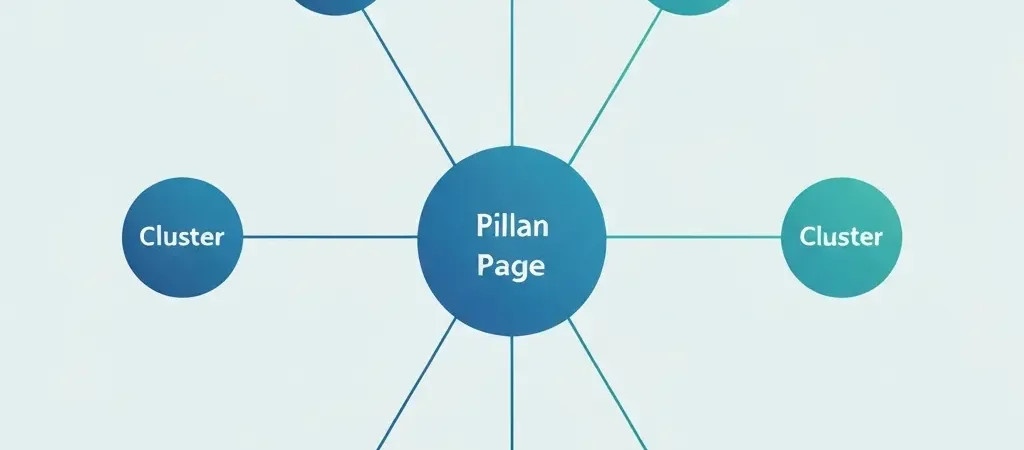
What Is a Content Cluster Strategy?
A content cluster strategy organizes your website’s content around core topics using a hub-and-spoke model. A single pillar page covers a broad topic comprehensively, while cluster pages dive deep into specific subtopics — all interlinked to signal topical authority to search engines.
In 2026, Google’s algorithms increasingly reward websites that demonstrate deep expertise on a topic rather than those that publish isolated, disconnected articles. A well-executed content cluster strategy is how you prove that expertise at scale.
Platforms like Authenova have made this strategy accessible to teams of any size, automating the creation and interlinking of cluster content across entire topic maps. Sites like Tesify used this exact approach to dominate academic writing keywords across six languages — from English to Spanish, French, German, and Portuguese.
Why Content Clusters Work Better Than Random Publishing
Traditional SEO advice suggested targeting one keyword per page and building backlinks. That worked in 2015. In 2026, search engines evaluate your entire domain’s coverage of a topic before deciding whether to rank any single page.
The Topical Authority Signal
When Google sees 15-20 interlinked pages covering every angle of “content strategy,” it trusts your site more than a competitor with a single comprehensive guide. This is topical authority — and content clusters are the most efficient way to build it.
Internal Link Equity Distribution
Content clusters create a natural internal linking structure. The pillar page accumulates authority from all cluster pages linking to it, while cluster pages benefit from the pillar’s strength. This creates a rising-tide effect where every page in the cluster performs better.
User Journey Optimization
Clusters map naturally to how people research topics. A visitor who lands on your cluster page about “content brief templates” can easily navigate to your pillar page about “content strategy” and then explore other clusters about “editorial calendars” or “content measurement.” This reduces bounce rates and increases time on site — both ranking factors.
Anatomy of a Perfect Content Cluster in 2026
The Pillar Page
Your pillar page is the comprehensive hub. It should:
- Cover the broad topic in 3,000-5,000 words
- Include a table of contents with jump links
- Link to every cluster page with descriptive anchor text
- Target a high-volume, competitive head keyword
- Provide genuine value as a standalone resource
- Include FAQ schema markup for featured snippet opportunities
Cluster Pages
Each cluster page dives deep into a specific subtopic. Effective cluster pages:
- Target a specific long-tail keyword related to the pillar topic
- Run 1,500-2,500 words with focused depth
- Link back to the pillar page (mandatory) and to 2-3 related cluster pages
- Answer a specific question or solve a specific problem
- Include unique data, examples, or case studies not found on the pillar
Supporting Content
Supporting pages fill gaps and capture long-tail traffic:
- FAQ roundups, glossaries, tool comparisons
- Typically 800-1,500 words
- Link to the most relevant cluster page and the pillar
- Target very specific, low-competition queries
How to Build a Content Cluster: Step-by-Step
Step 1: Choose Your Pillar Topic
Start with a topic broad enough to generate 10-20 subtopics but specific enough to represent a single area of expertise. Use keyword research tools to find topics with:
- Monthly search volume above 2,000
- Multiple related long-tail keywords
- Clear subtopic branches
- Commercial or informational intent that matches your goals
Step 2: Map Your Subtopics
For each pillar topic, brainstorm every question someone might ask. Use tools like Google’s “People Also Ask,” Answer the Public, and keyword research platforms. Group related questions into clusters — each cluster becomes a page.
Step 3: Audit Existing Content
Before creating new pages, check what you already have. You may find existing articles that can be updated and linked into the cluster. This is faster than starting from scratch and preserves any existing rankings.
Step 4: Create a Publishing Schedule
Don’t try to publish an entire cluster at once. A realistic schedule might look like:
- Week 1: Publish the pillar page
- Weeks 2-4: Publish 2-3 cluster pages per week
- Weeks 5-6: Add supporting content and optimize internal links
Step 5: Interlink Strategically
Every cluster page links to the pillar. The pillar links to every cluster page. Cluster pages link to 2-3 siblings where contextually relevant. Use descriptive anchor text — never “click here.”
Health content sites like iQuitNow.life demonstrate this beautifully, with pillar pages on quit smoking methods linking to clusters about withdrawal timelines, craving management, and health recovery — each reinforcing the site’s authority on smoking cessation.
Step 6: Measure and Iterate
Track cluster performance as a unit, not just individual pages. Monitor:
- Total organic traffic to the cluster
- Average position of cluster keywords
- Internal click-through rates between pages
- Conversion rates from cluster entry points
Content Cluster Mistakes to Avoid
Keyword Cannibalization
The most common cluster mistake is having multiple pages target the same keyword. Each page in your cluster should target a distinct keyword with minimal overlap. If two pages compete for the same query, consolidate them.
Weak Internal Linking
Creating cluster content without proper interlinking defeats the purpose. Every cluster page must link to the pillar, and the pillar must link to every cluster page. Missing links break the authority flow.
Pillar Pages That Are Too Thin
A pillar page that merely lists subtopics with one paragraph each provides no standalone value. Your pillar should be genuinely useful even if a reader never clicks through to cluster pages.
Ignoring Search Intent
Not every subtopic deserves a full article. Some are better served by a section within the pillar page. Match your content format to search intent — if Google shows listicles for a query, write a listicle, not a deep-dive guide.
Advanced Cluster Strategies for 2026
Multi-Language Clusters
If you serve international audiences, replicate your cluster structure across languages. Each language version should follow the same pillar-cluster-supporting hierarchy but with locally relevant examples and keywords. Tools like CampaignOS can automate multi-channel distribution for these multilingual clusters.
Dynamic Cluster Expansion
Use search console data to identify new queries your cluster pages rank for on page 2-3. Create new supporting content targeting those specific queries and link them into the existing cluster. This compound growth effect accelerates over time.
AI-Powered Cluster Building
Modern AI content platforms can analyze your keyword map and automatically generate cluster content that maintains topical coherence. The key is ensuring each piece adds unique value and isn’t just a rephrased version of other cluster pages.
Measuring Content Cluster ROI
Track these metrics to prove your cluster strategy works:
- Cluster traffic growth: Total organic sessions across all pages in the cluster, measured monthly
- Keyword coverage: Percentage of target keywords with a page ranking in the top 20
- Average position improvement: Track how the pillar page’s ranking improves as you add cluster content
- Revenue attribution: If you can, tie conversions to cluster entry points to measure direct business impact
Frequently Asked Questions
How many cluster pages do I need?
Most effective clusters have 8-15 cluster pages plus 5-10 supporting pages. Start with 10 and expand based on keyword opportunities and performance data.
How long does it take for a content cluster to rank?
Expect 3-6 months for a well-built cluster to gain meaningful traction. The pillar page often starts ranking first, with cluster pages following as internal link equity builds.
Can I build clusters on an existing site with random content?
Yes. Audit your existing content, reorganize it into clusters by updating internal links and filling gaps with new pages. This often produces faster results than building from scratch because existing pages may already have some authority.
Should every page on my site belong to a cluster?
Not necessarily. Legal pages, about pages, and conversion pages serve different purposes. But all your informational and educational content should be organized into clusters.
What is the difference between a content cluster and a topic cluster?
They are the same thing. “Content cluster” and “topic cluster” are used interchangeably in SEO. Both describe the pillar-cluster-supporting content architecture designed to build topical authority.