Pillar Cluster Content Strategy: The Ultimate 2026 Guide to Building Topical Authority
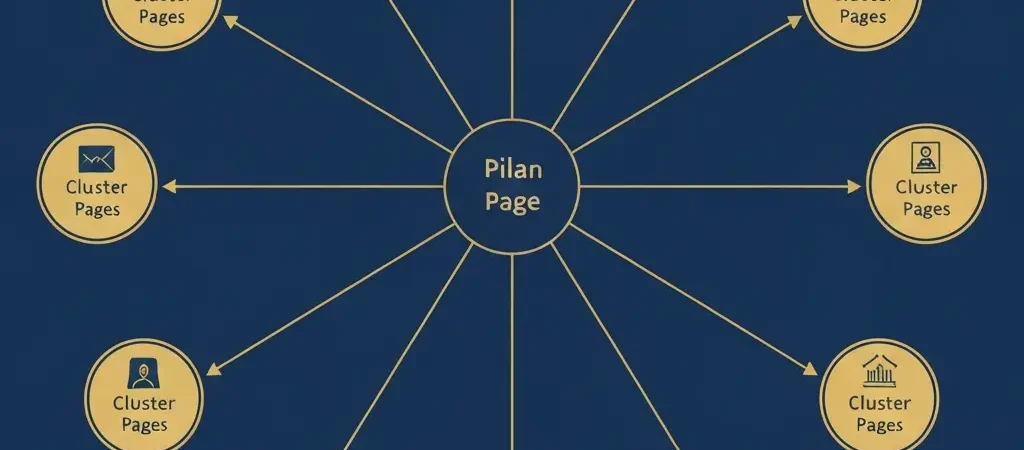
The pillar cluster content strategy is the most impactful SEO framework available to content teams in 2026. Originally popularized by HubSpot, it has since been refined and validated by thousands of sites across every niche. The core insight is simple but profound: Google doesn’t just evaluate individual pages — it evaluates your entire site’s expertise on a topic. Pillar-cluster architecture is how you make that expertise visible.
This guide goes beyond explaining what pillar-cluster is — you can find that in a 5-minute Google search. What this covers is the complete operational playbook: how to design your architecture for your specific niche, how to build it efficiently using AI tools, how to maintain it as your content library grows, and how to measure whether it’s working. This is the guide the SEO practitioners writing for each other actually want to read.
Why Pillar-Cluster Works: The Google Perspective
To understand why pillar-cluster works, you need to understand how Google evaluates sites. Google’s systems don’t just read individual pages — they analyze the relationships between pages. A well-connected cluster of 50 articles on “email marketing” creates a much stronger topical signal than 50 unrelated articles on 50 different topics, even if the individual articles are identical in quality.
Three Google systems respond to pillar-cluster architecture:
Knowledge Graph Integration
Google maintains a knowledge graph of entities and their relationships. Sites that produce content organized around clear entity relationships (email marketing → email segmentation → behavioral triggers) align with how Google models knowledge — making it easier for Google to categorize and rank that content accurately.
PageRank Distribution
Internal links pass PageRank (ranking authority) between pages. A pillar-cluster architecture concentrates authority at the pillar page through multiple inbound internal links from cluster articles. This is why pillar pages tend to rank for broad, competitive keywords even when the individual article might not be “better” than competitors — it’s accumulating authority from the entire cluster.
User Behavior Signals
When visitors from a pillar page click through to cluster articles (and vice versa), Google sees extended engagement with your site on the topic. This engagement signal — users exploring multiple related pages — reinforces topical expertise.
Designing Your Pillar-Cluster Architecture
The most common mistake in pillar-cluster implementation is choosing pillar topics that are either too broad or too narrow. Here’s the framework:
The Goldilocks Pillar Test
A good pillar topic:
- Has a clear search intent (can you write a 3,000 word guide that fully answers the query?)
- Has 8-15+ logical subtopics (enough to build a real cluster)
- Is relevant to your audience and business goals
- Has a primary keyword with 1,000-10,000 monthly searches (broad enough to be valuable, specific enough to win)
Typical Pillar-Cluster Ratios
| Content Type | Word Count | Per Pillar Topic | Focus |
|---|---|---|---|
| PILLAR | 2,000-4,000 | 1 | Comprehensive overview |
| CLUSTER | 1,200-2,000 | 6-12 | Specific subtopic depth |
| SUPPORTING | 800-1,200 | 10-30 | Long-tail query capture |
Building High-Impact Pillar Pages
A pillar page is not just a long article with a broad keyword — it’s a structural anchor for an entire topic cluster. Here’s what distinguishes high-performing pillar pages:
Complete Topic Coverage
Your pillar page must answer the “what, why, how, when, and who” of your topic. It should mention (but not deeply cover) every major subtopic — those get cluster articles. Think of it as the table of contents for everything your site covers on this topic, with substantive overviews of each section.
Strategic Internal Linking Structure
Every pillar page should link to every cluster article in its group — with descriptive anchor text that tells Google what each linked page is about. “Learn about internal linking strategy” is better than “read more about this here.”
Cornerstone Status in Your SEO Plugin
Mark your pillar pages as “cornerstone content” in Yoast or set them as a reference in Rank Math. This signals to your SEO plugin that these pages should receive prioritized treatment in internal link recommendations.
Regular Updates
Pillar pages should be updated at least annually — updating the dateModified in the Article schema and adding new sections as your cluster content evolves. Google rewards freshness on evergreen pillar content.
Creating Cluster Content That Reinforces Authority
Each cluster article has one job: cover its subtopic better than any other article on the internet while reinforcing its parent pillar’s authority. Practically, this means:
- Single subtopic focus: Don’t let cluster articles drift into adjacent topics. Each article has one primary keyword and stays focused.
- Pillar link in the first half: The internal link back to the pillar page should appear within the first 500 words of every cluster article. This creates consistent internal link flow early in the content.
- Cross-cluster linking: Link to 2-3 adjacent cluster articles when naturally relevant. This builds lateral connections within the cluster and helps users (and Google) explore related content.
- Unique angle: Your cluster article should not just repeat what the pillar covers. Go deeper on one aspect the pillar only touches on — that’s why cluster articles exist.
Internal Linking Rules for Maximum Impact
Internal linking is where most pillar-cluster implementations fail. Teams build great content but connect it poorly, losing the majority of the architecture’s potential authority benefit.
The Non-Negotiable Rules
- Every cluster article links back to its pillar with descriptive anchor text
- Pillar pages link to ALL cluster articles in the cluster (not just some)
- Supporting articles link up to at least one cluster article AND the pillar
- No orphaned pages — every article has at least 2-3 internal links pointing to it
- Anchor text variety — vary the anchor text around the same semantic theme, not exact match every time
Internal Linking Audit (Run Monthly)
Use Screaming Frog or Ahrefs Site Audit to identify:
- Orphaned pages (no internal links pointing to them)
- Pages with only 1 internal link (under-linked)
- Pillar pages not linked from all cluster articles
- Cluster articles not linked from their pillar page
Building the Architecture at Scale with AI
Manually building a complete pillar-cluster architecture takes months. AI-powered content platforms accelerate this dramatically by generating cluster and supporting articles at scale, with internal link targets pre-configured.
Tesify built their multi-language pillar-cluster architecture using Authenova’s automated content generation — generating complete pillar-cluster-supporting article sets for each topic cluster. The platform enforced the internal linking architecture automatically, ensuring every cluster article linked to its pillar and every new article was connected to the existing structure. Their Portuguese platform and German platform both used this automated pillar-cluster approach to build topical authority from zero in under 6 months.
For agencies building pillar-cluster architectures for multiple clients, CampaignOS provides the campaign management layer that coordinates content production and client reporting across multiple Authenova strategies simultaneously.
Maintaining and Evolving Your Architecture
A pillar-cluster architecture is a living system — it needs regular care to perform at its best:
Quarterly Architecture Reviews
- Are there topic areas in your domain that aren’t yet covered by cluster articles? Add them.
- Are any pillar pages outdated? Update them with new sections and refresh the dateModified.
- Are any cluster articles now candidates for expansion into full pillars with their own clusters? This is healthy growth.
- Are any cluster articles underperforming? Consider merging with related articles or improving quality.
Content Pruning
Articles that have been indexed for 6+ months with zero impressions in GSC may be hurting your topical authority by diluting it with poor-quality content. Consider: rewriting, merging with a related article (301 redirect), or in rare cases, deindexing (noindex) very thin content.
Frequently Asked Questions
How many pillar pages should my site have?
Start with 3-5 pillar pages covering your most important topic clusters. Build each cluster fully before starting the next — partial clusters with 2-3 supporting articles don’t build meaningful authority. Expand to 8-10 pillars over your first year as you establish authority in the initial clusters. Most authority sites end up with 5-15 distinct pillar topics, each supported by 10-30 cluster and supporting articles.
Should pillar pages target commercial or informational keywords?
Informational keywords work best for pillar pages. Broad informational queries (how does X work, what is X, guide to X) align with the comprehensive, educational nature of pillar content. Commercial keywords (best X, X pricing, buy X) are better suited for dedicated landing pages rather than pillar content architecture. Your pillar pages build the topical authority that makes your commercial pages rank more easily — they’re separate strategies that support each other.
Can I retrofit pillar-cluster architecture onto an existing site?
Yes. Start by auditing your existing content for natural pillar candidates — your most comprehensive articles. Designate these as pillars and update them to link to all related existing articles. For existing cluster articles, add internal links back to their designated pillar. Fill gaps with new articles where subtopics aren’t covered. A retrofit takes 2-3 months of gradual internal link updates and content additions — avoid changing URLs of existing pages as this disrupts established rankings.
How does pillar-cluster content strategy work for e-commerce sites?
E-commerce sites can implement pillar-cluster through their blog/resource section. Category pages act as informal pillar pages for product clusters, while blog articles cover informational queries related to each product category. Example: a pillar article on “best running shoes for plantar fasciitis” surrounded by cluster articles on “cushioning types,” “shoe fitting guide,” and “supporting articles on specific shoe models — creating topical authority that drives both informational and commercial traffic.