Topical Authority SEO: Grow Rankings 90% in 6 Months
Most SEO campaigns plateau around month three. Traffic ticks up slightly, a few keywords move, and then — nothing. The frustrating part? The content is good. The problem is almost never quality in isolation. It’s topical authority SEO — or rather, the absence of it. Sites that consistently grow organic traffic by 80–90% within two quarters don’t get lucky. They build structured content ecosystems that signal domain expertise to Google, not just individual keyword matches.
Here’s the open question worth sitting with: what if your site isn’t ranking because Google doesn’t trust that you own your subject matter — regardless of how good any single piece of content is?
What Is Topical Authority SEO?
Topical authority isn’t a new concept, but its impact on rankings has intensified dramatically since Google’s Helpful Content System updates and the broader application of its E-E-A-T framework. According to Google’s Search Quality Evaluator Guidelines, quality raters assess expertise, experience, authoritativeness, and trustworthiness — and these signals operate at both the page and domain level.
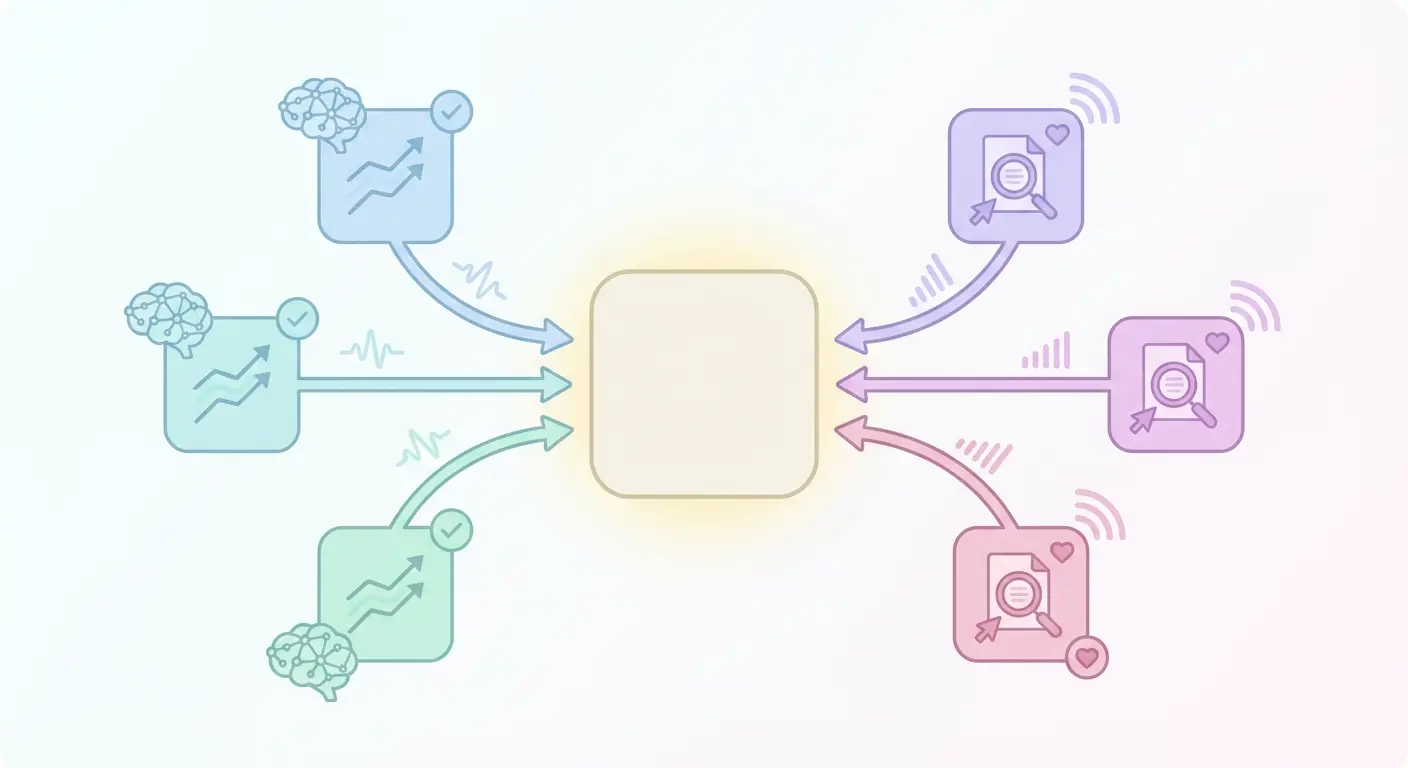
What most people miss is that topical authority is fundamentally a coverage problem before it’s a quality problem. Google’s algorithms — particularly those powered by its BERT and MUM language models — map semantic relationships between content entities. A site that covers only 40% of the subtopics within a domain sends weaker authority signals than a site covering 90%, even if the 40% is brilliantly written.
The original academic grounding for this comes from the concept of “information gain” in information retrieval theory. Singhal et al.’s influential work at Google on PageRank eventually evolved to include topic-based authority signals. More recently, researchers like Bill Slawski documented how Google patents describe “authoritative sources” based on the breadth and depth of topical coverage — not just inbound links.
For a full research-backed framework, the definitive framework for building topical authority in SEO breaks this down into four phases with measurable benchmarks at each stage.
Why the Pillar-Cluster Model Drives Ranking Velocity
The pillar-cluster content strategy is the operational mechanism for building topical authority at scale. It works because it mirrors how Google’s Knowledge Graph organizes semantic relationships — with a central concept node connected to related entity clusters.
HubSpot’s documented case study on the pillar-cluster model showed a 4.5x increase in blog traffic within six months of restructuring their content from keyword-siloed posts to interconnected topic clusters. That’s not a theoretical outcome — it’s a measured result from restructuring architecture alone, with minimal new content production.
Here’s where it gets interesting: the pillar-cluster model creates compounding authority signals. Each cluster page that earns an external backlink passes link equity to the pillar page through internal links. The pillar page, in turn, distributes authority to all cluster pages. This is structurally different from an isolated post strategy, where link equity sits stranded on a single page with nowhere to flow.
| Model | Authority Distribution | Avg. Ranking Velocity | Long-Term Compounding |
|---|---|---|---|
| Isolated Keyword Posts | Per-page only | Slow (6–12 months) | Low |
| Pillar-Cluster Architecture | Domain-wide flow | Fast (2–4 months) | High |
| Topic Silo (no cross-links) | Silo-contained | Moderate (4–8 months) | Medium |
| AI-Augmented Pillar-Cluster | Domain-wide + velocity | Fastest (1–3 months) | Very High |
According to Ahrefs’ analysis of topical authority signals, sites with tightly interlinked cluster content ranked for 3x more keywords per domain authority point than sites relying on isolated high-DA pages. That ratio is the real unlock. You’re extracting more ranking output from the same domain-level input.
For a technical walkthrough of how to architect this properly — including URL structure, crawl depth optimization, and internal linking ratios — the pillar-cluster content strategy architecture guide covers implementation in rigorous detail.
The 6-Month Topical Authority Growth Framework
Ninety percent ranking growth in six months sounds like marketing copy until you map the actual mechanism. Here’s a phased approach grounded in how Google’s crawl and indexing cycles actually work — not how SEOs wish they worked.
Phase 1: Topical Map Construction (Weeks 1–3)
Before writing a single word, you need a complete topical map — a structured inventory of every subtopic, question, and entity your domain should own. This is the research infrastructure that most sites skip, and it’s the single biggest reason pillar-cluster strategies underperform.
- Identify your core topic domain: Define the 3–5 subject areas your site will claim expertise over. These become your pillar topics. Be ruthlessly specific — “digital marketing” is not a topic domain; “B2B SaaS content marketing” is.
- Map all semantic subtopics: Use tools like SEMrush’s Topic Clusters tool or Ahrefs’ Content Gap to identify every question cluster associated with your topic. Aim for 15–25 cluster topics per pillar.
- Classify by intent and stage: Group cluster topics by search intent (informational, commercial, navigational) and funnel stage. Not all clusters carry equal authority weight — Google values definitional and educational content as strong expertise signals.
- Audit existing content against the map: Flag which subtopics you already cover (and whether coverage is adequate), which are missing entirely, and which need consolidation.
Phase 2: Pillar Page Construction (Weeks 4–6)
Your pillar page is not a listicle or a roundup post. It’s a definitive resource that answers the broadest version of your topic question and creates navigation hooks into every cluster. Think of it as the Wikipedia entry for your niche — exhaustive in scope, precise in structure.
Fair warning: this takes real effort. A well-constructed pillar page typically runs 3,000–5,000 words, includes original frameworks, data tables, and deliberately leaves depth for cluster pages to fill. The strategic tension here is intentional — the pillar signals breadth; clusters deliver depth.
Phase 3: Cluster Content Deployment (Weeks 7–16)
Deploy cluster content in thematic batches rather than random order. Google’s crawl patterns respond to bursts of topically coherent new content — publishing 5–7 tightly related cluster posts in a week sends a stronger topical signal than one post per week across different subjects.
Target a minimum of 12 cluster posts per pillar for meaningful authority gains. HubSpot’s internal data (referenced in their pillar-cluster case study) suggests the inflection point for ranking velocity typically occurs between the 10th and 15th cluster post — before that, authority signals are accumulating; after it, they start compounding visibly in Search Console data.
Phase 4: Link Velocity and Signal Amplification (Weeks 17–24)
This is where topical authority SEO and traditional link building intersect. With a complete cluster architecture in place, link outreach becomes dramatically more efficient — you’re pitching a resource ecosystem, not a single post. Guest posts, digital PR, and HARO responses should all link to cluster pages, not the pillar, to maximize equity distribution.
Scaling this phase efficiently is where AI-assisted content workflows pay dividends. The complete guide to AI-powered SEO content strategy for 2026 details how to build content production pipelines that maintain quality while increasing cluster deployment velocity.
Measuring Topical Authority Gains: Metrics That Matter
Here’s a counterintuitive truth: the best early signal of topical authority growth isn’t keyword rankings — it’s crawl frequency. When Google starts crawling your site more often (visible in Google Search Console’s crawl stats), it’s a leading indicator that the algorithm is reassessing your domain’s authority in a topic area. Rankings follow; they don’t lead.
Beyond crawl frequency, track these metrics in 30-day cohorts:
- Topical keyword coverage rate: What percentage of your topical map’s keywords does your site rank in the top 50 for? Start here as your baseline. A site moving from 18% to 55% coverage in six months is building genuine authority, regardless of whether head terms have moved.
- Cluster page impressions vs. clicks: Rising impressions with flat CTR often means you’re ranking for new, broader queries — an authority signal. Don’t misread this as underperformance.
- Internal PageRank distribution: Tools like Screaming Frog or Sitebulb can map internal link equity flow. You want to see authority distributing bidirectionally between pillar and cluster pages — not pooling on the homepage.
- Featured snippet capture rate: As topical authority grows, snippet captures accelerate disproportionately. Track how many cluster pages hold featured snippets. A 10% capture rate within a mature cluster is achievable.
What most analytics setups miss is entity-level tracking. Tools like SEMrush’s Topic Research tool can surface which semantic entities your domain now “owns” in its niche. Comparing entity ownership at month one versus month six gives you the clearest picture of authority trajectory.
Common Mistakes That Kill Topical Authority
Plenty of sites attempt pillar-cluster architecture and see minimal gains. The failure modes are predictable — and most of them happen before a word is written.
Mistake 1: Publishing Clusters Without a Live Pillar Page
Cluster content without a live pillar to link to is like building spokes without a hub. The authority signals have nowhere to concentrate. Always publish the pillar page first, even as a minimum viable draft, before deploying clusters.
Mistake 2: Shallow Cluster Content That Duplicates Intent
If five cluster posts answer the same underlying question with slightly different phrasing, Google reads cannibalization — not coverage. Each cluster page must occupy a distinct semantic space. Moz’s Whiteboard Friday on comprehensive topic cluster research provides an excellent methodology for ensuring genuine semantic differentiation between cluster topics.
Mistake 3: Treating Internal Links as an Afterthought
Internal links are the structural mechanism that makes topical authority compounding actually work. They’re not decorative. Every cluster page should link to the pillar with descriptive anchor text that includes the pillar’s core keyword phrase — and the pillar should link back to every cluster. Audit this architecture monthly.
Mistake 4: Ignoring Entity Optimization
Google’s Knowledge Graph is entity-centric. Pages that mention, define, and contextually relate relevant named entities — people, organizations, products, locations, concepts — in your topic area rank faster within authority clusters. This isn’t keyword stuffing; it’s semantic completeness. Getting topical authority SEO right means treating entity coverage as a first-class ranking input, not an optional enhancement.
Frequently Asked Questions
How long does it take to build topical authority in SEO?
Most sites see measurable topical authority gains within 3–6 months when following a structured pillar-cluster strategy with consistent cluster deployment. The first visible signals typically appear in Google Search Console as increased crawl frequency and rising impressions across cluster pages — ranking gains follow 4–8 weeks later. Competitive niches may take 9–12 months for significant head-term movement.
What is the difference between topical authority and domain authority?
Domain authority (DA) is a third-party metric estimating overall link-based strength across a domain. Topical authority is Google’s native assessment of how completely and credibly a site covers a specific subject area — it’s influenced by content coverage breadth, semantic depth, E-E-A-T signals, and internal architecture, not just backlink quantity. A newer site with high topical authority can outrank a high-DA site that lacks subject-matter coverage depth.
How many cluster pages do I need per pillar to build topical authority?
Industry data and documented case studies suggest a minimum of 10–15 cluster pages per pillar for meaningful authority gains. HubSpot’s research indicates the ranking inflection point typically occurs between the 10th and 15th cluster post. However, quality and semantic distinctiveness matter more than raw volume — 12 well-differentiated cluster posts outperform 25 that overlap in intent.
Does topical authority replace the need for backlinks?
No — topical authority and backlinks are complementary signals, not substitutes. Strong topical authority allows a site to rank for mid-tail and long-tail cluster keywords with fewer backlinks than an authority-weak competitor would need. But for highly competitive head terms, backlink equity remains critical. The strategic advantage is that complete topical coverage creates more link-attracting assets across the cluster, improving overall link velocity organically.
Can I use AI tools to build topical authority faster?
Yes, with specific guardrails. AI tools can accelerate topical map construction, identify semantic coverage gaps, generate first-draft cluster content, and scale internal linking audits — all of which compress the 6-month framework’s timeline. The risk is AI-generated content that lacks genuine E-E-A-T signals, which Google’s quality systems increasingly detect and discount. The most effective model uses AI for velocity and human expertise for authority signals like original data, case studies, and nuanced analysis.
Build the Authority Your Niche Respects
The 90% growth figure isn’t a promise — it’s a documented outcome of applying structured topical authority SEO principles consistently over six months. The architecture is replicable. The results scale with execution quality.
Start with the foundational research: explore the definitive framework for building topical authority to ground your strategy in the four-phase model. Then move into execution with the pillar-cluster architecture guide for technical implementation specifics.
If this analysis added value to your thinking, share it with the SEO practitioners and content strategists in your network who are still fighting the keyword-by-keyword battle. They deserve a better strategy.