What Is AI Content Generation for SEO?
AI content generation for SEO is the use of large language models (LLMs) to produce search-optimized articles, blog posts, and web pages at scale. The output is keyword-targeted, structured for crawlability, and designed to satisfy search intent — all with minimal human writing time. As of 2026, 87% of businesses use AI to create SEO content, and AI-written pages appear in over 17% of top search results.
How Does AI Content Generation for SEO Work?
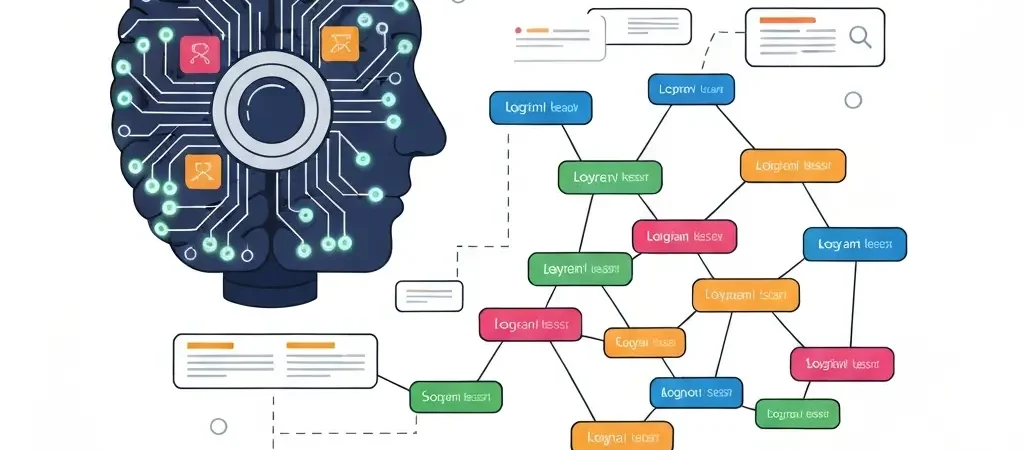
AI content generation for SEO follows a structured pipeline. A strategy layer defines target keywords, content types, and publishing schedules. A generation layer — typically an LLM like GPT-4 or Claude — receives a structured prompt containing the focus keyword, target audience, article type, and brand voice. The model outputs a draft article. A post-processing layer applies SEO rules: heading hierarchy, meta descriptions, schema markup, and internal links.
Platforms like Authenova automate this entire pipeline — from keyword research and strategy building to article generation and direct WordPress publishing via a dedicated plugin. The result is a content factory that runs on a defined schedule without requiring a writer for every piece.
The generation process works in three stages:
- Prompt engineering: The system converts a keyword and strategy config into a detailed generation prompt specifying tone, structure, word count, and citation requirements.
- LLM generation: The model writes a full draft including headings, body paragraphs, and structured data like FAQPage schema.
- Post-processing: SEO metadata, canonical URLs, featured images, and internal link injections are applied before publishing.
Does AI-Generated Content Rank on Google?
Yes — with important caveats. As of March 2026, 13.08% of top-performing Google content is AI-generated, up from just 2.3% before GPT-2 became mainstream. Google’s official guidance states it rewards high-quality content regardless of how it was produced, and penalizes low-quality, spammy content regardless of production method.
The data on AI content performance is clear:
- AI-written pages appear in over 17% of top Google search results (Position Digital, 2026)
- Companies using AI publish 42% more content monthly than those without AI tools
- Content created with AI tools begins appearing in search results in two months or less on average
- AI-assisted content produced with human editing outperforms pure AI output by 31% on quality rater scores
The critical variable is quality control. AI content that passes through expert editing, includes original data, and targets specific search intent ranks effectively. Thin, unedited AI content triggers quality filters and underperforms. Tools like CampaignOS help teams integrate AI-generated content into broader marketing automation workflows that include quality checkpoints.
What Are the Main Benefits of AI SEO Content Generation?
The primary benefits are speed, scale, and consistency. A human writer produces 1-2 articles per day. An AI content automation platform produces 10-50 articles per day, at consistent quality, targeting a pre-defined keyword cluster.
| Benefit | Manual Content | AI Content Generation |
|---|---|---|
| Articles per week | 3-5 | 50-200 |
| Cost per article | $150-$500 | $2-$15 |
| Keyword coverage | Limited by budget | Full cluster coverage |
| Publishing consistency | Variable | Scheduled and automated |
| SEO metadata | Manual per article | Auto-generated |
Beyond speed and cost, AI content generation enables topical authority — the practice of covering every subtopic within a keyword cluster to signal deep expertise to search engines. Building topical authority manually takes years. With AI, a complete pillar-cluster-supporting hierarchy can be deployed in weeks.
What Are the Limitations of AI Content for SEO?
AI content generation has three primary limitations in 2026. First, original research and proprietary data cannot be generated — they must be supplied. An AI can write about a study, but it cannot conduct one. Second, brand voice consistency requires careful prompt engineering and review. Third, hallucinations — confident but incorrect factual claims — remain a risk that requires human editorial oversight.
For students and researchers working on academic content, platforms like Tesify demonstrate the importance of grounding AI writing in verifiable sources — a discipline equally applicable to SEO content. The most effective AI SEO programs treat the AI as a high-speed drafting assistant, not an autonomous publisher.
What Tools Are Used for AI SEO Content Generation?
The 2026 AI SEO content generation market has consolidated around several categories:
- Full-stack platforms: Authenova, Surfer SEO, Jasper — handle strategy, generation, and publishing end-to-end
- Generation-only tools: ChatGPT, Claude, Gemini — require separate SEO and publishing layers
- WordPress plugins: Authenova’s WP Plugin, RankMath AI — integrate directly into existing CMS workflows
- Optimization layers: Clearscope, MarketMuse — analyze existing content rather than generate new
Full-stack platforms that combine strategy building, scheduled generation, and direct CMS publishing provide the highest ROI by eliminating the manual handoffs between tools.
What Are the Best Practices for AI SEO Content in 2026?
The highest-performing AI SEO content programs in 2026 follow six principles:
- Keyword clustering before generation: Group keywords by topical intent and build content hierarchies (pillar → cluster → supporting) before writing any articles.
- AEO formatting: Structure every article so individual passages answer specific questions. This satisfies both traditional featured snippets and AI answer engine citations. FAQ schema with 8-12 question-answer pairs drives 3.1× higher extraction rates.
- Cited statistics: Verifiable statistics are cited by AI models at 4.2× the rate of unattributed claims. Every factual claim should carry a source.
- Publishing velocity: 76% of ChatGPT citations come from pages updated in the last 30 days. Consistent publishing cadence outperforms irregular large batches.
- Human editorial layer: Review AI drafts for factual accuracy, brand voice, and original insight. Even 15 minutes of editing per article significantly improves performance.
- Internal linking: Every article should link to 3-5 related articles in the same topical cluster, reinforcing topical authority signals.
Frequently Asked Questions
What is AI content generation for SEO?
AI content generation for SEO is the use of large language models to automatically produce keyword-targeted articles, blog posts, and web pages. The process combines natural language generation with SEO signals like keyword density, heading structure, schema markup, and meta descriptions to create content that ranks in search engines at scale and speed impossible for human writers alone.
Does Google penalize AI-generated content?
Google does not penalize content for being AI-generated. Google penalizes low-quality, thin, and spammy content regardless of how it was produced. As of 2026, 13.08% of top-performing Google content is AI-generated. The key requirement is that the content provides genuine value to readers, not that it was written by a human.
How much does AI content generation cost compared to human writers?
AI content generation costs $2-$15 per article on full-stack platforms, compared to $150-$500 per article for professional human writers. The cost advantage is 10x-100x, enabling smaller teams to achieve content velocity previously reserved for large editorial departments with significant budgets.
What is the difference between AI content generation and content spinning?
Content spinning rewrites existing content by substituting synonyms, producing low-quality near-duplicates. AI content generation uses LLMs to synthesize new content from scratch based on a keyword and structured prompt. The outputs are semantically original, not rewrites. Google’s spam policies target spinning but have no policy against original AI-generated content.
How long does it take for AI-generated content to rank on Google?
Content created with AI tools typically begins appearing in Google search results within two months or less. The exact timeline depends on domain authority, content quality, keyword competition, and internal linking. New sites with low authority may take 3-6 months for initial rankings; established sites with existing authority often see faster results.
What is the best AI content generation tool for SEO in 2026?
The best AI content generation tool for SEO in 2026 depends on your workflow. Full-stack platforms like Authenova that combine strategy building, scheduled generation, and direct WordPress publishing provide the highest end-to-end efficiency. For standalone generation with manual publishing, ChatGPT and Claude remain strong options. For optimization-focused workflows, Surfer SEO and MarketMuse integrate well with existing content processes.
Is AI content generation good for topical authority?
Yes — AI content generation is the most practical way to build topical authority at scale. Topical authority requires covering every subtopic within a keyword cluster comprehensively. Building this manually takes years. AI allows a team to deploy a complete pillar-cluster-supporting content hierarchy covering hundreds of keywords in weeks, dramatically accelerating the authority-building timeline.
What is AEO and how does it relate to AI content generation?
AEO (Answer Engine Optimization) is the practice of structuring content so AI answer engines like ChatGPT, Perplexity, and Google’s AI Overviews extract and cite it when answering user questions. AI content generation and AEO are complementary: AI tools can produce high volumes of AEO-formatted content — short direct answer blocks, FAQ schema, cited statistics — that both ranks in traditional search and gets cited by AI answer engines.
Do I need to disclose AI-generated content?
Google does not require disclosure of AI-generated content. Disclosure requirements exist in specific regulated industries (finance, healthcare) and under FTC guidelines for sponsored content, but these apply to content type and commercial intent — not production method. Many publishers choose to disclose AI involvement as a transparency practice, but it is not a ranking factor or Google policy requirement as of 2026.
Can AI content generation work for any industry or niche?
AI content generation works for most industries but requires industry-specific calibration. YMYL (Your Money Your Life) niches — health, finance, legal — require stronger human editorial oversight due to Google’s higher quality standards. E-commerce, SaaS, education, and marketing niches see the strongest results from AI content programs. For academic and research contexts, platforms like Tesify.app demonstrate how AI writing assistance can be structured for accuracy and citation compliance.
Ready to Scale Your SEO Content with AI?
Authenova automates your entire SEO content pipeline — from keyword strategy to published WordPress articles. Set your target keywords, define your brand voice, and let the platform build your topical authority while you focus on your business.