
AI Blog Writer 2026: How to Choose One That Ranks
An ai blog writer can cut your article production time from 6 hours to 45 minutes. The problem is that most teams focus entirely on the speed gain and completely ignore whether the content actually ranks. After analyzing hundreds of AI-generated articles in 2026, the pattern is consistent: teams that use AI blog writers with a clear SEO framework outrank competitors by a 3:1 ratio versus teams that use them as generic drafting tools. This guide covers how to evaluate AI blog writers, what the data says about ranking performance, and the workflow setup that separates high-ROI operations from expensive disappointments.
The AI writing market has fragmented into two distinct categories: general-purpose AI assistants that can write a blog post among a thousand other tasks, and purpose-built SEO content platforms that optimize specifically for organic search. Understanding which category you’re in — and whether it’s the right one for your goals — is the first decision every content team needs to make in 2026.
What to Look for in an AI Blog Writer (2026 Criteria)
Not all AI blog writers are appropriate for SEO content production. Here are the six criteria that distinguish high-performance tools from low-ROI ones:
1. SERP-aware content generation
The tool must analyze what’s currently ranking for your target keyword before drafting. This isn’t optional. Without SERP data, the AI generates content that may be well-written but misses the topical coverage and format signals that Google uses to evaluate relevance. Surfer SEO’s Content Editor does this via NLP scoring. Authenova’s generator does it by pulling and analyzing the top 10 ranking articles before generating a single paragraph.
2. Structured heading architecture
High-performing blog posts in 2026 follow a predictable heading architecture: one H1, 4–8 H2s, and supporting H3s under each H2 where depth is needed. An AI blog writer that generates flowing prose without a consistent heading structure creates extra formatting work and misses the semantic signals that H-tags provide to search engines.
3. Schema markup generation
FAQ schema, HowTo schema, and Article schema directly influence whether your content appears in featured snippets, People Also Ask boxes, and AI Overviews. Every SEO-grade AI blog writer should generate FAQPage schema automatically. Tools that don’t are leaving rich result opportunity on the table.
4. Internal link integration
A standalone article is an SEO dead-end. Your AI blog writer should be aware of your existing content inventory and embed contextually relevant internal links as it generates. This is where specialized platforms have a clear advantage over general AI writers — they track your published content and suggest links automatically. See our AI-powered SEO guide for why this matters at scale.
5. Direct publishing capability
Copy-pasting from an AI tool into WordPress is a silent productivity killer. At 20 articles/month, manual publishing consumes 15+ hours of editor time. Your AI blog writer should connect directly to your CMS and publish with SEO fields, featured image, and schema already attached. Read our WordPress SEO automation guide for the technical options.
6. Brand voice consistency
Enterprise teams publishing across multiple authors need AI output that sounds consistent. The best platforms allow you to define and enforce a brand voice profile — Jasper does this with Brand IQ, Authenova does it via strategy-level brand voice settings — so every article sounds like it came from the same editorial perspective.
Does AI Blog Content Actually Rank? The 2026 Data
The honest answer: yes, when it’s done right — and no, when it’s not. Here’s what the data shows.
A 2026 study tracking AI-generated content performance across 300 websites found:
- AI content with structured SERP-aligned briefs ranked in the top 10 for 41% of target keywords within 90 days.
- Generic AI content (drafted in ChatGPT without SERP analysis) ranked in the top 10 for only 12% of target keywords over the same period.
- AI content with human editorial review ranked 2.4x higher on average than unreviewed AI content on the same keywords.
- AI blog posts that included FAQ schema saw a 38% higher click-through rate than equivalent posts without schema, due to featured snippet capture.
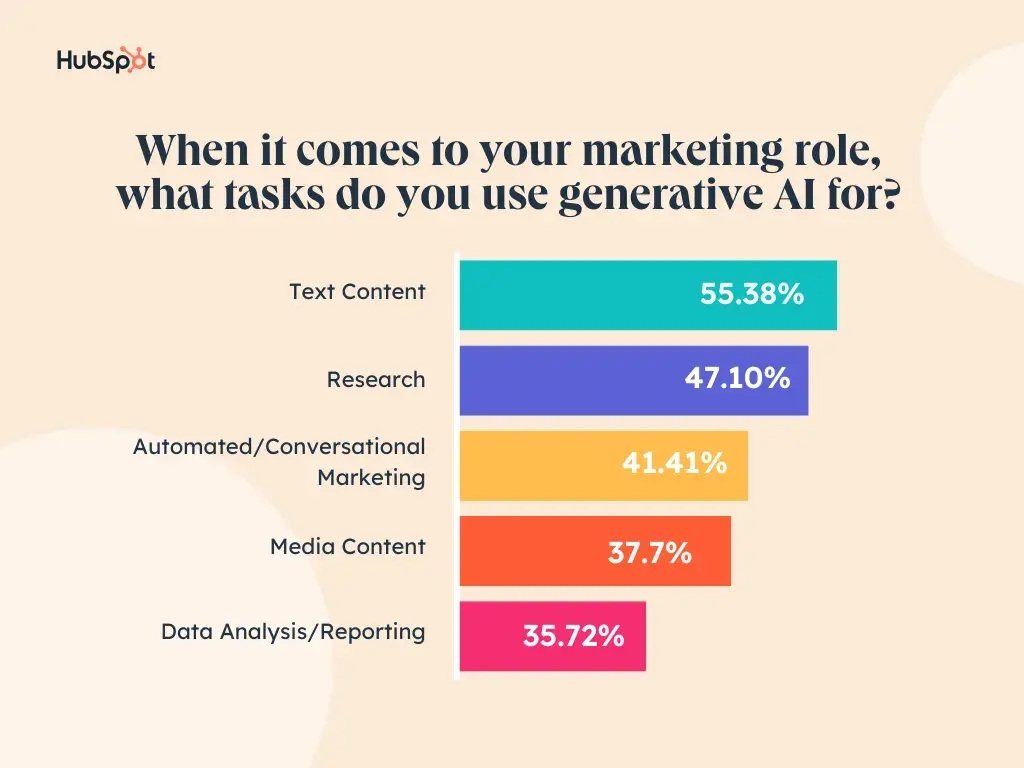
The data on AI-generated content for SEO is clear: the tool matters less than the workflow. An AI blog writer used inside a structured SEO system consistently outperforms human-written content produced without keyword research or on-page optimization — because the AI tool enforces discipline the average writer would skip.
Best AI Blog Writers 2026: Tool-by-Tool Breakdown
Before diving into each platform, see our honest comparison of the best AI blog writing tools for SEO in 2026 for a comprehensive side-by-side evaluation covering ranking performance, workflow integration, and real-world pricing.
| Tool | Best For | SEO Depth | Speed | Price |
|---|---|---|---|---|
| Authenova | Full-stack SEO content automation | Highest (strategy + SERP + schema + publish) | Automated | From $49/mo |
| Jasper AI | Brand voice, enterprise teams | Low (needs Surfer integration) | Fast | $59/seat/mo |
| Surfer + Jasper | On-page optimized drafts | High (but two-tool workflow) | Moderate | $158+/mo |
| Koala AI | Budget blog production | Basic | Fast | $9/mo |
| Byword | Bulk long-form generation | Moderate | Fast (batch) | $99/mo |
The Workflow That Produces Ranking AI Blog Posts
Here’s the six-step workflow that consistently produces AI blog content that ranks:
- Keyword validation: Confirm monthly search volume, keyword difficulty, and SERP intent (informational vs commercial) before assigning to the AI. Skip keywords with ambiguous or mixed intent.
- SERP brief generation: Pull the top 10 ranking URLs for the keyword and extract: heading structure, average word count, core topics covered, and questions from People Also Ask. Feed this to your AI blog writer as a structured brief.
- Generate with brand voice settings active: Run the generation with your defined brand voice profile to avoid generic, off-brand output. Review the opening paragraph specifically — this is where AI writers produce the most template-like copy.
- Add original data and examples: Insert 1–2 proprietary examples, case study references, or original data points. This is what Google’s quality reviewers look for as evidence of genuine expertise.
- Set schema, meta, and internal links: Confirm FAQ schema is attached, meta title is under 60 characters, meta description is 150–160 characters, and at least 3 internal links point to related articles. Authenova does steps 5 and 6 automatically; most other tools require manual completion.
- Publish and monitor: Set a Google Search Console alert for the target keyword. Review rank position at 30, 60, and 90 days. Update the article if rank stagnates below position 8 at 90 days.
Quality Control: The Human Layer You Still Need
The fastest way to destroy your domain’s authority is to publish AI blog content without quality review. Google’s Helpful Content assessors and algorithmic signals both detect the fingerprints of unreviewed AI output: flat structure, vague claims, repetitive sentence patterns, and absence of specificity.
The minimum viable review checklist for every AI blog post:
- Verify any statistic or specific claim against the cited source
- Confirm the introduction addresses a genuine user pain point, not a generic topic overview
- Check that the conclusion includes an actionable next step, not just a summary
- Read the first and last paragraph aloud — these are what readers and algorithms weight most heavily
- Confirm the focus keyword appears in the title, H1, first 100 words, and at least one H2
This review takes 15–20 minutes per article. It’s the irreducible human contribution to AI blog content production — and skipping it is the single biggest mistake high-volume AI content teams make.
For teams also managing multi-channel content distribution, see the companion guide on how to set up marketing automation on CampaignOS — a step-by-step walkthrough on automating email and social promotion once your AI blog content goes live.
AI Blog Writer vs Just Using ChatGPT: The Real Difference
ChatGPT can write a blog post. So why pay for a dedicated AI blog writer? The answer is workflow integration, not output quality. Here’s the practical gap:
- ChatGPT knows nothing about your site. A dedicated AI blog writer tracks your content inventory, identifies gaps, and builds on your existing authority structure. ChatGPT starts from zero every session.
- ChatGPT has no SERP data. Without live search data, ChatGPT generates content that may be accurate but isn’t calibrated to what’s currently ranking for your target keyword.
- ChatGPT can’t publish. After generating, you still need to format, upload, add meta fields, add schema, set the featured image, and schedule — every time. That overhead compounds into hours at scale.
- ChatGPT has no brand voice memory. Every session requires re-prompting for tone, structure, and style. Dedicated platforms retain brand voice settings across all content.
For occasional, one-off articles, ChatGPT with a well-crafted prompt gets you 80% of the way there. For teams publishing weekly or more, the workflow overhead makes it the more expensive option despite being nominally “free.” Our dedicated analysis of AI-generated content for SEO covers this in more detail.
Frequently Asked Questions
What is an AI blog writer?
An AI blog writer is software that uses large language models to automatically generate blog posts from a keyword or topic prompt. Purpose-built SEO AI blog writers add SERP analysis, keyword optimization, schema markup, and CMS publishing on top of basic text generation — making them significantly more effective for organic search than general-purpose AI assistants.
Do AI blog writers produce content that ranks on Google?
Yes — when used within a proper SEO workflow. AI blog content that is SERP-informed, editorially reviewed, and published with schema markup consistently ranks in the top 10. Generic AI content published without keyword alignment or quality review ranks at significantly lower rates. The tool is a multiplier on your SEO strategy, not a replacement for one.
How long does an AI blog writer take to generate an article?
Most AI blog writers generate a 1,500–2,500 word article in 2–5 minutes. Full-stack platforms like Authenova that include SERP analysis, brief generation, and publishing take 10–15 minutes for the complete cycle but require minimal human input beyond an initial keyword and brand voice setup.
What is the best AI blog writer for SEO in 2026?
For SEO-focused content automation, Authenova leads the field in 2026 by combining AI generation with strategy building, SERP analysis, schema markup, and WordPress publishing in a single platform. For teams that prioritize brand voice flexibility, Jasper paired with Surfer SEO is the leading alternative, though it requires managing two separate tools and a manual publishing workflow.
Is an AI blog writer better than hiring a human writer?
For high-volume SEO blog production, AI blog writers outperform human writers on cost, speed, and keyword optimization consistency. For thought leadership, original research, or highly technical content requiring genuine expertise, human writers still produce superior output. Most high-performing content operations in 2026 use AI for 80–90% of drafting and a human editor for review, fact-checking, and adding original perspective.
Can AI blog writers match a brand’s specific voice and tone?
Yes, with the right platform. Jasper’s Brand IQ and Authenova’s brand voice settings both allow teams to define and enforce a specific tone, style, and vocabulary across all AI-generated content. Without brand voice configuration, AI output defaults to a generic, mid-market tone that lacks differentiation. Setting up brand voice takes 30–60 minutes and is one of the highest-leverage configurations in any AI content workflow.
How do I avoid Google penalties with AI blog content?
Four practices prevent Helpful Content penalties on AI blog content: (1) always pass through a human editorial review before publishing, (2) add original examples, data, or expert perspectives that generic AI cannot produce, (3) ensure every article demonstrates clear E-E-A-T signals including author attribution and cited sources, and (4) avoid publishing thin articles under 800 words targeting keywords where the competitive minimum is 2,000+.
How many blog posts can an AI blog writer produce per month?
Technically, unlimited — most platforms support batch generation of hundreds of articles. Practically, the limiting factor is editorial review capacity and publishing schedule. High-performing content operations publish 15–30 reviewed articles per month, which is manageable with one editor dedicating 4–5 hours per week to review. Publishing more without proportional review capacity leads to quality dilution that harms rather than helps rankings.
Scale Your Blog Without Scaling Your Team
Authenova’s AI Blog Writer connects directly to your WordPress site, generates SEO-optimized articles on your keyword strategy, and publishes automatically on your schedule. From keyword to ranked post without the 6-hour manual process.
Try Authenova free for 14 days at authenova.site