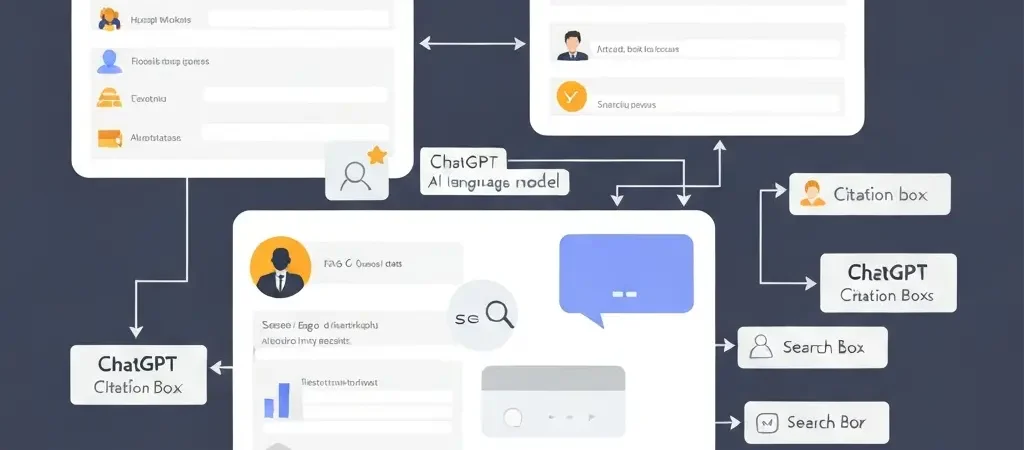
AI SEO in 2026: How Artificial Intelligence Is Rewriting Search Optimisation
AI SEO in 2026 operates on two parallel tracks that most practitioners conflate: AI as a tool for SEO practitioners (automating content creation, keyword research, and technical audits), and AI as a fundamental change to how search engines work (Google AI Overviews, LLM-driven ranking systems, generative search results). Understanding both tracks — and how they interact — is the foundation of any competitive SEO strategy for 2026 and beyond.
This guide synthesises the current state of AI SEO across both tracks: what has changed, what the evidence shows works, and the strategic priorities that separate sites winning in AI-influenced search from those losing ground.
AI SEO on Two Tracks: Practitioner Tools vs Search Evolution
Track 1: AI as an SEO Practitioner Tool
AI tools for SEO practitioners have reached functional maturity in 2026. The use cases that deliver consistent ROI:
- Content generation at scale: AI platforms generate SEO-structured articles at a fraction of the cost and time of manual writing. 86.5% of top-ranking pages now use AI assistance in content creation (Ahrefs, 600K page study, 2025).
- Keyword clustering and topical mapping: AI tools accelerate the process of organising keywords into topical clusters and identifying content gaps.
- Technical SEO automation: AI-powered audit tools identify site issues and generate fix recommendations faster than manual analysis.
- Meta data generation: AI generates title tags and meta descriptions at scale, maintaining keyword optimisation and click-through optimisation across large content libraries.
Track 2: AI Transforming Search Behaviour
Simultaneously, the search landscape itself is being restructured by AI:
- Google AI Overviews now appear in approximately 55% of all Google search results (as of 2026 estimates), generating AI-synthesised answers above traditional organic results.
- ChatGPT serves 883 million monthly active users as of 2026, many of whom use it as a search alternative for informational queries.
- Perplexity, Claude.ai, and similar AI assistant platforms are growing rapidly as research and information-finding tools, directing traffic to cited sources rather than to traditional search result lists.
- Google’s core ranking system increasingly uses AI (MUM, Gemini) to understand query intent and content relevance, shifting the evaluation criteria from keyword-match signals toward semantic content understanding.
Google AI Overviews: What They Mean for Organic Traffic
Google AI Overviews (previously Search Generative Experience) generate a synthesised answer above the traditional blue-link results. The traffic implications are significant and nuanced:
Click-through rate changes: Early studies show that AI Overviews reduce click-through rates for informational queries by 18-35% — users get their answer in the Overview and do not click through. However, for commercial and navigational queries, click-through rates are largely unchanged because AI Overviews focus on informational responses rather than product or service recommendations.
The citation opportunity: AI Overviews cite sources. Sites cited in AI Overviews see 30-50% traffic increases from Overview users who click through to the cited source for more depth. Being cited in AI Overviews is the new “position 0” — more prominent than a featured snippet because it appears in an AI-generated narrative rather than a decontextualised box.
Citation requirements: Research on which pages Google cites in AI Overviews shows consistent patterns: cited pages have clear structure (H2/H3 headings), specific factual claims with verifiable statistics, FAQ sections that directly answer the query, and schema markup that helps Google extract structured information. This is precisely the structure that AEO-optimised content provides. See which SEO tasks can be automated to maintain AI Overview optimisation at scale.
Answer Engine Optimisation (AEO): The New SEO Discipline
AEO is the practice of structuring content to appear in AI-generated answer responses — not just in traditional ranked search results. The two systems require different optimisation approaches:
| Dimension | Traditional SEO | AEO |
|---|---|---|
| Primary goal | Rank for keyword in SERP | Be cited/referenced by AI systems |
| Content structure | Keyword-focused, comprehensive coverage | Standalone-extractable sections, direct answer boxes |
| Schema markup | Standard Article schema | FAQ, HowTo, Speakable schema prioritised |
| Answer format | Nuanced, comprehensive paragraphs | Definitive answers in first 40-60 words |
| Update frequency | Quality matters more than recency | 76% of citations from pages updated within 30 days |
AEO and traditional SEO are not competing approaches — they are complementary layers on the same content. Applying AEO principles (direct answer boxes, FAQ schema, standalone sections) to traditionally SEO-structured content captures both traditional search rankings and AI system citations without requiring two separate content programs.
AI-Generated Content and Rankings: The 2026 Evidence
The evidence on AI-generated content and rankings has clarified significantly in 2026:
- Google’s March 2024 core update and subsequent updates explicitly confirmed that AI-generated content is evaluated by the same quality criteria as human-generated content — helpfulness, E-E-A-T, and user experience.
- 86.5% of top-ranking pages use AI assistance, suggesting that AI content is not a differentiator itself — what differentiates ranking performance is how AI content is structured, attributed, and published.
- Sites using AI for content generation at scale see 47% higher monthly content output than equivalent manual teams. This velocity advantage directly supports topical authority building, which is the primary determinant of domain-wide ranking performance.
- AI-generated content without E-E-A-T signals (author attribution, cited sources, structural trust signals) underperforms equivalent human-generated content on the same quality evaluation criteria. The gap is not in content quality but in trust signal implementation.
The Strategies Winning in AI-Influenced Search in 2026
Analysis of sites gaining organic traffic in the AI search era reveals five consistent strategies:
- Topical authority depth over keyword breadth. Sites that dominate a narrow subject area outperform sites that cover many topics superficially. AI systems cite sites recognised as subject authorities, not sites with the most total content.
- AEO-first content structure for all informational content. Every informational article opens with a direct answer box, uses FAQ schema, and has standalone-extractable sections. This structure serves both traditional SEO rankings and AI citation eligibility.
- E-E-A-T implementation as standard practice. Author attribution, cited sources, and expert review disclosures are applied consistently, not selectively to only “important” articles.
- Content freshness management at scale. 76% of AI citations come from pages updated within 30 days. Automated content refresh programs (updating statistics, year references, and current tool recommendations) maintain citation eligibility across large content libraries.
- AI content automation for volume with human enrichment for quality. AI generates the structural and informational content; human experts add experience examples, original frameworks, and cited primary research. This hybrid approach captures the volume advantages of automation and the quality advantages of human expertise. See the complete AI SEO tool guide for the full toolkit.
Technical SEO Changes Driven by AI Search
AI-driven search evolution has created new technical SEO requirements:
- Speakable schema: Schema markup that designates which sections of content are appropriate for text-to-speech AI responses. Increasingly important as voice search and AI assistant interfaces grow.
- Structured data completeness: AI systems extract information from structured data (FAQPage, HowTo, Article) more reliably than from unstructured prose. Sites with complete, valid structured data have a technical advantage for AI citation.
- IndexNow adoption: As AI systems increasingly source their training and real-time data from recently-indexed pages, faster indexation is an advantage. IndexNow protocol notifies search engines of new content immediately upon publication.
- Core Web Vitals maintenance: AI-generated search interfaces prioritise speed — slow pages are less likely to be cited in contexts where AI systems fetch pages for real-time data. Core Web Vitals targets (LCP under 2.5s) remain non-negotiable.
- Robots.txt and AI crawler management: New AI crawlers (GPTBot, ClaudeBot, PerplexityBot) require explicit configuration in robots.txt. Sites that block AI crawlers miss citation opportunities; sites that allow them feed their content into AI training and real-time answer generation. See how programmatic SEO at scale operates in the AI search environment.
Frequently Asked Questions
What is AI SEO?
AI SEO refers to two related concepts: (1) using artificial intelligence tools to perform SEO tasks — content generation, keyword research, technical audits, meta data optimisation; and (2) optimising for AI-powered search systems — Google AI Overviews, ChatGPT, Perplexity, and other LLM-based search interfaces that generate answers from indexed content. In 2026, competitive SEO requires both: using AI to achieve the content velocity and quality needed to rank, while structuring content to be cited by AI answer systems.
Does Google use AI to rank websites?
Yes. Google uses multiple AI systems in its ranking process: the core ranking system uses AI models (including MUM and Gemini-based systems) to understand query intent and evaluate content relevance beyond keyword matching. The spam detection systems use AI to identify low-quality, manipulative, or AI-generated-spam content. The helpful content system uses AI to evaluate site-level quality signals. Google AI Overviews use generative AI to synthesise answers from indexed content. AI is pervasive throughout Google’s search infrastructure in 2026.
Will Google AI Overviews replace traditional organic search?
Google AI Overviews are reducing click-through rates for informational queries (by 18-35%) but are not replacing organic search for commercial, navigational, and local queries. The more significant effect is that AI Overviews create a new visibility layer — citation in an Overview is more prominent than position 1 in traditional results for informational queries. The long-term outlook is a bifurcated search: AI-answered informational queries with organic search continuing for commercial and discovery queries. SEO strategies need to optimise for both.
How is AI SEO different from traditional SEO?
AI SEO differs from traditional SEO in three key ways: (1) It targets two audiences — traditional search crawlers AND AI answer systems that have different content structure preferences; (2) It emphasises topical completeness over keyword targeting, because AI ranking systems evaluate subject expertise rather than individual keyword density; (3) It requires AEO (Answer Engine Optimisation) practices — direct answer boxes, FAQ schema, standalone sections — that were optional in traditional SEO but are essential for AI citation eligibility.
Win in AI SEO With Authenova
Authenova generates content structured for both traditional SEO rankings and AI citation — AEO formatting, FAQ schema, and topical cluster architecture built into every article.