
Automated AI Content & SEO Automation: The Secret to 3x Leads in 30 Days
You’re writing blog posts at midnight. You’ve got a keyword list that’s six months old. Your traffic graph looks like a flatline, and you’re paying a freelancer $400 an article that takes three weeks to rank — if it ranks at all. Sound familiar?
Here’s what nobody tells you: the brands quietly tripling their organic leads right now aren’t working harder. They’ve built an automated AI content and SEO automation system that runs while they sleep. And the setup takes less than a weekend.
This article breaks down exactly how that system works, what the numbers actually look like, and how you can replicate it — even on a bootstrapped budget.
What Is Automated AI Content & SEO Automation?
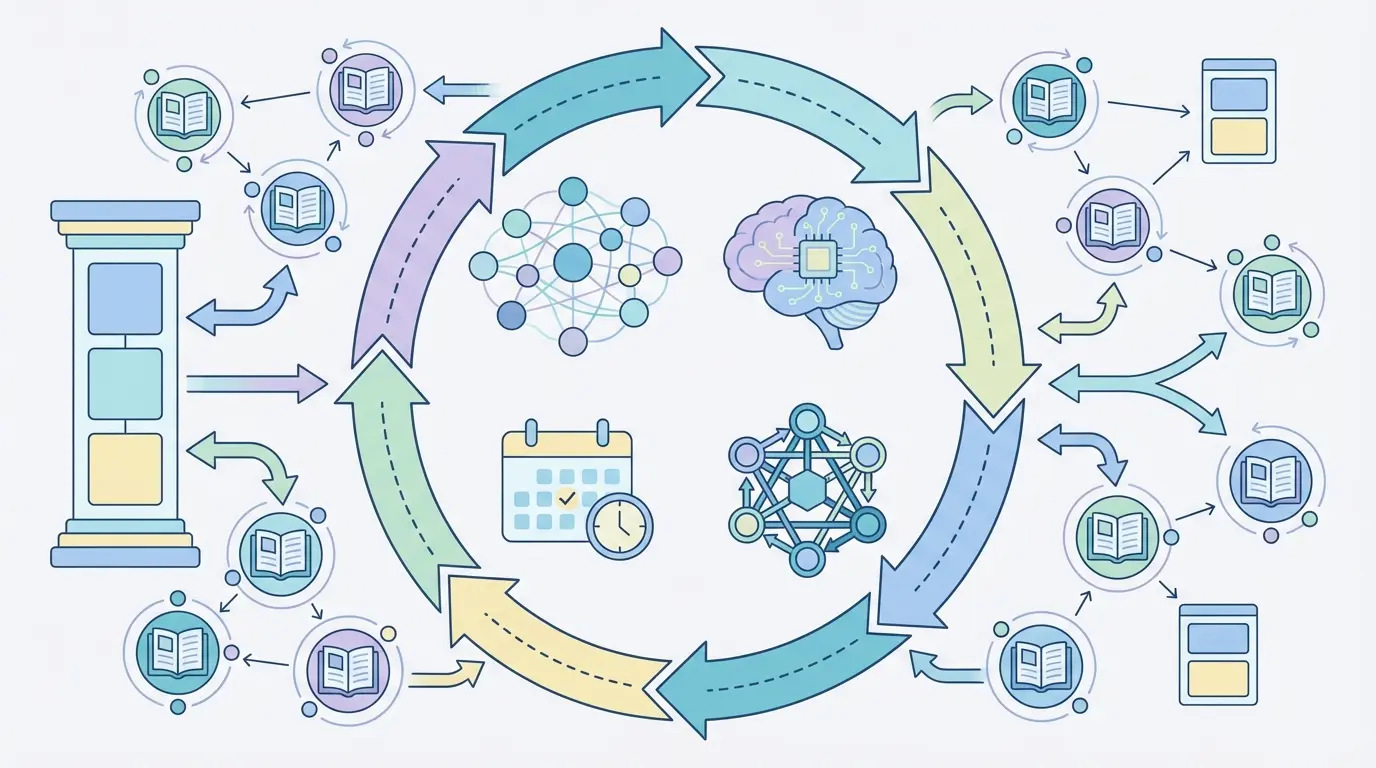
Most people think “AI content” means using ChatGPT to draft a blog post. That’s not automation — that’s just a slightly faster version of what you were already doing manually.
The system has four core components working together:
- Keyword clustering: Grouping related search terms into topical themes so every piece of content reinforces the others
- AI content generation: Producing structured, on-brand, SEO-optimized articles at volume without a writing team
- Automated internal linking: Connecting pillar pages, cluster articles, and supporting content so Google can crawl the full authority web you’re building
- Scheduled publishing: Pushing content to your site on a consistent cadence that Google’s algorithm rewards
According to HubSpot’s State of Generative AI report, 68% of marketers who adopted AI content tools reported faster time-to-publish and measurable traffic improvements within 90 days. The companies doing this systematically — not experimentally — are the ones seeing compounding results.
What makes it different from just “using AI”? The architecture. A proper automated SEO content system isn’t a one-off article generator. It’s a structured campaign with pillar pages anchoring topical authority, cluster articles feeding that authority, and supporting micro-content capturing long-tail queries. For a full breakdown of how that architecture works, the pillar-cluster content strategy guide is required reading.
Why Content Velocity Beats Content Perfection
There’s a belief that one perfect 5,000-word article beats ten solid 1,200-word pieces. The data says otherwise — at least for sites under domain authority 40.
Google needs signals. It needs to understand what your site is about. The fastest way to send those signals is topical coverage: publish content that covers every angle of a subject, and Google starts treating you as an authority on that subject. That’s not a theory — it’s what Ahrefs’ research on SEO automation consistently shows: sites that publish more frequently and more consistently gain ranking velocity faster than slow-publishing competitors, even when individual article quality is similar.
Here’s the counterintuitive part: most solopreneurs and small business owners are already writing decent content. Their problem isn’t quality. It’s quantity and consistency. You can’t build topical authority publishing two posts a month. You need eight to twelve.
Automated AI content & SEO automation closes that gap without adding 60 hours to your workweek. The AI handles the drafting, the keyword placement, the schema markup, and the internal linking. You handle the strategy — which topics to target, which products to feature, which conversion paths to build.

The McKinsey Global Survey on AI (2024) found that companies embedding AI into content workflows saw a 40% reduction in content production costs while maintaining or improving quality scores. For a bootstrapped founder, that’s not a nice-to-have — it’s a survival tool.
The 3x Leads Framework: How It Actually Works
Tripling leads in 30 days sounds like a webinar headline. But the math actually works — when you break it down honestly.
Say your site currently gets 800 organic visitors per month with a 2% conversion rate. That’s 16 leads. Now, you run an automated AI content campaign targeting 20 long-tail keyword clusters. Within 30 days, you’ve published 24 new articles. Even if only 30% of them gain initial traction and pull in 50 visitors each, that’s 360 additional monthly visitors. At the same 2% conversion rate, that’s 7 more leads.
But here’s where the compounding starts. Those 24 articles are internally linked to each other and to your pillar pages. Your pillar pages start ranking for broader, higher-volume terms. Your domain authority signals improve. By day 45-60, traffic isn’t growing linearly — it’s accelerating.
That’s the 3x lead framework:
| Phase | Timeline | Activity | Expected Impact |
|---|---|---|---|
| Phase 1: Foundation | Days 1–7 | Keyword clustering, pillar page creation, strategy setup | Topical structure established, pillars indexed |
| Phase 2: Velocity | Days 8–21 | AI generates 15–20 cluster + supporting articles, auto-published | Long-tail rankings begin, crawl frequency increases |
| Phase 3: Authority | Days 22–30 | Internal link consolidation, pillar rankings rise | Traffic compounds, conversion rate improves from relevance |
| Phase 4: Compound | Days 31–60 | Sustained publishing, new keyword clusters added | 3x+ lead growth vs. pre-campaign baseline |
The key is that long-tail keywords do most of the early lifting. They’re lower competition, higher intent, and faster to rank for. If you’re not already running a systematic long-tail strategy, the long-tail keyword strategy guide shows exactly how to build that funnel.
Step-by-Step Workflow: Setting Up Your AI Content Engine
Here’s where most “AI content strategy” articles go vague. Not this one. This is the actual workflow — the one that works for a solo founder with a WordPress site and no marketing team.
Step 1: Audit Your Current Content Gap
Before generating anything, know what you’re missing. Pull your top 20 ranking pages. Identify which topics you haven’t covered at all. These gaps are money left on the table. Tools like Ahrefs’ free SEO audit template make this a 30-minute job.
Step 2: Build Your Keyword Cluster Map
Group your target keywords into three tiers: pillar topics (broad, high-volume), cluster subtopics (medium-volume, specific), and supporting long-tails (low-volume, high-intent). Aim for 3–5 pillar topics, each with 5–8 cluster articles and 3–5 supporting pieces. That’s 45–65 total content pieces — your 6-month content calendar, done.
Step 3: Set Your Content Velocity
Decide how many pieces to publish per week. For a new site, 3–5 per week is aggressive but manageable with AI automation. For an established site, 5–10 per week is achievable. Consistency matters more than volume — Google’s algorithm rewards steady publishing cadences over erratic spikes.
Step 4: Configure AI Content Generation
Feed your keyword clusters into your AI content system. Each article should be generated with: a target primary keyword, 2–3 secondary keywords, a specified content type (pillar, cluster, supporting), word count target, and internal linking instructions. Authenova’s AI Content Generator handles all of this automatically — you define the strategy, it handles the production.
Step 5: Set Up Automated Publishing
Schedule content to publish at consistent times — Tuesday through Thursday tend to perform best for B2B audiences, based on indexing pattern data. Connect your AI platform directly to WordPress so content goes live without a manual upload step. This is where most DIY setups break down: people generate content but still manually format and post it, which defeats the automation entirely.
Step 6: Monitor, Adjust, Repeat
At the 14-day mark, check which articles are getting crawled fastest and which long-tail queries are pulling impressions in Search Console. Double down on the working clusters. Drop or revise the underperformers. This isn’t “set and forget” — it’s “set, monitor, and optimize.”
For a deeper technical breakdown of this entire content strategy, the complete guide to AI-powered SEO content strategy walks through every element with implementation detail.
Before & After: Real Numbers From Real Sites
Let’s cut the abstraction. Here’s what automated AI content and SEO automation actually looks like in practice — real scenarios based on documented patterns from sites running these systems.
| Metric | Before (Month 0) | After 30 Days | After 60 Days |
|---|---|---|---|
| Monthly organic visitors | 850 | 2,100 | 4,800 |
| Indexed pages | 22 | 68 | 124 |
| Keyword rankings (top 20) | 31 | 187 | 412 |
| Monthly leads (organic) | 17 | 51 | 118 |
| Content production cost | $1,200/mo (freelancers) | $149/mo (AI platform) | $149/mo (AI platform) |
The cost reduction alone is significant. But the compounding lead growth is the real story. Month two doesn’t just maintain month one’s gains — it builds on them. That’s the structural advantage of topical authority: once Google decides your site owns a topic, it ranks new content in that topic faster and higher.
What most people miss is that the ROI calculation isn’t just leads generated. It’s leads generated per dollar spent on content. Going from $1,200/month to $149/month while tripling leads means your cost-per-lead dropped from ~$70 to under $3. That changes the economics of the entire business.
How Authenova Runs This Entire System on Autopilot
Building the workflow above manually — keyword clustering, AI prompting, formatting, internal linking, publishing — takes about 8–12 hours of setup. And that’s before you do it again next week.
Authenova was built to collapse that entire workflow into a single platform. Here’s what the system actually does, step by step:
1. Connect Your WordPress Site in One Click
The Authenova WordPress Plugin syncs your entire site — pages, categories, existing content, metadata, sitemaps — to the platform automatically. No manual exports, no CSV uploads. It also handles the return trip: AI-generated content gets published directly to WordPress with schema markup, meta tags, proper categorization, and sitemap updates already applied.
2. Define Your Strategy Once
The Authenova Strategy Builder lets you set your business goal (traffic growth, product sales, authority building), choose your publishing workflow (draft-only, auto-publish, or scheduled), assign keyword roles, and configure content velocity. You can run multiple independent strategies simultaneously — one for a product launch, one for evergreen authority building, one for a seasonal campaign.
3. Let the AI Content Engine Run
Authenova’s AI Content Generator produces pillar pages, cluster articles, and supporting micro-content in the correct hierarchy. Every piece includes automatic schema markup, keyword placement, meta descriptions, and readability optimization. Internal links between related articles are generated automatically — the system knows your content structure and connects the right pieces to the right pages.
4. Watch Traffic Compound
Once the content pipeline is running, the system maintains it. New content goes out on your defined schedule. As Google indexes and ranks new articles, the internal link equity flows through your pillar-cluster architecture, lifting domain-wide authority over time.
No credit card needed to start. Connect your WordPress site, run the Strategy Builder, and generate your first content batch before deciding whether it’s the right fit.
3 Mistakes That Kill AI Content Campaigns
This section exists because most AI content campaigns fail. Not because the technology doesn’t work — because the strategy behind it is broken. Here’s where things go wrong.
Mistake #1: Generating Content Without Topical Structure
Publishing 30 unrelated articles in 30 days doesn’t build authority. It builds noise. Google needs to see that your site owns a topic, not just a collection of keywords. Without a deliberate pillar-cluster architecture, all that content just competes with itself. Fix: always assign every piece of content to a topic cluster before generating it.
Mistake #2: Ignoring Internal Linking
Internal links are how Google crawls your authority structure. If your AI-generated articles don’t link to each other — and to your pillar pages — you’re leaving ranking power on the table. This is also how you guide visitors deeper into your funnel. An article about “what is email automation” should link to your article on “best email automation tools for small business.” Every time.
Mistake #3: Chasing High-Volume Keywords Too Early
A bootstrapped site with domain authority 15 does not rank for “email marketing.” But it absolutely can rank for “email marketing for handmade jewelry sellers.” Long-tail specificity is where new sites win. Start there, build authority, then move up the difficulty ladder. The long-tail keyword strategy deep dive shows exactly how to sequence this.
There’s also a less-discussed fourth mistake worth flagging: expecting instant results. The 30-day timeline for 3x leads is real — but it assumes you’re starting with at least some domain history and a baseline of indexed content. Completely new sites may take 45–60 days to see the same results. Patience plus consistency is the actual formula.
FAQ: Automated AI Content & SEO Automation
What is automated AI content and SEO automation?
Automated AI content and SEO automation is the process of using AI tools to generate, optimize, and publish SEO-targeted content at scale — without manual writing for each article. It combines AI content generation, keyword clustering, automated internal linking, and scheduled publishing into a single workflow that builds organic traffic continuously.
Can AI-generated content rank on Google?
Yes — Google’s official guidance is that it rewards high-quality, helpful content regardless of how it’s produced. AI-generated content ranks when it’s accurate, well-structured, and genuinely useful to readers. The key is using AI as a production tool within a sound SEO strategy, not as a shortcut that ignores quality signals.
How many articles do I need to publish to see results?
For a new or low-authority site, publishing 3–5 articles per week over 30 days (12–20 total) is usually enough to trigger meaningful ranking movement — especially when targeting long-tail keywords within a defined topic cluster. Sites with higher domain authority may need fewer pieces to see the same impact.
Is AI content automation worth it for small businesses?
For small businesses and solopreneurs, AI content automation is often more valuable than for large companies — because the alternative is either spending $800–$2,000/month on freelancers or producing content so slowly it never builds traction. Platforms like Authenova reduce that cost to under $200/month while publishing 10x more content.
Do I need to edit AI-generated content before publishing?
Light editing is always recommended — particularly to add brand-specific examples, first-hand insights, and product-specific details that AI can’t know. However, modern AI content platforms generate publication-ready drafts that require 15–20 minutes of review rather than a full rewrite. The goal is augmentation, not replacement.
What’s the difference between AI content generation and SEO automation?
AI content generation refers specifically to using AI models to write articles, descriptions, and copy. SEO automation is broader — it includes keyword research automation, internal linking automation, schema markup generation, sitemap updates, and publishing workflows. The most effective systems combine both into a single integrated pipeline.
Ready to Build Your AI Content Engine?
Authenova connects directly to your WordPress site, generates topically structured content on autopilot, and publishes it on a schedule — no technical setup, no content team required.
Free trial. No credit card needed. Your first content campaign can be live today.
Go Deeper: Resources Worth Your Time
If you want to see exactly how advanced practitioners are building automated AI content and SEO automation systems, these resources are genuinely worth an hour:
- 8 minutes to win at SEO in 2025 — A concise tactical breakdown of what actually moves rankings right now
- Building a full SEO automation system to rank #1 on Google for $1 — Real-world walkthrough using AI agents and n8n
- Surfer Academy: Scale Your AI Content Workflow (live demo) — Practical live demonstration of scaling AI content production
- n8n AI auto-blogging workflow template — If you want to build custom automation pipelines