Automated SEO Strategy: Build a 12-Month Organic Traffic Plan That Runs Itself
An automated SEO strategy is a content and optimization plan designed to run with minimal ongoing human input — generating, publishing, and compounding organic traffic without daily management decisions. In 2026, it’s the difference between a content operation that scales and one that stays bottlenecked at whatever your team can produce manually.
This guide builds your complete 12-month automated SEO strategy from the ground up: keyword architecture, content sequencing, AI automation configuration, and the monitoring framework that keeps it running effectively without becoming a second job.
Building Your Automated SEO Strategy
Step 1: Define Your Topical Domain
Choose a clearly bounded topic space. Too narrow limits your keyword opportunity. Too broad dilutes topical authority. Aim for 3-5 major topic clusters that are related enough to reinforce each other’s authority.
Step 2: Build Your 12-Month Keyword Architecture
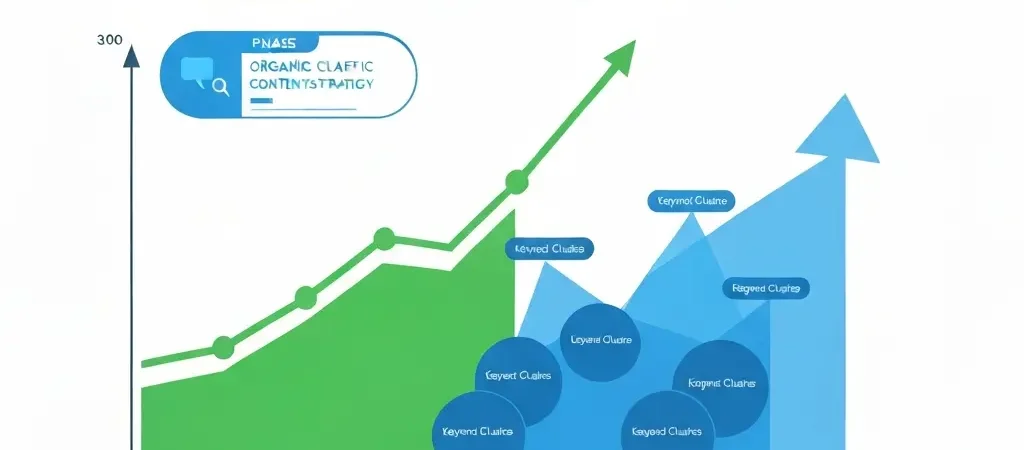
Organize 100-200 keywords into four segments:
- Priority PILLAR (Months 1-3): Your 5-10 most important broad keywords. These get your deepest, most comprehensive articles first.
- Core CLUSTER (Months 2-6): 20-30 topic-specific keywords that cluster around your pillars. Each references and links to its parent pillar.
- Expansion CLUSTER (Months 5-10): 30-50 additional cluster keywords discovered as you see which pillar topics perform best.
- Long-tail SUPPORTING (Months 6-12): 50-100+ specific long-tail queries. The automated content that captures the long tail at scale.
Step 3: Configure Authenova for the 12-Month Plan
Load your full keyword list into Authenova, prioritized in the sequence above. Configure your strategy with:
- Publishing velocity: start at 3-5/week, increase quarterly as indexing performance allows
- Content type ratios: 20% PILLAR, 50% CLUSTER, 30% SUPPORTING
- Brand voice: your detailed audience and tone description
- Workflow mode: SCHEDULED for the first 90 days, AUTO_PUBLISH after quality is validated
12-Month Phase Breakdown
| Phase | Months | Content Focus | Expected Outcome |
|---|---|---|---|
| Foundation | 1-3 | PILLAR articles, core CLUSTER | Initial indexing, first long-tail rankings |
| Authority Building | 4-8 | Expansion CLUSTER, SUPPORTING | Topical authority signals, cluster rankings |
| Scaling | 9-12 | Long-tail SUPPORTING, competitive CLUSTER | Significant organic traffic, PILLAR rankings |
Monitoring Your Automated Strategy
An automated SEO strategy still needs a monthly monitoring ritual. Spend 30-60 minutes per month on:
- Indexing health: GSC Coverage report — maintain above 80% indexed rate
- Keyword momentum: Which clusters are gaining impressions fastest? Double down.
- Cannibalization check: Multiple articles competing for the same keyword? Consolidate or differentiate.
- Content queue depth: Add keywords when queue drops below 30 remaining
- Competitor gap analysis: What keywords are competitors ranking for that you haven’t targeted yet?
The automated SEO strategy framework is exactly what powers Tesify‘s multi-language content operation — separate 12-month strategies per language, each running on Authenova’s automation. CampaignOS provides the campaign-level visibility agencies need when managing automated SEO strategies across multiple client accounts simultaneously. For deeper guidance on the automation layer, see the content automation tool comparison.
Frequently Asked Questions
How do I handle algorithm updates in an automated SEO strategy?
Algorithm updates primarily penalize thin, low-quality, or manipulative content. An automated SEO strategy producing comprehensive, well-structured articles is generally resilient to updates. After major updates, check your Google Search Console for significant traffic drops on specific articles and adjust those articles manually if needed. The topical authority built through consistent automated publishing is a long-term asset that typically survives algorithm updates better than individual optimized pages.
Should I include paid search in my automated SEO strategy?
Paid search (Google Ads) and automated SEO content are complementary. Use Authenova-generated content to build long-term organic authority; use paid search for immediate traffic on high-value commercial keywords while organic rankings build. The keyword data from Google Ads campaigns is valuable for identifying which terms convert well — feed these back into your Authenova keyword strategy to prioritize those topics in content generation.
What ROI should I expect from a 12-month automated SEO strategy?
ROI varies significantly by niche, domain authority, and publishing velocity. Conservative estimates for a new site publishing 5 articles/week: 5,000-15,000 monthly organic visitors by month 12, compounding thereafter. At average organic traffic values of $0.50-2.00 per visitor (depending on niche), this represents $2,500-30,000 per month in traffic value — all growing without additional ad spend. Most automated SEO strategies reach positive ROI within 4-6 months.
Build Your Automated SEO Strategy with Authenova
Authenova is the execution engine for your automated SEO strategy — generating and publishing content on autopilot while your organic traffic compounds month over month.