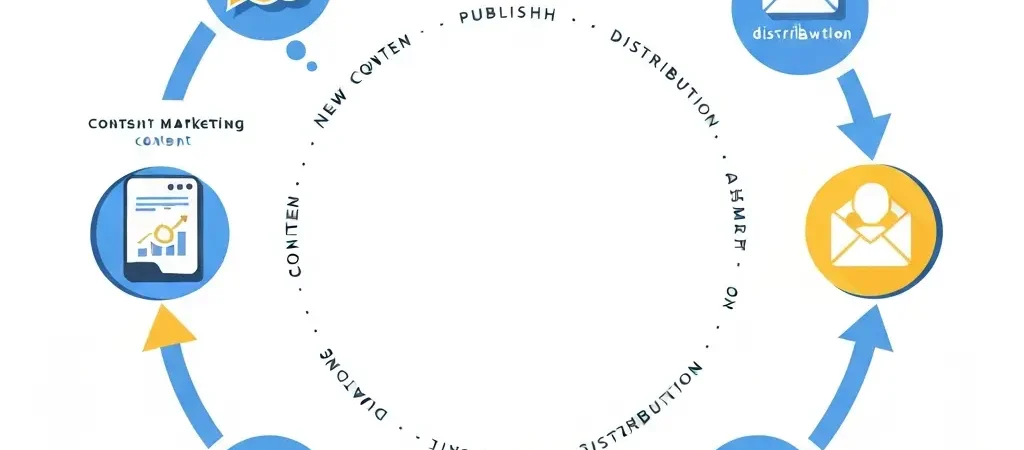
Content Marketing Automation in 2026: From Strategy to Published Article in One Workflow
Content marketing automation is the practice of eliminating manual steps from your content production cycle — connecting strategy, writing, optimization, image creation, and publishing into a single automated pipeline. In 2026, this is not a nice-to-have for high-growth brands. It’s the operational infrastructure that separates content programs that compound from ones that plateau.
The global marketing automation market reached $6.65 billion in 2024 and is projected to hit $15.58 billion by 2030. That growth is driven by exactly the need this guide addresses: teams that want to scale their content output without scaling their headcount. Here’s how the best-run content programs have built this workflow.
The 5-Stage Content Automation Pipeline
Think of content marketing automation as a manufacturing line for your content. Raw material (keywords) enters one end. Finished product (published, optimized articles) exits the other. The goal is zero manual steps between input and output — with optional human review at critical checkpoints.
Most teams start with manual operations at every stage and automate progressively. Start with the stages that consume the most time: content generation and publishing. Then automate upstream (keyword strategy) and downstream (performance reporting) as the system matures.
Stage 1: Keyword Strategy Automation
The strategy stage is where you define what gets produced. In a fully automated content program, this stage is semi-automated: AI tools handle keyword research and clustering, while a human strategist reviews and approves the topical map. The key deliverable is a keyword cluster map — a structured hierarchy of target keywords assigned to content types and a publishing schedule.
Tools like Authenova’s strategy builder take your keyword input and output a complete pillar-cluster architecture: which articles to write first, in what type, and at what cadence. Human review at this stage takes 30–60 minutes per strategy, not 3–5 hours of manual research. See our SEO content strategy guide for the full methodology.
Stage 2: AI Content Generation
The generation stage transforms the keyword map into publication-ready HTML articles. A properly configured AI content generator produces:
- H1 with focus keyword, followed by a hook paragraph
- Quick-answer box optimized for featured snippets and AI citations
- Table of contents with linked navigation
- Body sections with H2/H3 structure, tables, and bullet lists
- FAQ section with embedded FAQPage schema
- CTA section pointing to the product
- SEO meta title and description
This is not a first draft — it’s a publication-ready article with full SEO structure. The buyer’s guide to AI content generators covers the specific features that separate tools producing rankable content from those producing generic text.
Stage 3: SEO Optimization Layer
The optimization layer runs simultaneously with or immediately after generation. It handles the technical SEO elements that affect ranking ability:
- Focus keyword density check: 1–2% natural density, keyword present in H1 and first paragraph
- Schema markup validation: FAQPage and Article schema correctly structured
- Internal link insertion: 3–5 contextually relevant internal links from existing content library
- Meta tag verification: Title under 60 characters, description under 160 characters
- Slug optimization: URL contains focus keyword, no stop words, under 70 characters
In an integrated platform, this layer runs automatically as part of generation. In a multi-tool setup, it may require a separate step or plugin. Integration efficiency here directly determines whether your automation system is genuinely “one workflow” or a series of manual handoffs.
Stage 4: Image Generation
Featured images improve click-through rates by 20–30% in search results. In an automated content workflow, images should be generated alongside articles — not sourced manually afterward.
AI image generation tools (like the one built into Authenova) produce brand-consistent featured images from article context. The image is automatically linked to the article as its featured image, with SEO alt text populated. This removes a step that marketing teams routinely skip under production pressure — and that CTR data shows measurably matters.
Stage 5: Scheduled Publishing
The final stage pushes completed articles to WordPress at the scheduled publication time. This requires:
- A WordPress plugin with direct REST API integration (not copy-paste)
- A scheduling queue that stages articles across the publishing week
- Automatic post creation with correct categories, tags, slug, featured image, and canonical URL
When publishing is fully automated, you can front-load article production — generate a week’s worth of content in one session and have it publish daily without further interaction. This is the cadence pattern that drives consistent topical authority signals. Our guide on automated blog writing systems covers the full publishing workflow.
How to Connect the Pipeline Without Code
The appeal of modern content marketing automation platforms is that they connect all five stages without custom development. Here’s the no-code setup:
- Create an Authenova account and configure your strategy with keywords and brand voice settings
- Install the Authenova WordPress plugin on your site and complete the authentication handshake
- Define your publishing schedule in the strategy settings (days, times, velocity)
- Trigger your first article batch — either manually or via the automatic cron schedule
- Review the first 3–5 articles in the draft queue and adjust brand voice settings if needed
- Set the queue to auto-publish and let the system run
Total setup time: 2–3 hours. Ongoing maintenance: 1–2 hours per week for performance review and occasional strategy updates. Get started with Authenova’s full platform.
Frequently Asked Questions
What is content marketing automation?
Content marketing automation is the use of software to remove manual steps from the content production process — covering keyword strategy, AI content generation, SEO optimization, image creation, and scheduled publishing. A fully automated pipeline produces and publishes optimized content continuously with minimal human intervention, allowing marketing teams to scale output without proportional headcount growth.
How is content marketing automation different from marketing automation?
Marketing automation (platforms like HubSpot, Mailchimp, or CampaignOS) automates distribution — email sequences, lead nurturing, campaign delivery. Content marketing automation automates production — writing, optimizing, and publishing the content that feeds those campaigns. Both are necessary for a complete content-to-conversion system, and the two complement each other.
What does a content marketing automation tool need to do?
A complete content marketing automation tool must handle: keyword strategy and cluster mapping, AI article generation with SEO structure (headings, schema, meta tags, internal links), optional human review queue, image generation, and direct CMS publishing on a schedule. Tools that only handle one stage of this pipeline require manual handoffs that break the automation benefit.
How many articles per week can content marketing automation produce?
A well-configured content marketing automation system can produce 5–15 publication-ready articles per week for a single site with minimal human time. At higher velocities (15–30 articles per week), quality review becomes the limiting factor. Most solo operators run at 5–10 articles per week as a sustainable high-quality cadence that drives topical authority without overwhelming the review process.
One Platform. Full Pipeline. Real Results.
Authenova connects all five stages of content marketing automation in one platform — from keyword strategy to published WordPress article. No stitching together multiple tools. No copy-paste. Just a compounding content engine.