How Do You Optimize Content for Google AI Overviews?
To optimize content for Google AI Overviews, you must answer the target query directly in the first 100 words, structure every heading as a question, implement FAQPage schema markup, and support every factual claim with a named source. Pages that already hold a Featured Snippet have a 60% probability of also appearing in a Google AI Overview — making featured snippet optimization the most efficient starting point. As of 2026, Google AI Overviews appear in at least 16% of all searches and are visible to over one billion users across 100+ countries.
What Are Google AI Overviews?
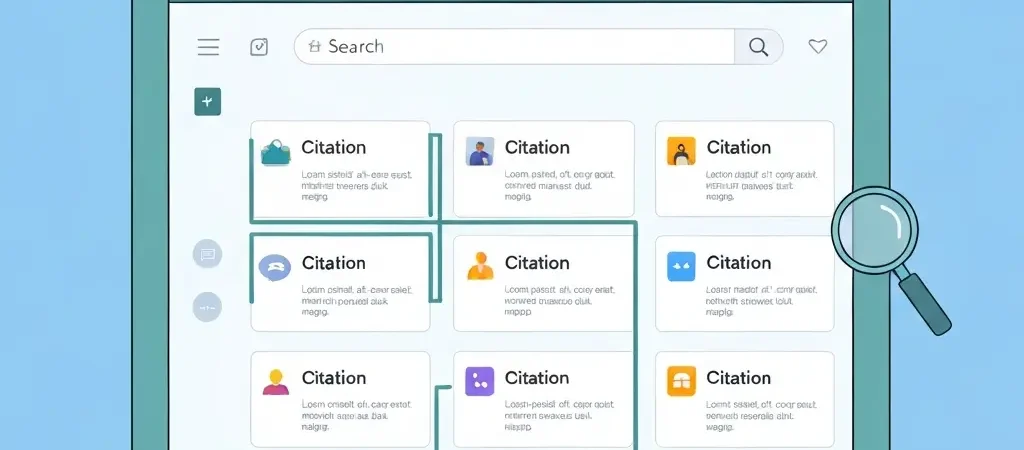
Google AI Overviews (previously called Search Generative Experience or SGE) are AI-generated summary responses that appear at the top of Google search results pages for qualifying queries. They synthesize information from multiple web sources into a single, attributed response — then display the cited sources as expandable cards below the summary.
As of March 2026, AI Overviews appear for informational and navigational queries at a rate of roughly 16% of all Google searches, according to Semrush tracking data. This rate is higher — often 30-50% — for how-to, definition, comparison, and FAQ-type queries, which are precisely the formats most relevant to content-driven SEO strategies.
The critical distinction from traditional search: AI Overviews do not simply link to your page. They extract a passage from your content, attribute it to your domain, and paraphrase or quote it inside the generated answer. The user may never click through to your site — but your brand is cited as the authority. Citation visibility drives brand recognition, trust, and indirect conversion.
How Does Google Select Sources for AI Overviews?
Google’s AI Overview selection combines its standard indexing and ranking systems with an additional extraction layer. Google’s documentation confirms that pages must first be crawlable and indexable — disallowed or noindexed pages are categorically excluded. From the indexed pool, the AI system applies quality and relevance filters.
Does ranking position predict AI Overview inclusion?
Yes, but imperfectly. According to Semrush’s 2025 analysis, 99.5% of AI Overview citations come from pages ranking in the top 10 organic results for the same query. However, position 1 is not guaranteed to be cited — the AI selects the clearest answer, which may come from position 3, 5, or 7. Optimizing for AI Overviews therefore means optimizing for clarity alongside rank.
What query types trigger AI Overviews most often?
Informational queries beginning with “what,” “how,” “why,” “when,” and “which” trigger AI Overviews at the highest rates. Transactional queries (product purchases, bookings) rarely trigger them. Competitive comparison queries (“X vs Y”) trigger them frequently and cite comparison tables. Understanding query type is essential for prioritizing which pages to optimize first.
What Content Structure Gets Cited in AI Overviews?
A study by Conversion Digital found that concise answers and well-structured lists have the strongest correlation with AI Overview inclusion. The following structural patterns appear in cited pages at disproportionate rates.
Direct answer in the first paragraph
State the complete answer to your H1 question in 40-60 words before any background context. This paragraph is what Google’s AI system evaluates for extraction first. If the answer is buried after two introductory paragraphs, the extraction confidence drops. Think of this paragraph as your “Google snippet target” — it should be usable without reading anything else on the page.
Question-format headings throughout
Rewrite every H2 and H3 as a question that mirrors natural query language. “Content Structure” becomes “What Content Structure Gets Cited?” This alignment allows the AI system to match its query against your heading and extract the following paragraph as the answer. Each question-answer heading pair functions as an independent extraction unit.
Bullet points and numbered lists
AI Overviews regularly reproduce bulleted lists verbatim when the list comprehensively answers a “what are the steps” or “what are the types” query. Lists under 7 items are preferred for extraction. Each bullet should be a complete thought, not a fragment that requires reading context to understand.
Comparison tables
Tables comparing two or more options on named dimensions are extracted for evaluative queries. The table must include column headers, use consistent criteria, and be mobile-readable. A properly formatted table answering “AI Overviews vs Featured Snippets” will appear across dozens of related queries in AI-generated responses.
What Schema Markup Is Required for AI Overviews?
Schema markup does not guarantee AI Overview inclusion, but pages with comprehensive structured data receive 2-3x more AI citations than equivalent unstructured pages, according to 2025 testing by Stackmatix. The following schema types are the highest priority.
| Schema Type | Purpose | Impact on AI Citations |
|---|---|---|
| FAQPage | Marks Q&A pairs for direct extraction | Highest single-impact schema type |
| Article | Establishes page as authoritative content | Adds author, datePublished, dateModified signals |
| HowTo | Marks step-by-step procedural content | Highest value for instructional queries |
| Organization | Entity recognition for domain authority | Builds trust layer across all pages |
| BreadcrumbList | Signals topical context and site structure | Reduces parsing ambiguity for AI |
All schema must be implemented in JSON-LD format, which Google prefers and which all major AI systems parse most reliably. Schema must match visible on-page content exactly — mismatches are penalized. Validate every implementation using Google’s Rich Results Test prior to publication.
Which Authority Signals Matter Most for AI Overview Citation?
Authority signals function as the tiebreaker when multiple structurally similar pages compete for the same AI Overview citation. E-E-A-T (Experience, Expertise, Authoritativeness, Trustworthiness) is Google’s published framework for evaluating these signals. Sites demonstrating E-E-A-T saw 23% ranking gains following the December 2025 Core Update, according to BKNDdevelopment’s post-update analysis.
What specific E-E-A-T signals improve AI Overview inclusion?
Named authors with credentials on bylines, organizational About and Contact pages with verifiable information, external backlinks from recognized authoritative domains, accurate statistics with named citations, and consistent factual accuracy across the domain all contribute. The “Experience” component — added to Google’s quality framework in 2022 — favors content that demonstrates first-hand or original observation over purely aggregated information.
Does content freshness affect AI Overview selection?
Yes, significantly. According to Search Engine Land’s analysis of AI Overview citation patterns, 85% of citations came from content published within the last two years, and 44% from 2025. AI Overview systems that use live web retrieval apply recency weighting. The practical implication: update statistics, examples, and publication dates annually on high-value pages. A “2024” label on a guide reduces its citation probability against a direct 2026 competitor.
What Mistakes Kill Your AI Overview Chances?
Several common content and technical practices consistently exclude pages from AI Overview citations despite strong traditional SEO performance.
Burying the answer. Starting with background context or storytelling before stating the answer reduces extraction confidence. AI systems evaluate the opening passage first. If the answer appears in paragraph four, the page will rarely be cited.
Vague statistical claims. Writing “studies show that AI improves traffic” without naming the study or year fails AI verification filters. Named, dated, sourced statistics pass the authority check. Anonymous ones are downweighted or disregarded.
Missing or inconsistent schema. No FAQ schema means your Q&A content is invisible to AI extraction systems. Schema that contradicts visible page content triggers a trust penalty. Both omission and inconsistency reduce AI Overview inclusion probability.
Blocking crawlers for certain page types. AI Overview systems cannot cite content that Googlebot cannot access. Verifying that your sitemap includes all target pages and that robots.txt does not disallow critical content paths is a prerequisite, not an optimization.
What Is the AI Overview Optimization Checklist?
Use this checklist to audit any existing page for AI Overview readiness before publishing or updating.
- H1 is phrased as a question matching the target query
- Opening paragraph answers the H1 query in 40-60 words
- Every H2 is a question; every H3 is a sub-question
- At least one comparison table covering an evaluative sub-topic
- FAQPage schema with 8-12 Q&A pairs in JSON-LD format
- Article schema with author, datePublished, dateModified
- Every statistic cites a named source and year inline
- Page is indexed and crawlable (confirm in Google Search Console)
- Schema validates without errors in Google’s Rich Results Test
- Publication date or “Updated” timestamp reflects current year
- Internal links to 3+ topically related pages on the same domain
- External links to 2+ authoritative third-party sources
How Does Authenova Automate AI Overview Optimization?
Applying the full AI Overview checklist manually across hundreds of articles requires engineering infrastructure most content teams do not have. Authenova builds this structure into every generated article by default — question-format H1, direct-answer opening paragraph, FAQ section with JSON-LD schema, inline citations, and pillar-cluster linking architecture for topical depth.
Content strategies in Authenova specify the brand voice, target keywords, content types (pillar, cluster, supporting), and publishing schedule. The Authenova AI Content Generator produces structurally consistent articles that satisfy AI Overview requirements at each publish, then automatically pushes them to WordPress via the Authenova plugin. Teams managing 50-500 articles per month can maintain freshness and structural compliance systematically rather than through ad hoc audits.
The relationship between AI Overview optimization and broader GEO strategy is explored in depth at What Is Generative Engine Optimization (GEO)? The 2026 Complete Guide and What Is Answer Engine Optimization (AEO)?. For adjacent insights on AI-driven marketing automation, see Email Marketing Automation: Complete Guide for Growth Teams in 2026 from CampaignOS.
Frequently Asked Questions
Can I opt out of Google AI Overviews?
Yes. Adding a nosnippet meta tag to a page’s HTML head prevents Google from using that page’s content in AI Overviews and featured snippets. However, this also removes you from all snippet-based visibility, not just AI Overviews. Most sites should not use nosnippet broadly — it eliminates a significant visibility channel. Use it only for content you specifically do not want quoted outside its original context.
How do I know if my page is being cited in AI Overviews?
Google Search Console shows AI Overview impressions for your site under the Search Results report — filter by “AI Overview” appearance type (available from mid-2025). Third-party tools including Semrush AI Toolkit and SE Ranking also track AI Overview citation frequency by keyword. Manually searching your target queries in an incognito browser remains the fastest qualitative check.
Does getting cited in AI Overviews reduce my organic click-through rate?
There is a measured CTR reduction for some query types when AI Overviews appear — users who receive a complete answer may not click through. However, brand citation in AI Overviews drives downstream branded search volume and direct traffic, which offset the CTR loss for most informational content. Transactional pages that do not appear in AI Overviews are less affected.
Is it enough to optimize just a few pages for AI Overviews?
No. AI Overview citation is probabilistic and competitive. A single optimized page earns citations for a narrow set of queries. Building citation coverage across a topic requires a content cluster — a pillar page plus 8-15 supporting cluster pages covering all major sub-questions. Topical depth across the domain is a stronger AI citation predictor than any individual page optimization.
How often should I update pages to stay in AI Overviews?
At minimum, update statistics, publication date, and any outdated examples annually. For fast-moving topics (AI, technology, regulation), quarterly reviews are preferable. Pages with a visible “Updated: March 2026” timestamp and refreshed data outperform equivalent pages with 2024 dates in AI Overview citation tracking, all else equal. Set a calendar reminder for each high-value page’s annual review.
Does page speed affect AI Overview inclusion?
Page speed affects AI Overview inclusion indirectly. Google’s crawler prioritizes fast-loading pages for more frequent re-crawling, meaning your freshness signals are updated more regularly. Slow pages (above 3-4 seconds LCP) also correlate with lower overall quality scores in Google’s ranking systems, which reduces the probability of being in the ranking pool from which AI Overviews are drawn.
What word count performs best for AI Overview citations?
There is no universal optimal word count. The AI selects the best answer passage, not the longest page. Pillar pages of 2,000-3,000 words covering a broad topic comprehensively tend to earn more citations across a wider range of queries. Cluster pages of 1,000-1,500 words that answer one specific question precisely tend to earn concentrated citations for that specific query. Match depth to intent.
Do images help with AI Overview optimization?
Images with descriptive alt text contribute to AI Overview eligibility for visually-triggered queries. Google’s AI Overviews occasionally include images alongside text citations. Proper alt text makes your images parseable, and optimized filenames contribute to image-based search signals. More importantly, high-quality images are an E-E-A-T signal — original diagrams and charts that illustrate your content differentiate it from aggregated text-only pages.
Should I write specifically for Google AI Overviews or for all AI engines?
Write for all AI engines simultaneously — the optimization requirements overlap by approximately 90%. Direct answers, question headings, structured data, and named citations improve your probability in Google AI Overviews, ChatGPT, Perplexity, and Gemini at the same time. The remaining 10% difference is engine-specific (e.g., Perplexity emphasizes recency more heavily). A unified AEO content strategy captures all channels efficiently.
What is the fastest way to start appearing in Google AI Overviews?
The fastest path is optimizing your existing pages that already hold Featured Snippets, since 60% of Featured Snippet pages are also cited in AI Overviews. Update those pages with question-format headings, a direct opening answer, FAQ schema, and refreshed statistics. This improves your existing authority position rather than building from scratch, delivering AI Overview citations in 4-8 weeks rather than months.