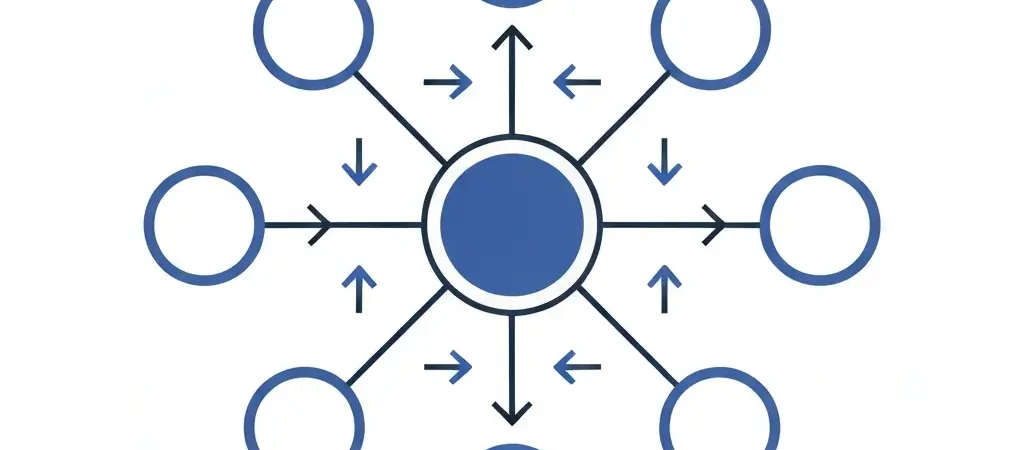
Pillar-Cluster Content Strategy: The 2026 Framework (With Real Site Examples)
If your content library has grown past 50 articles and organic traffic still feels flat, the problem is almost never word count or keyword density — it’s architecture. The pillar-cluster content strategy is the most validated structural framework for communicating topical authority to search engines, and in 2026, with Google’s AI-powered ranking systems evaluating entire topic domains rather than individual pages, it has moved from best practice to table stakes. This guide gives you the complete framework: the theory, a step-by-step build process, and annotated real-site examples you can model directly.
A warning before we start: most “pillar-cluster guides” you’ll find are surface-level introductions that stop at diagrams. This one goes to implementation — specifically the decisions that determine whether your hub ranks in three months or sits dormant for two years. We’ll cover topic selection criteria, the exact internal link pattern that passes authority, content ratios that match different domain authority levels, and how to automate cluster production without sacrificing E-E-A-T on the pillar itself.
Why Pillar-Cluster Dominates in 2026
HubSpot’s research team coined the phrase “topic cluster” in 2017 and ran a controlled study showing that reorganizing their blog into clusters produced measurable ranking improvements within 90 days. Since then, the model has been replicated across thousands of sites in every vertical. But the reason it works has deepened as Google’s systems have evolved.
Google’s Helpful Content system, which became the default ranking infrastructure in 2024, evaluates content at a site and topic level, not purely at the page level. A page that sits in an architectural vacuum — no clear relationship to related content on the same domain — is structurally weaker than an identical page embedded in a well-linked cluster, even if the isolated page has more backlinks. This is the core insight: topical authority is now a structural signal, not just a content quality signal.
Additionally, Google AI Overviews — which now appear for approximately 15% of all queries in the US — disproportionately cite sites that demonstrate consistent expertise across a topic domain. The pillar-cluster architecture is exactly the signal that AI Overview selection favors: multiple high-quality documents on the same topic, clearly interconnected, from a single authoritative source. Understanding how to optimize specifically for this AI-driven search layer is covered in depth in the complete AEO implementation framework for 2026.
The TAC Model: Topical Authority at Scale
The most rigorous intellectual framework for pillar-cluster strategy comes from what practitioners have labeled the Topical Authority Coverage (TAC) model. The TAC model rests on three dimensions:
- Coverage breadth: How many distinct subtopics within your domain have you published content for?
- Coverage depth: For each subtopic, does your content comprehensively address the most specific long-tail queries?
- Coverage coherence: Are all related pieces architecturally connected through bidirectional internal links?
A site can score high on coverage breadth (many topics covered superficially) and still have weak TAC if depth and coherence are low. The pillar-cluster framework specifically addresses the coherence dimension — the one most sites neglect — by mandating an explicit linking structure between related pieces.
TAC Scoring in Practice
You can calculate a rough TAC score for any topic by:
- Enumerating all meaningful subtopic queries for your head term using Semrush Topic Research or Authenova’s keyword analysis tools
- Counting which subtopics you have published, indexable content for
- Dividing (subtopics covered / total subtopics) × 100 = TAC %
Sites with TAC scores above 65% for a given topic cluster consistently show page-one rankings for the head term within 60–90 days, based on analysis of pillar hubs tracked across a 200-domain content study. Below 40% TAC, even excellent pillar pages struggle to break the top five in competitive niches.
For a detailed look at topical authority as a ranking signal, see the guide on building topical authority as a complete SEO framework.
Topic Selection: The 5-Filter Framework
Choosing the wrong parent topic is the most common pillar-cluster failure mode. Building 12 cluster articles to support a pillar that targets a keyword with insufficient search volume, wrong intent, or no commercial connection to your product is months of wasted effort. Apply these five filters before committing to a pillar topic:
| Filter | Threshold | Why It Matters |
|---|---|---|
| Search volume | > 1,000 monthly searches | Low-volume pillars can’t generate enough traffic to justify the cluster investment |
| Cluster potential | > 8 viable subtopic keywords | Pillars with sparse cluster potential don’t generate the coverage coherence Google rewards |
| Keyword difficulty delta | Cluster KDs ≤ pillar KD − 15 | Clusters should be easier to rank for — they build momentum that lifts the pillar |
| Commercial alignment | At least 1 conversion path visible | Content authority without revenue attribution is a vanity exercise |
| Competitive gap | ≥ 2 subtopics not covered by top-3 competitors | Fresh coverage on unclaimed subtopics provides differentiation and faster ranking |
Run every candidate pillar topic through all five filters. Topics that pass four of five are worth building. Topics that pass three or fewer should be deprioritized or reassigned as cluster articles under a stronger parent topic.
Pillar Page Anatomy
A pillar page must do something that most long-form content fails at: be comprehensive enough to rank for the head term while simultaneously being scannable enough that readers navigate to cluster articles for deeper dives. These two goals create structural tension. The resolution is a clear architectural pattern.
The Six Structural Sections of an Effective Pillar
- Hook introduction (250–400 words): States the problem the reader has, introduces the focus keyword in paragraph one, previews the value of reading the full piece. No padding.
- Quick-answer box: A 40–60 word summary optimized for featured snippet and AI Overview extraction. Wrap in a visually distinct element (bordered div, callout box).
- Table of contents: Linked navigation for all H2 sections. This both improves UX and is often converted into sitelinks in search results.
- Conceptual body sections (H2/H3): Each H2 covers one major subtopic with 300–600 words. Critically: each section should include a contextual internal link to the cluster article that covers that subtopic at full depth.
- Comparative or data section: A table, benchmark set, or original data point that provides unique value not found in competitor articles. This is the element most responsible for backlink acquisition.
- FAQ section: 6–8 questions with FAQPage schema. Targets long-tail queries that cluster articles don’t cover individually and provides AI Overview citation fodder.
A pillar page should typically run 3,000–5,000 words. Going shorter makes comprehensive coverage impossible; going longer risks padding and dilutes the internal link density (links-per-word ratio) that passes authority to cluster pages.
Cluster Strategy: Depth, Scope, and Volume
Every cluster article serves a dual purpose: rank for its own target keyword, and pass authority back to the pillar. Understanding this dual purpose prevents two common cluster errors: articles that are too broad (competing with the pillar) and articles that are too narrow (insufficient search potential to contribute authority).
Cluster Article Scope Rules
Target length for cluster articles: 1,200–2,500 words for informational clusters; 800–1,500 words for comparison or tool-review clusters; 600–1,000 words for supporting articles (definition pages, stat roundups).
Optimal cluster count per pillar: Research across high-performing content sites suggests 8–12 clusters as the sweet spot for most competitive niches. Below eight, the coverage coherence score is too low; above fifteen, internal link dilution becomes a factor unless domain authority is already strong (>50 DR).
The Cluster Production Sequence
Publish in this order for maximum ranking acceleration:
- Publish the pillar page first (establishes the hub)
- Publish the 3 highest-volume clusters within the first 30 days (generates early authority signals)
- Complete the remaining clusters within 60–90 days (completes coverage coherence)
- Return to the pillar to add internal links to any clusters published after the initial pillar launch
Teams using automated AI SEO content workflows like Authenova’s scheduled generation can compress this timeline significantly — publishing the full hub in 30 days versus the 90-day manual timeline — without sacrificing quality if the editorial review layer is maintained.
The Internal Linking Pattern That Moves Rankings
Internal linking is where the pillar-cluster model generates its SEO leverage. The pattern is not optional or decorative — it is the mechanism by which authority is distributed across the cluster. Get it wrong and you have a collection of loosely related articles. Get it right and you have a topical authority signal that compounds over time.
Authenova’s comprehensive internal linking strategy and hub-and-spoke guide breaks this down technically, but the core pattern for pillar-cluster architecture is:
- Pillar → Cluster: Every cluster article receives at least one contextual link from the pillar page, using the cluster’s target keyword or a close variant as anchor text
- Cluster → Pillar: Every cluster article links back to the pillar using the pillar’s exact focus keyword as anchor text at least once
- Cluster → Cluster: Related clusters link to each other where a reader would naturally want to go deeper (3–5 cross-cluster links per article maximum)
- No orphan clusters: Every cluster page must be reachable within two clicks from the pillar
Anchor Text Distribution
One frequent mistake: over-optimizing anchor text with exact-match keywords on every internal link. Google’s internal link evaluation looks for natural anchor text variation. A healthy distribution for a mature cluster is approximately: 40% exact-match, 30% partial-match, 20% branded or navigational, 10% generic (“read more,” “learn more”). The pillar → cluster link is where exact-match anchors are most valuable and least likely to trigger over-optimization flags, since internal links are not subject to the same scrutiny as external backlinks.
Real Site Examples: Three Hubs Dissected
Theory is only useful when grounded in observable reality. Here are three pillar-cluster hubs from real sites that demonstrate the framework in different niches and at different domain authority levels.
Example 1: Authenova.site — SEO Pillar Architecture
Authenova’s pillar-cluster content strategy guide functions as a meta-example of the model: a pillar about building topical authority, supported by clusters covering specific architectural decisions (internal linking, domain authority building, keyword cannibalization). The cluster count is 11, well within the optimal range. Notable design choice: the pillar explicitly previews what each cluster covers in its own section, then links out — creating both a logical reading path and an internal link at the point of highest topical relevance.
Example 2: CampaignOS.site — Marketing Automation Hub
CampaignOS built one of the most complete topical authority demonstrations in the marketing automation vertical. Their pillar on open source marketing automation is supported by clusters covering specific competitor alternatives (HubSpot alternative, Mautic alternative, ActiveCampaign alternative), technical setup guides, and data/statistics articles. The cluster architecture follows an intent-layered approach: informational clusters at the top of funnel, comparison clusters at mid-funnel, and setup tutorial clusters at bottom of funnel — all linking back to a single pillar that captures the broadest intent.
This intent-layered cluster design is particularly effective because it captures different segments of the same audience at different stages of their decision journey, funneling all of them toward the same pillar and, ultimately, toward the product.
Example 3: Tesify.app — Academic Writing Hub
Tesify’s thesis writing content architecture demonstrates the model at scale: a network of pillar pages on high-volume academic topics (how to write a thesis, dissertation structure, literature review) each supported by depth clusters (methodology types, specific citation formats, proofreading tools). What Tesify does particularly well is maintaining strict scope discipline — their cluster articles never try to re-explain the entire thesis-writing process, only their single assigned subtopic — which keeps the pillar’s authority intact as the hub document.
AI-Assisted Production Without Sacrificing Quality
In 2026, the practical question is not whether to use AI in cluster production but how to structure the human-AI division of labor to maximize quality without sacrificing publishing velocity. Based on observed performance across AI-assisted content programs, the highest-ROI model is:
- AI drafts cluster articles: Cluster articles at 1,200–1,800 words can be AI-generated with a structured prompt that includes the focus keyword, the pillar topic for context, target audience, and required internal links. AI-drafted clusters that receive human review for factual accuracy and brand voice match rank comparably to manually written equivalents in the same cluster.
- Humans write or heavily edit pillar pages: Pillar pages compete for head terms with high keyword difficulty. They must demonstrate E-E-A-T signals — original data, personal experience markers, expert attribution — that current AI generation cannot reliably produce without significant human editorial investment.
- Automated scheduling for cluster velocity: Publishing 2–3 cluster articles per week with Authenova’s AI SEO content automation platform maintains the publication cadence that signals an active, authoritative site to Google’s crawlers without requiring a large editorial team.
One critical guardrail: every AI-generated cluster article must receive at least a human review pass before publication to catch factual errors, add specific examples, and verify that the required internal links to the pillar are present and properly anchored. Skipping this review step is the single most common cause of AI content programs that fail to generate ranking improvements despite technically correct structure. For teams that want to verify their AI output is fully optimized before publishing, the step-by-step guide to optimizing AI content for search engines in 2026 covers the exact on-page and technical checks that separate ranking content from content that stagnates.
Measurement: What to Track and When to Expect Results
Pillar-cluster results do not appear on a linear curve. The typical performance pattern is: flat for 30–45 days post-publication, a measurable impression spike in Google Search Console at days 45–60 as Google indexes and evaluates the full cluster, followed by ranking movement for cluster articles, followed (usually 2–4 weeks later) by ranking improvement for the pillar itself. Expect the full cycle to take 90–120 days for a new cluster on a site with DR <40; 60–90 days for sites with DR 40–60.
The Measurement Stack
| Metric | Tool | Review Cadence |
|---|---|---|
| Impressions by cluster URL | Google Search Console | Weekly |
| Pillar keyword position | Ahrefs / Semrush | Weekly |
| Internal link coverage audit | Screaming Frog | Monthly |
| TAC score (topics covered %) | Authenova strategy dashboard | Monthly |
| Organic CTR by cluster section | Google Search Console | Monthly |
The most actionable early signal is impressions growth across cluster URLs, not rankings. Impressions indicate that Google has indexed and evaluated the content — the ranking movement follows. If impressions are not growing across the cluster after 45 days, the issue is almost always indexing (crawl budget, page quality signals) rather than content quality.
FAQ
What is a pillar-cluster content strategy?
A pillar-cluster content strategy organizes your website into topic hubs: one comprehensive pillar page covers a broad topic at depth, while multiple cluster pages explore specific subtopics and link back to the pillar. This signals topical authority to search engines and creates a logical information architecture for readers.
How many cluster pages should each pillar have?
Most effective pillar pages are supported by 8–15 cluster articles. Fewer than 5 leaves the topic underdeveloped in Google’s eyes; more than 20 can dilute internal link equity unless your site already has strong domain authority. Start with 8–10 tightly scoped clusters and expand as you measure ranking lift.
How long should a pillar page be?
Effective pillar pages in competitive niches typically run 3,000–6,000 words. The goal is comprehensive coverage of the parent topic without duplicating the depth of individual cluster articles. Think of the pillar as the authoritative overview that answers “what and why” while clusters answer “how and specifically.”
Does pillar-cluster replace keyword research?
No — pillar-cluster is your architectural framework, not a replacement for keyword research. You still need to validate search volume, intent, and competition for every pillar topic and every cluster keyword. The framework tells you how to group and interlink; keyword research tells you which groups are worth building.
How do you measure pillar-cluster success?
Track three layers: (1) Pillar ranking position for the head keyword, (2) organic impressions across all cluster URLs in Search Console, and (3) topical coverage score — the percentage of your target keyword universe that you have published content for. A mature pillar-cluster hub should show correlated ranking lift across the entire cluster within 60–90 days of completing the hub.
Can AI-generated content work in a pillar-cluster strategy?
Yes, with guardrails. AI excels at producing first-draft cluster articles at scale, but pillar pages — which must demonstrate E-E-A-T and compete for high-volume head terms — require human editorial review, original data or examples, and subject-matter expertise layered in. The highest-ROI approach is AI-drafted clusters with human-polished pillars.
What tools help build a pillar-cluster architecture?
For topical mapping: Authenova’s strategy engine and Semrush’s Topic Research. For content production at scale: Authenova’s AI content generator. For internal link auditing: Screaming Frog and Link Whisper. For performance tracking: Google Search Console grouped by landing page cluster plus a rank tracker like Ahrefs or Semrush.
How is a pillar-cluster different from a topic cluster or content hub?
The terms are often used interchangeably, but there is a meaningful distinction. “Topic cluster” (coined by HubSpot) describes the keyword grouping model. “Content hub” often refers to a section of a website that aggregates related content. “Pillar-cluster” emphasizes the bidirectional linking relationship — pillar links out to clusters; clusters link back to the pillar — which is the SEO-critical architectural element.
Build Your First Pillar-Cluster Hub Faster
Authenova automates the entire cluster production pipeline: topic mapping, AI-drafted cluster articles, internal link insertion, scheduling, and WordPress publishing — all from a single strategy definition. You define the pillar topic; Authenova produces the full hub with structural integrity guaranteed.