Structured Data Types Guide: Every Schema Markup Type That Drives Rich Results in 2026
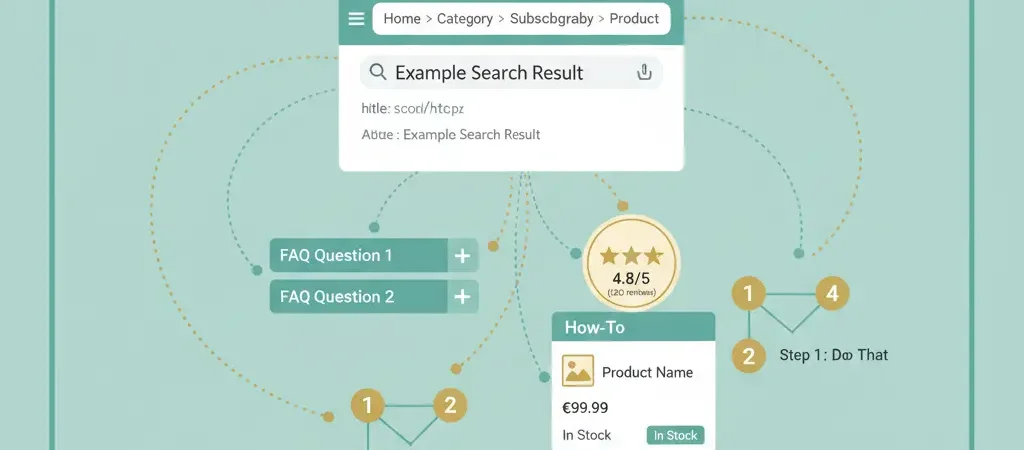
Structured data is the layer of machine-readable code that transforms a standard blue link into a rich result — a star-rated review block, an expandable FAQ accordion, a product listing with pricing and availability, or a how-to card with step thumbnails. In 2026, structured data types have expanded beyond traditional SERP rich results: Google’s AI Overviews and third-party AI answer engines actively consume schema markup to identify authoritative, well-structured sources for citation.
The difference between a site that earns rich results and one that does not is rarely content quality — it is schema implementation. Products with complete structured data are 4.2x more likely to appear in Google Shopping results. Pages with FAQPage schema generate click-through rates 20–30% higher than equivalent pages without it. LocalBusiness schema is now described by Google as a “structural trust layer,” not an optional enhancement.
This guide covers every structured data type that generates rich results in 2026, with JSON-LD implementation examples for each, common implementation errors, and a prioritization framework for deciding which schema types to implement first.
Why JSON-LD Is the Standard Format
Google supports three structured data formats: JSON-LD, Microdata, and RDFa. JSON-LD (JavaScript Object Notation for Linked Data) is unequivocally the recommended choice for new implementations and migration targets for existing ones:
- Separation of concerns: JSON-LD lives in a
<script>tag and does not require annotating individual HTML elements — you can add or update it without touching your page layout - CMS compatibility: Easier to generate dynamically from templates or databases without HTML modifications
- Maintenance: A single block of JSON is easier to read, validate, and update than attribute-scattered Microdata
- Google’s preference: Explicitly documented in Google’s Developer documentation and Search Central blog posts
All examples in this guide use JSON-LD placed in a <script type="application/ld+json"> tag within the page’s <head> or <body>.
Article and BlogPosting Schema
Article schema signals to Google that a page is a news article, blog post, or editorial piece. While it does not directly generate a visual rich result in standard web search, it is a critical E-E-A-T signal and is used by Google to populate Top Stories, Google News, and Discover cards. It also provides essential signals for AI crawlers evaluating source authority.
Minimal Required Properties
{
  "@context": "https://schema.org",
  "@type": "BlogPosting",
  "headline": "Your Article Title Here",
  "author": {
    "@type": "Person",
    "name": "Author Name",
    "url": "https://example.com/authors/author-name"
  },
  "publisher": {
    "@type": "Organization",
    "name": "Site Name",
    "logo": {
      "@type": "ImageObject",
      "url": "https://example.com/logo.png"
    }
  },
  "datePublished": "2026-07-27",
  "dateModified": "2026-07-27",
  "image": "https://example.com/featured-image.jpg",
  "description": "Article meta description or excerpt."
}
High-Impact Optional Properties
wordCount— helps Google understand content depthkeywords— reinforces topical relevancemainEntityOfPage— confirms this page is the canonical page for the articleinLanguage— important for multilingual sites
FAQPage Schema
FAQPage schema generates expandable question-and-answer accordions directly in the SERP, increasing the visual footprint of your result and often pushing competitor results below the fold. It is also the schema type most actively consumed by AI answer engines when attributing answers to source pages.
FAQPage JSON-LD Implementation
{
  "@context": "https://schema.org",
  "@type": "FAQPage",
  "mainEntity": [
    {
      "@type": "Question",
      "name": "What is the answer to the first question?",
      "acceptedAnswer": {
        "@type": "Answer",
        "text": "The answer text. Can include HTML, but plain text is safest for broad compatibility."
      }
    },
    {
      "@type": "Question",
      "name": "What is the answer to the second question?",
      "acceptedAnswer": {
        "@type": "Answer",
        "text": "Second answer text here."
      }
    }
  ]
}
FAQPage Best Practices
- Keep each answer concise (under 300 words per answer) — longer answers may be truncated in rich results
- The question text in the schema must exactly match the visible question on the page
- Use real questions your target audience asks — pull from People Also Ask data, Google Autocomplete, and keyword research tools
- 4–8 questions is the optimal range for rich result eligibility and user experience
HowTo Schema
HowTo schema marks up step-by-step instructional content and generates a rich result showing the steps directly in the SERP — with optional images for each step. In 2026, HowTo schema is explicitly referenced by Google as a source for AI Overview step-by-step content.
HowTo JSON-LD Implementation
{
  "@context": "https://schema.org",
  "@type": "HowTo",
  "name": "How to Implement Hreflang for International SEO",
  "description": "A step-by-step guide to implementing hreflang tags on your website.",
  "totalTime": "PT30M",
  "estimatedCost": {
    "@type": "MonetaryAmount",
    "currency": "USD",
    "value": "0"
  },
  "step": [
    {
      "@type": "HowToStep",
      "name": "Audit Your URL Structure",
      "text": "Identify all language and regional versions of your site and map their URLs.",
      "image": "https://example.com/step1-image.jpg",
      "url": "https://example.com/how-to-implement-hreflang#step-1"
    },
    {
      "@type": "HowToStep",
      "name": "Write the Hreflang Tags",
      "text": "Create a hreflang tag for each language version, including the self-referencing tag.",
      "url": "https://example.com/how-to-implement-hreflang#step-2"
    }
  ]
}
HowTo Best Practices
- Use
HowToStepfor each individual action — not for conceptual sections - Include
imageon each step when step-specific visuals exist — this enables the visual carousel rich result - Set
totalTimeusing ISO 8601 duration format (PT30M = 30 minutes) - The page must actually contain visible step-by-step instructions matching the schema — do not use HowTo schema on pages that do not contain instructional content
Product and Offer Schema
Product schema is where structured data delivers the most immediate, measurable SERP impact. Products with complete schema are eligible for Google Shopping integration, rich results showing rating, price, and availability, and Merchant Center product listings. The key is including the Offer nested type — a Product without an Offer is ineligible for most product-specific rich results.
Product JSON-LD Implementation
{
  "@context": "https://schema.org",
  "@type": "Product",
  "name": "Product Name",
  "image": [
    "https://example.com/product-1.jpg",
    "https://example.com/product-2.jpg"
  ],
  "description": "Product description text.",
  "sku": "PROD-12345",
  "brand": {
    "@type": "Brand",
    "name": "Brand Name"
  },
  "aggregateRating": {
    "@type": "AggregateRating",
    "ratingValue": "4.7",
    "reviewCount": "328"
  },
  "offers": {
    "@type": "Offer",
    "url": "https://example.com/product-url/",
    "priceCurrency": "USD",
    "price": "49.99",
    "priceValidUntil": "2027-01-01",
    "itemCondition": "https://schema.org/NewCondition",
    "availability": "https://schema.org/InStock",
    "seller": {
      "@type": "Organization",
      "name": "Your Store Name"
    }
  }
}
Product Schema Requirements
nameand at least one ofimage,description,sku, orbrandare required- The
Offertype withprice,priceCurrency, andavailabilityis required for pricing rich results priceValidUntilmust be a future date — expired price validity disqualifies the listing from Google Shopping- Price in the schema must exactly match the visible price on the page — discrepancies cause eligibility loss
LocalBusiness Schema
LocalBusiness schema tells Google exactly who your business is, where it operates, when it is open, and what it offers. In 2026, Google explicitly describes this as a structural trust layer — it influences Google Maps listings, local pack rankings, and AI assistant responses to “near me” queries.
LocalBusiness JSON-LD Implementation
{
  "@context": "https://schema.org",
  "@type": "LocalBusiness",
  "name": "Business Name",
  "image": "https://example.com/business-image.jpg",
  "@id": "https://example.com/#business",
  "url": "https://example.com",
  "telephone": "+1-555-123-4567",
  "address": {
    "@type": "PostalAddress",
    "streetAddress": "123 Main Street",
    "addressLocality": "City",
    "addressRegion": "CA",
    "postalCode": "90210",
    "addressCountry": "US"
  },
  "geo": {
    "@type": "GeoCoordinates",
    "latitude": 34.0522,
    "longitude": -118.2437
  },
  "openingHoursSpecification": [
    {
      "@type": "OpeningHoursSpecification",
      "dayOfWeek": ["Monday", "Tuesday", "Wednesday", "Thursday", "Friday"],
      "opens": "09:00",
      "closes": "17:00"
    }
  ],
  "sameAs": [
    "https://www.facebook.com/businessname",
    "https://www.yelp.com/biz/businessname"
  ]
}
LocalBusiness Sub-Types
Use the most specific sub-type for your business — it provides more precise context than the generic LocalBusiness type:
Restaurant,Bakery,FoodEstablishmentMedicalClinic,Dentist,HospitalAutoDealer,AutoRepairLegalService,LawyerRealEstateAgentStore,ClothingStore,BookStore
Review and AggregateRating Schema
Review schema enables star ratings to appear in search results — one of the most attention-grabbing rich result types. The key distinction: Review schema marks up individual reviews, while AggregateRating marks up an average of multiple reviews. Both can be nested inside Product, LocalBusiness, or Recipe schema.
AggregateRating Nested in Product
"aggregateRating": {
  "@type": "AggregateRating",
  "ratingValue": "4.8",
  "bestRating": "5",
  "worstRating": "1",
  "ratingCount": "1247"
}
Individual Review
"review": {
  "@type": "Review",
  "author": {
    "@type": "Person",
    "name": "Jane Smith"
  },
  "reviewRating": {
    "@type": "Rating",
    "ratingValue": "5",
    "bestRating": "5"
  },
  "reviewBody": "Excellent product — highly recommend.",
  "datePublished": "2026-06-15"
}
BreadcrumbList Schema
BreadcrumbList schema generates breadcrumb navigation in the SERP, replacing the URL with a readable path like Home > Blog > Technical SEO. While less visually impactful than Product or FAQ rich results, it improves click-through rate through improved URL readability and is particularly valuable for e-commerce and content sites with deep URL hierarchies.
{
  "@context": "https://schema.org",
  "@type": "BreadcrumbList",
  "itemListElement": [
    {
      "@type": "ListItem",
      "position": 1,
      "name": "Home",
      "item": "https://example.com/"
    },
    {
      "@type": "ListItem",
      "position": 2,
      "name": "Blog",
      "item": "https://example.com/blog/"
    },
    {
      "@type": "ListItem",
      "position": 3,
      "name": "Technical SEO",
      "item": "https://example.com/blog/technical-seo/"
    }
  ]
}
Organization and WebSite Schema
Organization and WebSite schema belong on your homepage and establish entity identity for your brand. WebSite schema enables the sitelinks searchbox in branded SERPs. Organization schema provides signals for Google’s Knowledge Panel generation and connects your website to your social profiles, ensuring consistent entity recognition across the web.
WebSite Schema for Sitelinks Searchbox
{
  "@context": "https://schema.org",
  "@type": "WebSite",
  "name": "Site Name",
  "url": "https://example.com",
  "potentialAction": {
    "@type": "SearchAction",
    "target": {
      "@type": "EntryPoint",
      "urlTemplate": "https://example.com/search?q={search_term_string}"
    },
    "query-input": "required name=search_term_string"
  }
}
VideoObject Schema
VideoObject schema enables video rich results — thumbnail previews, duration, and upload date visible in the SERP. With video content increasingly prominent in AI Overviews, proper VideoObject markup helps your video assets appear in both standard and AI-augmented search results.
Required properties: name, description, thumbnailUrl, uploadDate. High-impact optional: duration (ISO 8601), embedUrl, contentUrl, hasPart with Clip types for key moments.
Event Schema
Event schema generates rich results for conferences, webinars, workshops, and other scheduled events — including in-person location, dates, ticket pricing, and virtual event URLs. Particularly valuable for SaaS companies running webinars and for e-commerce brands with limited-time promotions structured as events.
Implementation Priority Framework
Not all schema types deliver equal ROI. Use this framework to sequence your implementation:
| Priority | Schema Type | Applies To | SERP Impact |
|---|---|---|---|
| 1 | Organization + WebSite | All sites | Entity recognition, sitelinks |
| 2 | Product + Offer + AggregateRating | E-commerce | Stars, price, availability in SERP |
| 2 | LocalBusiness | Local businesses | Local pack, Maps, hours in SERP |
| 3 | Article/BlogPosting | Content sites, news | Top Stories, Discover, E-E-A-T |
| 3 | BreadcrumbList | All multi-level sites | SERP URL readability, CTR |
| 4 | FAQPage | FAQ, support pages | Expandable Q&A accordion, AI citation |
| 4 | HowTo | Tutorial/guide pages | Step rich result, AI Overviews |
| 5 | VideoObject | Video content pages | Video rich result, thumbnail |
| 5 | Event | Events, webinars | Event rich result with dates/location |
Validation and Testing
Google’s Rich Results Test
The Rich Results Test is the authoritative validation tool. It renders your page, extracts all schema, and tells you which rich result types your page is eligible for — and which errors or warnings are blocking eligibility. Run this test after every schema implementation or update.
Google Search Console — Rich Results Report
Search Console’s Enhancements section shows rich result performance and errors across your entire site. Monitor this weekly, especially after site deployments that might affect schema output.
Schema.org Validator
The Schema.org Validator validates against the full schema.org specification — stricter than Google’s Rich Results Test, which only checks Google’s own supported subset. Use both.
Common Validation Errors
- Missing required field: A required property for a specific rich result type is absent
- Content mismatch: Schema values do not match visible page content (price, rating, date)
- Invalid URL: Image or URL properties contain relative paths instead of absolute URLs
- Incorrect type: Using
@type: "Blog"instead of@type: "BlogPosting"for individual articles
Structured Data for AI Search Engines
In 2026, structured data serves a dual audience: Google’s rich result algorithms and AI answer engine crawlers. The way AI engines use schema differs from traditional rich results:
- FAQPage and HowTo schema are directly consumed by AI engines to identify authoritative answers for user queries — these schema types increase the probability of your content being cited in AI-generated responses
- Article schema with author credentials signals source authority and increases likelihood of citation in AI Overviews
- Product schema with complete pricing is used by shopping AI assistants to provide product recommendations
- Organization schema with sameAs properties establishes entity identity across multiple data sources, which AI knowledge graphs use to verify and cross-reference source credibility
The practical recommendation: treat schema markup as a minimum requirement for every published page, not an enhancement layer. Sites with comprehensive schema markup consistently outperform schema-less competitors in both traditional rich results and AI citation rates.
Connecting your structured data strategy to a topical authority framework amplifies the impact — schema signals are stronger when Google’s entity recognition system already understands your site’s topical focus. Similarly, your internal linking strategy should ensure that schema-rich pillar pages receive strong internal link signals, reinforcing both the schema entity relationships and the topical authority architecture simultaneously.
For teams managing content at scale, the challenge is generating accurate, up-to-date schema dynamically across thousands of pages. Authenova’s content generation system automatically includes Article schema with author, publisher, date, and headline properties on every generated article — ensuring that the AI-written content you publish is schema-compliant from day one without additional manual configuration. Learn more about automating schema-complete content production across your site.
Frequently Asked Questions
Can I use multiple schema types on a single page?
Yes. Google supports multiple JSON-LD blocks on a single page, and each block can declare a different schema type. A product page, for example, can legitimately include Product schema, BreadcrumbList schema, AggregateRating (nested in Product), and an Article or BlogPosting schema if the page includes an editorial section. Including multiple applicable schema types is always better than using only one — each type signals to different Google systems (Shopping, local pack, news, rich results) independently.
Does structured data directly improve rankings?
Not directly. Google has confirmed that structured data itself is not a ranking signal in the traditional sense — having Product schema does not directly boost your position for a keyword. However, structured data has significant indirect effects: rich results dramatically improve click-through rates (which is a positive behavioral signal), FAQPage schema increases the visual real estate of your SERP listing, and Article schema with author/publisher properties contributes to E-E-A-T evaluation. The combination of better CTR, stronger entity recognition, and AI citation eligibility makes structured data an essential part of a competitive SEO strategy.
How often should I update my structured data?
Update structured data whenever the underlying page content changes. For Product schema, this means updating price, availability, and priceValidUntil whenever those values change — Google will stop showing product rich results if schema data is out of sync with page content. For Article schema, update dateModified with every significant content revision. For Event schema, update all date and location properties whenever event details change. For static content types like Organization and WebSite schema, annual review is sufficient unless your business details change.
What is the difference between schema.org types and Google’s supported rich result types?
Schema.org defines hundreds of types and properties — it is a comprehensive vocabulary for describing almost any entity on the web. Google supports a subset of schema.org types for its specific rich result features, documented at developers.google.com/search/docs/appearance/structured-data. Not every schema.org type generates a visual rich result in Google Search, but any schema.org type can contribute to entity recognition and AI engine understanding. Use Google’s supported types for rich result eligibility, and use additional schema.org types for entity completeness even when no Google-specific rich result exists.
Will schema markup help my content appear in AI Overviews?
Structured data is not a guaranteed path to AI Overviews inclusion, but it is a contributing factor. Google has indicated that AI Overviews draw from sources that demonstrate authority and content structure — and schema markup is a signal of content organization. FAQPage schema in particular aligns closely with the question-and-answer format that AI Overviews frequently cite. The most reliable path to AI Overviews inclusion combines comprehensive schema markup with high-quality content that directly answers the target query, strong E-E-A-T signals (author credentials, publisher authority), and topical authority in the subject area.
Is there a penalty for incorrect structured data?
Yes, in specific cases. Google issues manual actions for structured data that violates its policies — primarily for spammy or misleading markup (fake reviews, inflated ratings, marking non-FAQ content as FAQPage). Incorrect but well-intentioned schema (wrong property names, missing required fields) does not trigger penalties — Google simply ignores the invalid markup and the page loses rich result eligibility, but rankings are unaffected. The exception is Product schema with prices that do not match the visible page price — this discrepancy can cause the product to be excluded from Google Shopping and may trigger a “misrepresentation” policy review.
Schema-Complete Content, Automatically Generated
Every article Authenova generates includes Article schema with publisher, author, headline, and date properties — ensuring your AI-produced content is schema-compliant from the first publish event. Combined with Authenova’s SEO metadata generation (title, description, canonical), you get structured-data-ready content at scale without manual JSON-LD authoring.