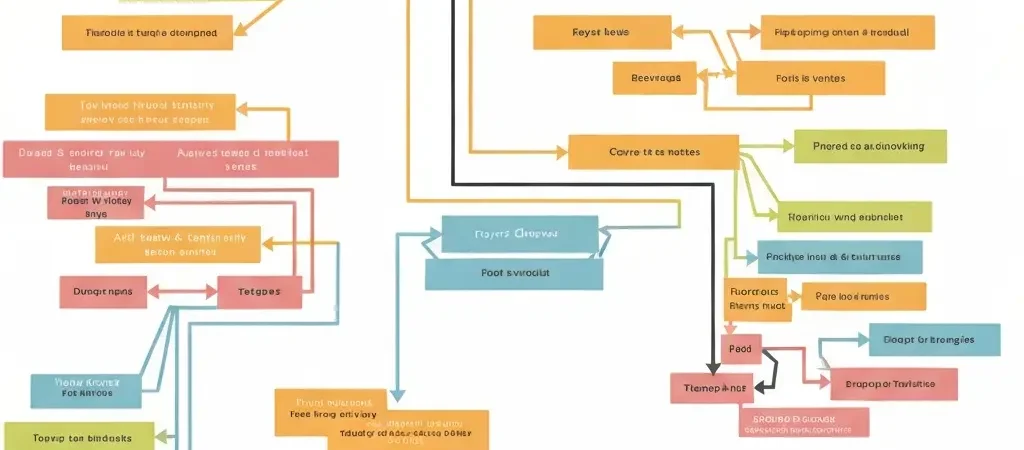
Topical Map SEO: How to Build One That Generates Traffic for Years
A topical map is the single most important strategic document in a content-driven SEO program. It defines the topical territory your site will own, the hierarchy of content that covers it, and the interconnections between articles that signal comprehensive expertise to Google. Without a topical map, you’re publishing articles. With one, you’re building a compounding asset.
The difference shows up in analytics. Sites with organized topical map architectures consistently outperform those without one in organic traffic growth rate, because Google’s entity recognition systems reward the depth signal that topical maps create. This guide covers the research methodology, architecture decisions, and execution workflow that make a topical map a genuine traffic engine.
What Is a Topical Map and Why Does It Matter?
A topical map is a strategic document — typically a structured hierarchy or spreadsheet — that organizes all the topics, subtopics, and content types your site will cover within a given niche. It serves as the single source of truth for your content program: what gets written, at what depth, in what order, and how it connects to other content.
Why Google Cares About Topical Maps
Google’s Knowledge Graph and entity recognition systems evaluate sites not just on individual pages but on the totality of their content coverage. A site that thoroughly covers every facet of “email marketing automation” — from getting started guides to technical deliverability, A/B testing, segmentation, GDPR compliance, and platform comparisons — registers as an authoritative entity on that topic. A site with two articles on the same topic doesn’t.
This is why topical maps matter: they’re the planning layer that ensures you achieve the coverage depth required for entity recognition. Our complete framework is in the Topical Authority SEO Framework.
Phase 1: Topic and Keyword Research
The research phase begins with your primary topic — the broad niche or problem space your brand serves. From there, you systematically expand outward:
Step 1: Identify Core Topics (5–10)
These are the pillar-level topics: broad enough to anchor comprehensive content clusters, specific enough to have clear audience intent. For a marketing automation tool, core topics might be: email marketing automation, lead nurturing, audience segmentation, marketing analytics, campaign optimization.
Step 2: Expand to Subtopics (10–20 per core topic)
For each core topic, identify all the relevant subtopics a comprehensive resource would cover. Tools: Ahrefs “Content Gap,” Semrush “Topic Research,” Reddit r/[your niche], People Also Ask data in Google search results, competitor content audits.
Step 3: Capture Long-Tail Questions
Long-tail questions (10–50 searches/month) are goldmines for supporting content. They have minimal competition, capture specific user intent, and are increasingly prioritized by AI citation engines like ChatGPT and Perplexity. Use AnswerThePublic, AlsoAsked.com, and GSC data to surface these.
Step 4: Prioritize by Volume, Difficulty, and Strategic Value
Not all keywords are created equal. Score each keyword on: monthly search volume, keyword difficulty, commercial intent alignment with your product, and whether covering it creates a coverage gap in your cluster. High-volume, low-difficulty, high-alignment keywords get priority.
Phase 2: Clustering and Hierarchy Assignment
Clustering groups keywords by intent and entity so that related keywords get covered in a single article rather than spread across multiple thin pieces. The output is a clean keyword hierarchy with no cannibalization.
Clustering Rules
- Keywords with identical or near-identical search intent get consolidated into one article
- Keywords with different intent but shared topic become separate articles within the same cluster
- Questions starting with “What is,” “How to,” “Why does,” and “Best X for Y” are almost always separate intent buckets
- Comparison keywords (“X vs Y,” “X alternatives”) warrant their own articles regardless of volume
Phase 3: Map Architecture and Content Type Assignment
Each cluster in your topical map gets a three-tier architecture:
- 1 Pillar article: Comprehensive, authoritative coverage of the core topic. Target: highest-volume keyword in the cluster.
- 3–8 Cluster articles: Focused subtopic coverage. Each targets a specific secondary keyword within the cluster.
- 3–6 Supporting articles: FAQ content, long-tail questions, and comparison pieces. Low competition, specific intent.
Document this assignment in your topical map spreadsheet with columns for: keyword, search volume, difficulty, content type, pillar parent (for cluster/supporting articles), target article length, and internal link targets.
For a real-world example of how this hierarchy plays out, see our article on pillar cluster content strategy implementation.
Phase 4: Execution Order and Publishing Strategy
The order in which you publish matters for link equity distribution and topical authority signaling. Best practice:
- Publish pillar articles first. These are the anchor pages that cluster articles will link to. Without the pillar live, cluster articles have nowhere to point their link equity.
- Publish cluster articles in topic batches. Publishing 5–8 cluster articles around a single pillar in a 2-week window sends a topical depth signal that a drip of unrelated articles does not.
- Fill in supporting content. Once pillar and cluster content is live, add supporting articles to capture long-tail traffic and deepen topical coverage.
- Cross-link immediately. Each new article should link to existing related pieces on publication day — don’t leave articles unlinked.
AI content automation is the practical enabler of this strategy. Building a full topical cluster manually takes months. With an automated system, you can execute a complete cluster (15–25 articles) in weeks. See how Authenova’s strategy builder automates this execution.
Phase 5: Map Maintenance and Expansion
A topical map is not a one-time document — it’s a living strategic resource. Maintain it by:
- Quarterly keyword refresh: New search trends, new product categories, and competitor content gaps create fresh opportunities. Update your map every 90 days.
- Content decay monitoring: Articles in positions 11–30 that have stopped improving are refresh candidates. Flag them in the map with a “refresh scheduled” status.
- Adjacent topic expansion: Once you’ve achieved topical authority in your core cluster, identify the adjacent topic spaces where your audience also searches. Expand into those with a new cluster, linking back to your established authority base.
Tools for Building and Managing Topical Maps
- Ahrefs / Semrush: Keyword research, gap analysis, and competitor content auditing
- Google Sheets / Notion / Airtable: Map documentation and content status tracking
- Authenova Strategy Builder: Converts your keyword map into a pillar-cluster architecture and executes the content program automatically
- Google Search Console: Real performance data to identify gaps and high-potential refresh opportunities
- Screaming Frog: Site crawl to audit existing content coverage and identify orphan pages
For the complete methodology on building and executing a topical map, see our deep-dive guide on how to build a topical map from scratch.
Frequently Asked Questions
What is a topical map in SEO?
A topical map in SEO is a structured hierarchy of target keywords and topics organized to signal comprehensive expertise to search engines. It defines which topics to cover, at what depth (pillar/cluster/supporting), in what order, and how articles interconnect. A well-built topical map creates the content architecture that drives topical authority — Google’s recognition of your site as a comprehensive resource in your niche.
How many keywords should a topical map cover?
A starting topical map for a focused niche covers 30–80 keywords across 3–5 topic clusters. Each cluster typically contains 1 pillar keyword, 5–10 cluster keywords, and 5–10 supporting/long-tail keywords. Established sites with strong domain authority can expand to 200–500+ keywords across 10–20 clusters without diluting topical focus.
How long does it take to build topical authority from a topical map?
With consistent publication (5–10 articles per week), meaningful topical authority signals typically emerge by month 3 and compound significantly by month 6. Sites publishing at lower velocity (1–2 articles per week) typically see topical authority signals in 6–12 months. The key driver is achieving the minimum coverage depth within a cluster before Google recognizes topical completeness.
Is a topical map the same as a content calendar?
No. A topical map is a strategic architecture document — it defines what to cover and how it connects. A content calendar is an execution schedule — it defines when each article gets published. Effective content programs use both: the topical map defines the “what,” the content calendar defines the “when.” The topical map should inform the calendar’s priorities.
Turn Your Topical Map Into a Live Traffic Engine
Authenova converts your keyword research into an executed content strategy — generating articles, scheduling publishing, and building internal links automatically. Your topical map becomes a running content program without manual effort.