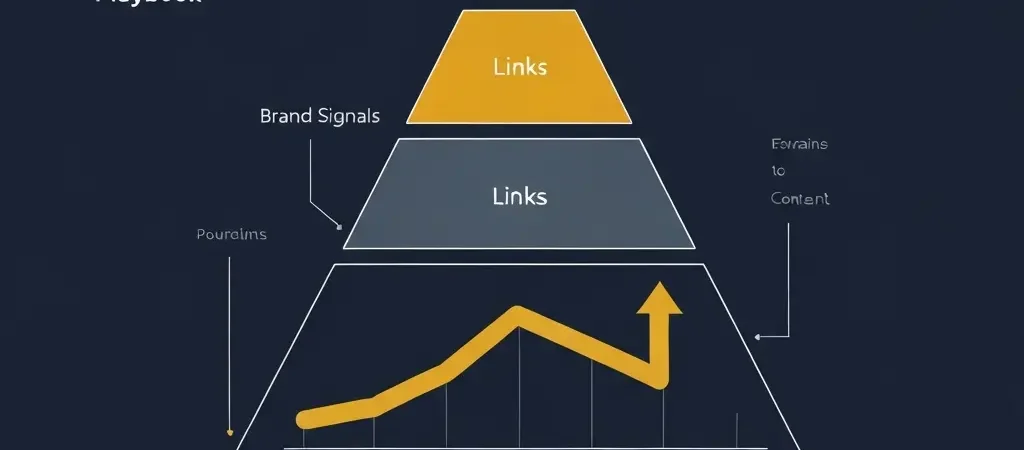
Domain Authority Building in 2026: The Research-Backed Playbook That Actually Works
Domain authority building is simultaneously one of SEO’s most important and most misunderstood concepts. Domain Authority (DA) as measured by Moz, or Domain Rating (DR) as measured by Ahrefs, is a third-party proxy metric reflecting the strength of your site’s backlink profile. But the actual authority Google assigns to your domain — the internal score that determines how confidently Google trusts and ranks your content — is determined by a far more complex set of signals.
This playbook separates the evidence-based tactics from the myths. We draw on Google’s published documentation, large-scale correlation studies from Ahrefs and Moz, and observable patterns from sites that have successfully built genuine domain authority to give you a framework that works in 2026.
What Domain Authority Really Means in 2026
Let’s establish clarity on what we’re actually trying to build. “Domain Authority” in the general SEO sense encompasses two distinct but related concepts:
Third-Party DA/DR Scores
Moz’s Domain Authority (0-100) and Ahrefs’ Domain Rating (0-100) are computed metrics based primarily on backlink profile analysis — the quantity and quality of sites linking to yours. These are proxies, not Google rankings factors. Improving your DA/DR score is a lagging indicator, not a goal in itself.
Google’s Internal Trust Signals
What Google actually uses is more nuanced: PageRank (still operational, still significant), topical relevance scoring, E-E-A-T signals, brand recognition, and historical quality signals. You can have a DA 40 site outrank DA 60 sites on topical relevance alone — as demonstrated repeatedly in the data.
This playbook focuses on building both: the real Google authority signals AND the third-party DA scores that are often used as a proxy by potential link partners and SEO tools.
The Content Foundation: The #1 DA Building Strategy
Every other DA building tactic produces more results on a stronger content foundation. Before investing in link acquisition, digital PR, or technical SEO, you need a site that deserves to rank.
Topical Authority as the DA Accelerant
Sites that build deep topical authority through topical authority SEO and pillar-cluster content strategy see faster DA growth because:
- More content = more pages to earn backlinks (each article is a potential link target)
- Topically comprehensive sites attract natural links as the recognized authority resource
- Higher organic traffic signals to Google that the site is a valued resource
- Content depth creates the linkable assets that outreach campaigns can promote
Content Velocity and DA Growth
Analysis of sites in competitive niches shows a correlation between content publishing velocity and DA growth rate. Sites publishing 10+ articles per week see measurably faster DA growth than sites publishing 1-3 per week — even controlling for backlink acquisition rates. The likely mechanism: higher content velocity increases crawl frequency, organic traffic, and natural link acquisition simultaneously.
Platforms like Authenova enable the content velocity that underpins fast DA growth. Sites like Tesify have used automated content publishing to build topical authority at scale across multiple language markets, with DA growth tracking the topical authority accumulation closely. iQuitNow.life demonstrates a similar pattern in the health niche — content velocity enabling faster DA growth than competitors publishing manually.
Strategic Link Acquisition: What Actually Works
Backlinks remain a critical DA building signal, but the landscape of effective tactics has shifted significantly since 2023’s Google leak confirmed the importance of link quality over quantity.
What the Data Shows Works in 2026
HARO / Source of Expertise Outreach
Responding to journalist queries (Help a Reporter Out, Connectively, Qwoted) generates editorial links from high-DA publications. These are among the highest-quality links available — placed by a third-party journalist, contextually relevant, and on legitimate editorial domains. Conversion rate is low (2-5%) but link quality is exceptional. Budget 3-4 hours per week for this tactic to generate 2-4 high-quality links per month.
Digital PR with Original Data
Publishing original research (surveys, studies, data analyses) creates linkable assets that journalists and industry publications naturally cite. A well-executed study in your niche can generate 50-200+ backlinks from a single piece. The investment (survey tool, PR distribution) pays out in DA gains over 3-12 months as links accumulate. See the Digital PR section for full implementation details.
Guest Posting on Topically Relevant Sites
Guest posting still works when executed properly: topically relevant placement (your niche, not general blogs), high editorial standards (no “guest post farms”), genuine author expertise demonstrated in the article. 2-4 strategic guest posts per month on DA 40+ sites in your niche compounds reliably.
Broken Link Building
Finding broken links on relevant sites and offering your content as a replacement remains consistently effective. Tools: Ahrefs, Check My Links Chrome extension. Target pages in your niche with 10+ broken links — these site owners are clearly maintaining their link sections and receptive to legitimate replacement suggestions.
What Doesn’t Work Anymore
- Paid link placements on link farm networks: Google’s systems identify these reliably and discount the links. High risk, decreasing reward.
- PBN (Private Blog Network) links: Still used by some black-hat operators but increasingly detected and penalized post-2024 core updates.
- Exact-match anchor text links at scale: Over-optimized anchor profiles trigger algorithmic flags. Natural anchor diversity is essential.
- Low-quality directory submissions: Directory links from non-curated directories carry near-zero weight.
Digital PR and Linkable Assets
Digital PR is the highest-scalability link acquisition strategy available in 2026. Done right, a single piece of original research can generate more high-quality links than 6 months of guest posting. Here’s the framework:
Step 1: Identify Your Data Opportunity
What data exists in your niche that no one has collected and published? Options:
- Survey data (use Typeform or Google Forms, distribute to your audience + paid panels)
- Analysis of publicly available datasets (government data, industry reports)
- Proprietary platform data (if you have a tool or platform, anonymized aggregate data is gold)
- Expert roundup with original quotes (still effective when expert quality is genuinely high)
Step 2: Create a Linkable Asset
Present your data as a comprehensive article with original findings, charts, and quotable statistics. Structure it for citation: “According to [Your Site]’s 2026 study, X% of marketers [finding].” Make the statistics specific, surprising, and relevant to journalists covering your topic.
Step 3: PR Outreach
Build a media list of journalists and publications covering your niche. Pitch your findings with a personalized email highlighting the most newsworthy statistic and why it matters to their audience. Timing matters — pitch to coincide with industry events, trending topics, or seasonal relevance.
Technical SEO: The DA Multiplier
Technical SEO doesn’t build DA directly, but it prevents authority from being wasted. A technically sound site extracts maximum ranking value from every backlink and piece of content you create.
Core Technical Requirements for DA Building
- Core Web Vitals (LCP, CLS, INP): All metrics in “Good” range (LCP under 2.5s, CLS under 0.1, INP under 200ms)
- HTTPS: Fully implemented with proper redirect chain. HTTP pages waste link equity through redirect dilution.
- Crawlability: No accidental noindex tags on important pages. Clean robots.txt. Functional XML sitemap submitted to GSC.
- Canonical tags: Prevent PageRank dilution from duplicate content (pagination, session parameters, www vs non-www)
- Redirect chains: All redirects are 301 (permanent) not 302 (temporary). No chains longer than one hop. Chains dilute the link equity from referring domains.
- Mobile-first indexing: Your mobile version must match your desktop version — Google indexes from mobile.
Brand Signals: The Underrated DA Factor
Brand mentions — even unlinked ones — are a documented Google ranking signal (confirmed in the 2024 Google leak). Building brand recognition in your niche produces DA-building effects that many SEO practitioners overlook.
Brand Signal Building Tactics
- Consistent brand mentions in your content: Other sites referencing your research and findings, even without linking, strengthen brand authority signals.
- Social proof and community building: Active community presence (LinkedIn, Reddit, X/Twitter) in your niche increases branded search volume — a confirmed positive signal.
- Podcast appearances and speaking: Authority-building in your niche drives branded searches and often generates backlinks through show notes and speaker bio pages.
- Review building: G2, Capterra, Trustpilot, and niche-specific review sites generate branded search signals and co-citation authority.
Content marketing agencies managing DA-building programs for multiple clients use CampaignOS alongside Authenova to coordinate brand signal building campaigns with automated content publishing — the content velocity from Authenova provides the foundation while CampaignOS coordinates the digital PR and outreach layer.
Realistic DA Growth Timeline
| Starting DA | Target DA | Realistic Timeline | Primary Driver |
|---|---|---|---|
| 0-10 | 20 | 3-6 months | Content + basic links |
| 20-30 | 40 | 6-12 months | Guest posts + digital PR |
| 40-50 | 60 | 12-24 months | Digital PR + HARO |
| 60+ | 70+ | 24+ months | Brand authority + editorial |
Note: DA growth slows at higher values because each incremental point requires significantly more link equity than the previous. Diminishing returns are real above DA 50. Fortunately, at DA 40+, topical authority becomes the dominant ranking factor — meaning you can outrank DA 70+ competitors through superior topical depth in your niche.
Frequently Asked Questions
How often does Moz’s Domain Authority score update?
Moz updates DA scores monthly as part of their link index crawl. Significant DA changes typically appear within 30-60 days of major link acquisition. For real-time backlink monitoring, use Ahrefs or Semrush which update more frequently. Remember that DA is a lagging indicator — actual ranking improvements from new links typically appear in Google before your DA score reflects the change.
Can I build domain authority without link building?
You can build significant topical authority and Google trust without active link building — through high-quality content at scale and brand signal building. However, your third-party DA/DR scores will remain low without backlinks, which can limit your ability to rank for highly competitive keywords. For competitive niches, some level of link acquisition remains necessary. For informational content in moderate-competition niches, topical authority through content often suffices.
Does publishing more content help build domain authority?
Yes, through three mechanisms: (1) More content creates more potential link targets — each article can attract backlinks independently. (2) Higher content volume and topical depth builds topical authority that Google associates with domain-level trust. (3) More content drives more organic traffic, which signals to Google that users value the site — a positive ranking signal. Low-quality content at high volume can backfire, but high-quality content at high volume consistently drives DA growth.
How do I know if my domain authority building is working?
Track these indicators: (1) Number of referring domains in Ahrefs (should grow monthly), (2) Organic keywords ranking in positions 1-10 in Google Search Console (should grow), (3) Organic traffic trend (should grow), (4) New article ranking velocity (new articles should rank faster over time), and (5) Third-party DA/DR scores (should trend upward quarterly). Improvement across 3+ of these metrics confirms your strategy is working.